7 Best Plastic Fruit Containers for Global Buyers

Time:2026-09-21 Author:Isabella
0%

Choosing the right Plastic Fruit Containers is a practical decision for growers, exporters, retailers, and food distributors. The best option must protect delicate fruit from bruising, moisture buildup, and unnecessary movement during handling. A clear container can display color and quality, while strong vents help reduce condensation around strawberries, grapes, cherries, and other sensitive produce.

Freshness matters.

This guide reviews seven leading container types for global buyers. Each option is considered through real purchasing factors, including material strength, lid security, stackability, visibility, ventilation, and shipping efficiency. We also examine whether the design suits retail shelves, cold storage, local delivery, or longer international transport. A container that performs well in a warehouse may disappoint during repeated loading and unloading. That assumption can fail.

Food-contact suitability and recycling information should be verified with the supplier. Requirements differ across markets, so buyers should request technical sheets, test results, and clear material declarations before placing large orders. Reliable manufacturers should explain resin types, temperature limits, production tolerances, and quality-control procedures. Samples are valuable because small details matter: a sharp edge, weak hinge, or loose lid can damage fruit and increase waste.

The ranking is not based on appearance alone. It reflects practical performance, supplier transparency, product protection, and overall value. Some containers may look premium but use space inefficiently. Others may cost less yet require stronger outer cartons. Careful comparison helps buyers choose packaging that supports freshness, safe handling, and responsible distribution across different supply chains. Mistakes still happen, especially when one design is applied to every fruit. That is worth remembering.
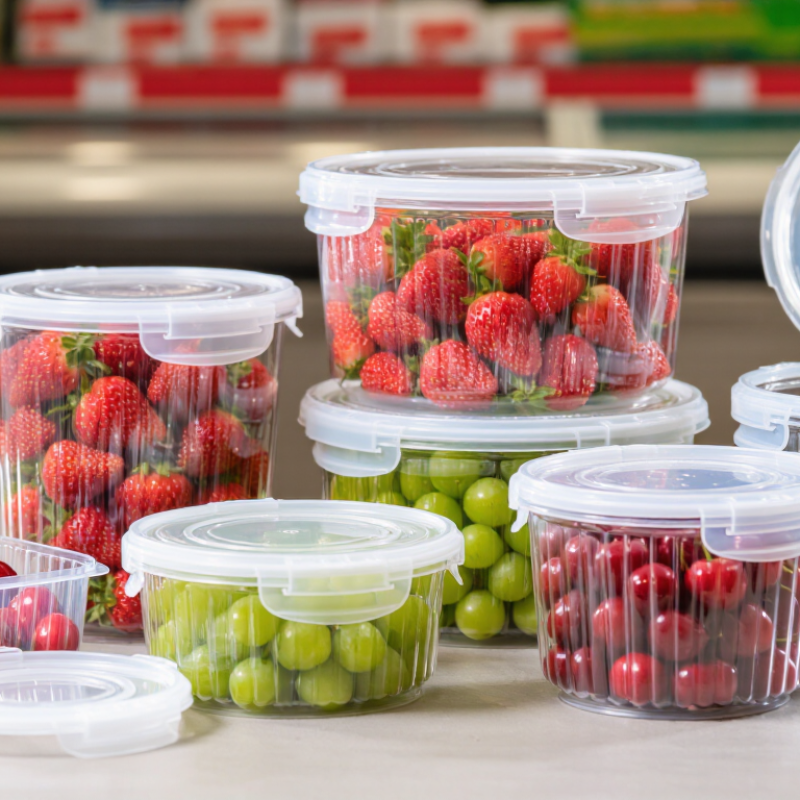
7 Best Plastic Fruit Containers for Global Buyers

What Plastic Fruit Containers Are and Why Global Buyers Use Them

Plastic fruit containers are lightweight food-contact packages designed to hold, protect, and display fresh produce. They include clamshells, trays, cups, and lidded boxes. Common materials include PET, PP, and recycled plastic blends. Each material behaves differently under pressure, cold storage, and humidity.

A clear clamshell helps buyers inspect color, size, and visible damage without opening the package. Small vent holes can reduce condensation around berries and cut fruit. During long routes, secure lids help prevent bruising and product loss. Stackable shapes also use warehouse and truck space more efficiently. Retailers value consistent dimensions because automated packing becomes easier.

Practical purchasing needs more than attractive samples. Buyers should request food-contact documentation, material specifications, and test results for temperature and drop resistance. A supplier’s carton strength matters too, especially when containers travel through several distribution points. I would test filled samples under realistic conditions. One drop test is not enough.

Still, plastic is not perfect. Overly tight lids may trap moisture, while thin walls can crack during handling. I have seen containers that looked strong but warped inside warm vehicles. That mistake costs money. Buyers should compare ventilation, closure strength, recyclability, and local packaging requirements before approving large orders.

How to Evaluate Plastic Fruit Containers by Key Performance Factors

7 Best Plastic Fruit Containers for Global Buyers

How to Evaluate Plastic Fruit Containers by Key Performance Factors

Choosing plastic fruit containers requires more than checking price and appearance. FAO’s The State of Food and Agriculture 2019 reports that about 14% of food is lost between harvest and wholesale. Strong packaging can reduce bruising, compression, and moisture damage during this journey. Check the container’s food-contact material, wall thickness, and closure strength. A rigid base should support stacked loads without bending. Ventilation holes also matter, especially for berries and stone fruit. Poor airflow can trap condensation and speed up decay.

Transparency helps buyers inspect color, mold, and bruising without opening every pack. However, a clear lid may hide water droplets underneath. That detail is easy to miss. Test containers inside cold storage, during transport simulation, and after repeated stacking. Measure temperature, visible condensation, lid fit, and damaged fruit. The UNEP Food Waste Index Report 2024 estimates that 1.05 billion tonnes of food were wasted in 2022. Packaging cannot solve every loss, but poor design can increase it. Recyclability, material identification, and local recovery systems should also influence purchasing decisions.

Tips: Place filled containers in a real shipping carton. Add vibration and compression tests. Compare fruit quality after 24 and 72 hours. Ask suppliers for migration, strength, and temperature data. Do not accept vague claims. Performance sometimes changes between laboratory tests and humid warehouses.

Seven Plastic Fruit Container Types for Different Fruits and Markets

Choosing among the seven best plastic fruit containers depends on fruit structure, travel time, and market expectations. FAO’s State of Food and Agriculture 2019 estimates that 14% of food is lost between harvest and retail. Packaging cannot solve every loss, but poor ventilation can worsen it.

For berries, vented PET clamshells and shallow PP punnets reduce crushing and expose condensation. Cherries often suit hinged PET containers with small drainage channels. Grapes need rigid lidded trays with airflow slots. Soft peaches and nectarines perform better in cushioned plastic trays, especially during long export routes. A reusable plastic crate fits apples, citrus, and pears because its vertical walls resist stacking pressure. For mangoes and avocados, ventilated bulk bins allow ripening gases to escape. Small mixed-fruit orders may need stackable plastic tubs with secure lids.

Market conditions change the best choice. Retail buyers usually prefer clear containers that show bruising immediately. Wholesale markets may prioritize nesting crates and lower return costs. The OECD notes that packaging systems should consider full life-cycle impacts, not only material weight. That makes reusable crates attractive when reverse logistics are reliable. Still, reuse is not automatically greener. Empty-container transport, washing water, and damage rates matter. The wrong assumption is costly. I would test each format with real fruit, temperature records, drop trials, and humidity readings before approving a global shipment. Source: FAO, The State of Food and Agriculture 2019; OECD, Global Plastics Outlook 2022.

7 Best Plastic Fruit Containers for Global Buyers - Seven Plastic Fruit Container Types for Different Fruits and Markets
Plastic Container Type Best-Suited Fruits Common Material Typical Capacity Ventilation & Protection Typical Market Use Handling & Sustainability Notes
Hinged PET Clamshell Strawberries, blueberries, raspberries, blackberries and small table grapes Food-grade PET or recycled PET, subject to local food-contact regulations 125 g, 250 g, 500 g or 1 lb Small vents help manage moisture; clear walls provide product visibility and reduce handling damage Retail supermarkets, e-commerce grocery orders and export berry programs Lightweight and stackable; PET is widely recyclable where collection and recycling systems are available
Vented PP Punnet Peaches, nectarines, plums, apricots, cherries and figs Food-grade polypropylene, commonly PP 500 g, 750 g, 1 kg or 2 kg Side and base openings support airflow; reinforced corners help limit crushing during stacking Fresh-produce retail, wholesale distribution and regional export shipments Good impact resistance over chilled distribution routes; reusable options are available for closed-loop supply chains
Molded Plastic Tray with Top Film Apples, pears, kiwifruit and premium stone fruit Rigid PET, PP or a PET/PP combination with a lidding film 4 to 12 pieces per tray, typically 500 g to 1.5 kg Individual cavities separate fruit; perforated or microperforated film can support airflow and humidity control Premium retail packs, gift packs and long-distance distribution Improves presentation and reduces fruit-to-fruit contact; material combinations should be designed for local recycling systems
Reusable Ventilated HDPE Crate Apples, oranges, mandarins, mangoes, avocados, melons and mixed produce High-density polyethylene, commonly HDPE 10 to 25 kg, depending on crate footprint and wall design Large ventilation slots promote cooling; rigid walls provide strong protection during pallet stacking Export packinghouses, wholesale markets, food-service distribution and returnable transport systems Durable and washable; best environmental performance is achieved when crates are repeatedly reused and efficiently backhauled
Lidded PP Produce Tub Cherries, grapes, berries, peeled fruit and ready-to-eat fruit portions Food-grade PP with a snap-fit or hinged lid 250 g, 500 g, 750 g or 1 kg Perforated lid or vent holes help reduce condensation while the rigid body protects delicate fruit Convenience retail, food service, institutional catering and prepared-food channels Secure closure supports transport and resealing; reusable designs may reduce packaging consumption in returnable programs
Perforated Plastic Bag or Net Sleeve Oranges, lemons, limes, onions-sized fruit packs, kiwifruit and small melons Low-density polyethylene film, polypropylene mesh or a combination of both 500 g, 1 kg, 1.5 kg, 2 kg or 3 kg Open mesh or perforations provide high airflow and allow shoppers to inspect the product Supermarkets, discount retail, wholesale display and value-oriented markets Very low packaging weight; puncture resistance, seal strength and local recycling infrastructure should be checked before export
Modified-Atmosphere PET or PP Tray Fresh-cut melon, pineapple, mango, berries, grapes and mixed fruit portions Food-grade PET or PP tray with a compatible lidding film 150 g, 250 g, 400 g, 500 g or 1 kg Film permeability and seal design are selected for the product; controlled gas exchange can help maintain quality when properly validated Chilled convenience food, airline catering, meal delivery and international retail programs Requires a continuous cold chain and validated shelf-life testing; tray and film combinations should be compatible with regional recycling rules

How Container Design Supports Freshness, Transport, and Retail Display

7 Best Plastic Fruit Containers for Global Buyers
How Container Design Supports Freshness, Transport, and Retail Display

The best plastic fruit containers balance airflow, protection, stacking, and clear presentation. Vented clamshells help reduce condensation around berries and small fruit. Stackable punnets use vertical space efficiently during refrigerated transport. Hinged trays keep lids attached, which can reduce handling mistakes in busy warehouses. Perforated crates suit larger fruit because they allow air movement and resist crushing.

Airflow matters.

A poor vent pattern may dry exposed fruit or create uneven cooling.

Lidded tubs can protect delicate produce during short distribution routes. Cushioned inserts limit movement when fruit travels over rough roads. Reusable transport boxes support repeated handling and reduce replacement waste when cleaning procedures are practical. Retail visibility also matters; transparent walls let buyers inspect color, firmness, and damage without opening the package. Smooth edges make shelf handling safer. Drainage channels can guide excess moisture away from the fruit.

However, no container solves every supply-chain problem. I have found that a strong design can still fail when produce enters the package too warm. Buyers should test ventilation, closure strength, stacking load, and label space under real shipping conditions. Small prototypes often reveal weaknesses that specifications miss. Temperature, humidity, fruit size, and route length should guide the final choice.

How to Select and Source the Best Plastic Fruit Container Globally

Global buyers should start with the fruit, not the container catalogue. A soft berry needs cushioning, airflow, and drainage. A firm apple tolerates stacking, but trapped moisture still accelerates decay. FAO’s The State of Food and Agriculture 2019 estimates that 14% of food is lost between harvest and retail. Better packaging cannot solve every loss, yet it can reduce bruising and condensation when matched to the supply chain. Measure fruit diameter, mass, temperature, and transit duration before requesting samples. Small details matter.

For fresh produce, compare food-contact PET, PP, and recycled-content options through documented compliance records. Check wall thickness, hinge fatigue, closure strength, and ventilation-area ratio. Ask for migration testing under intended temperature and food conditions. Do not accept a generic certificate. It may cover another resin or market. The United Nations Environment Programme reported 1.05 billion tonnes of food waste in 2022. That figure is not a packaging target, but it reinforces the value of preventing avoidable damage. I would test filled containers after vibration, compression, cold storage, and repeated opening.

A reliable supplier should provide traceable resin specifications, batch records, tooling details, and inspection samples. Request quotations using identical terms: container weight, inner dimensions, pallet count, mold cost, lead time, and minimum order quantity. Confirm destination rules for food-contact materials and recycled plastic before production. Also calculate cube utilization; a cheap container can become expensive freight. The OECD’s Global Plastics Outlook reports that only 9% of plastic waste was recycled globally in 2019. Recyclability claims need local collection evidence. This is where buyers often rush. Leave room for redesign after the pilot shipment.

FAQS

What are plastic fruit containers used for?

They hold, protect, and display fresh fruit. Common formats include clamshells, trays, cups, and lidded boxes. Clear walls help buyers inspect color, bruising, and mold. Secure lids can reduce movement during transport.

Which fruits suit vented plastic containers?

Berries often suit vented clamshells or shallow trays. Small holes release moisture and reduce condensation. Grapes need rigid trays with airflow slots. Poor ventilation can speed decay.

How should buyers choose container material?

PET, PP, and recycled plastic blends behave differently. Compare their strength under pressure, cold storage, and humidity. Request food-contact documents and material specifications. Appearance alone is not enough.

Why do transparency and ventilation matter?

Transparency allows quick inspection without opening each pack. Ventilation helps manage moisture around berries and cut fruit. Yet clear lids may hide water droplets underneath. That detail is easy to miss.

What tests should buyers perform before ordering?

Test filled containers inside realistic shipping cartons. Use drop, vibration, compression, and stacking trials. Check samples after 24 and 72 hours. One drop test is not enough.

How can containers reduce fruit damage during long routes?

Rigid bases support stacked loads without bending. Secure closures limit movement and bruising. Cushioned trays can protect soft peaches and nectarines. Warm vehicles may still warp thin plastic.

Are reusable plastic crates always the greener choice?

Not automatically. Consider washing water, empty-container transport, damage rates, and return logistics. Reuse works better when containers return efficiently. The wrong assumption is costly.

What should buyers compare before approving a large order?

Compare ventilation, closure strength, wall thickness, recyclability, and local recovery systems. Check carton strength across several distribution points. Ask for temperature, migration, and strength data. I would test real fruit, not only attractive samples.

Conclusion

Plastic Fruit Containers are practical packaging solutions designed to protect fresh produce from pressure, moisture, contamination, and handling damage. Global buyers use them because they can improve product visibility, support consistent portioning, and make fruit easier to store, transport, and display. This guide explains the main performance factors to consider, including material strength, ventilation, stackability, clarity, closure security, temperature tolerance, recyclability, and compatibility with different supply chains.

It also introduces seven container types suited to various fruits and market needs, such as hinged clamshells, vented trays, stackable tubs, punnets, lidded cups, bulk crates, and specialty protective packs. Each design offers different advantages for freshness management, transit stability, retail presentation, and efficient handling. To select and source the best option globally, buyers should match container structure to fruit characteristics, sales volume, distribution conditions, sustainability goals, and packaging specifications while carefully assessing supplier quality, production capacity, customization, documentation, and total delivered cost.

Isabella

Isabella

Isabella is a dedicated marketing professional with a sharp focus on driving brand growth and engagement through strategic content creation. With an extensive background in digital marketing, she combines her passion for storytelling with her keen understanding of industry trends to deliver......