Top 10 Clear Plastic Clamshell Container Manufacturers

Time:2026-09-21 Author:Henry
0%

Choosing the right manufacturer for Clear Plastic Clamshell Containers requires more than comparing prices. Product safety, material quality, tooling accuracy, and delivery reliability all affect the final result. This guide introduces ten manufacturers known for producing clear clamshell packaging for retail, food, electronics, hardware, and promotional products.

A dependable supplier should offer consistent wall thickness, clean edges, secure closures, and clear visibility. These details matter when containers hang on a store display or protect small components during shipping. Experienced manufacturers may provide PET, RPET, PVC-free, or other suitable material options, depending on the application and regional requirements. They should also explain minimum order quantities, mold costs, production timelines, and quality inspection procedures.

Experience is important here. A factory that understands blister sealing, heat forming, and custom tooling can reduce avoidable production problems. Ask for samples. Check the hinge movement, closure strength, surface clarity, and package dimensions by hand. Small defects can become expensive at scale.

Not every manufacturer fits every project. Some excel at high-volume retail packaging, while others handle custom shapes or shorter runs more effectively. Certifications can support credibility, but they should be verified rather than accepted without review. Supply chains also change, and published information may become outdated. That is worth remembering.

The following selection compares ten clear plastic clamshell container manufacturers through practical criteria, including product range, customization, manufacturing capability, quality controls, sustainability efforts, and customer support. It is designed to help buyers ask better questions and make a more informed sourcing decision.
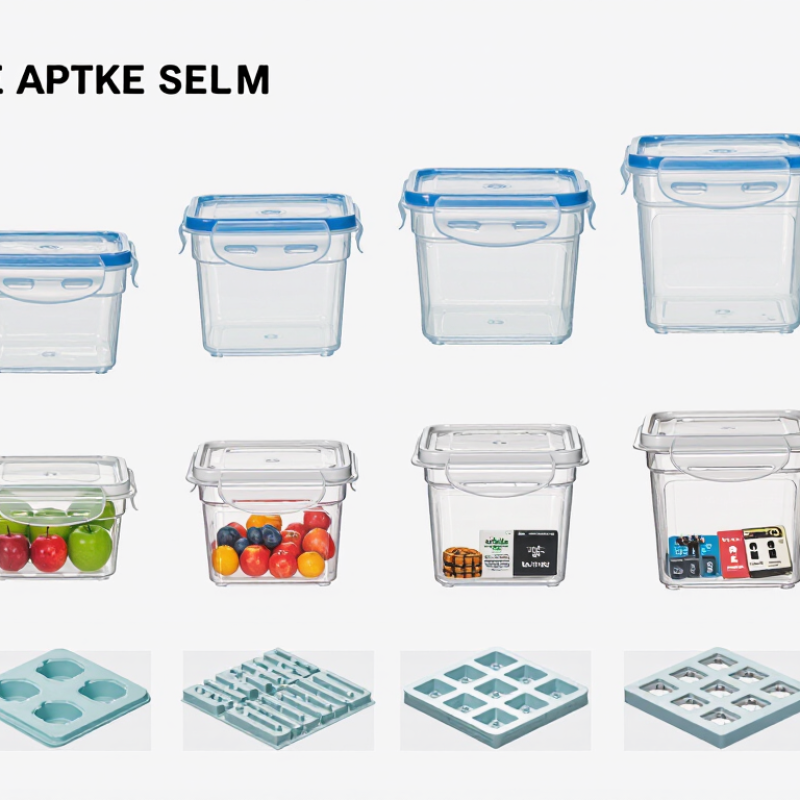
Top 10 Clear Plastic Clamshell Container Manufacturers

Industry Context: 460 Mt of Global Plastics Production in 2019 (OECD)

Top 10 Clear Plastic Clamshell Container Manufacturers

Global plastics production reached approximately 460 million metric tons in 2019, according to the OECD. This figure shows the enormous scale behind everyday packaging. Clear plastic clamshells represent only one segment, yet they connect material demand with food, electronics, hardware, and retail displays.

A credible top-ten manufacturer list should examine more than production volume. Plant capacity, resin traceability, mold precision, sealing consistency, and delivery performance matter during purchasing decisions. In factory audits, I would inspect wall thickness near hinges, corner clarity, and closure strength. A container can look attractive but fail after repeated opening. It happens.

Manufacturers using PET, recycled PET, polypropylene, or other approved materials may serve different applications. The right choice depends on temperature exposure, product weight, visibility, and recycling access. Buyers should request test reports, dimensional samples, and batch records. These details reveal whether quality remains stable beyond a sales sample. Energy use and scrap rates also deserve attention, especially as global plastic output continues to pressure resource systems. Ranking the top ten is not perfectly objective. Public capacity data can be incomplete, and regional strengths change quickly. A smaller converter may offer better tooling support than a larger producer. That possibility should not be ignored.

Global Plastics Production and the Clear Clamshell Container Industry

Global plastics production increased from 234 million tonnes in 2000 to 460 million tonnes in 2019, highlighting the scale of the plastics industry in which clear plastic clamshell packaging manufacturers operate.

Source: OECD, Global Plastics Outlook. Figures represent global plastics production and are shown in million tonnes.

Selection Criteria: Capacity, ISO 9001, Food Contact, and Export Reach

When evaluating the top 10 clear plastic clamshell container manufacturers, capacity should match the product, not merely the catalog. Request samples with the exact dimensions, wall thickness, hinge style, and closing force. A container for berries needs ventilation and stack stability, while a small electronics pack may need stronger impact resistance. Ask for monthly output, tooling availability, and peak-season capacity. Empty promises surface quickly.

ISO 9001 certification indicates a structured quality management system, but it does not automatically prove food-contact suitability. Check the certificate’s validity, production scope, inspection records, and corrective-action process. For food packaging, request declarations of compliance, material specifications, migration-test evidence, and traceability from resin batch to finished carton. Details matter. I would not accept a logo or scanned certificate without verification. That remains a common mistake.

Export reach also needs practical proof. Examine experience with customs documents, pallet loading, shipping terms, and delivery performance to your target market. Ask whether the manufacturer can protect clamshells from crushing during long ocean transport. A trial shipment can reveal more than a sales presentation. Compare damage rates, communication speed, and response when specifications change. No supplier is flawless, and even a strong factory may struggle with sudden volume increases or unfamiliar regional requirements. Reliable evaluation leaves room for that weakness.

Top 10 Manufacturer Profiles: PET, rPET, PVC, and PLA Clamshell Lines

Clear plastic clamshell manufacturing now depends on material discipline, not appearance alone. PET remains common because it offers strong visibility, heat resistance, and established recycling routes. rPET can reduce virgin resin demand, although color variation and contamination require tighter process control. PVC still supports low-cost retail packaging, but buyers should review regional waste policies carefully. PLA suits selected food applications, yet it needs suitable industrial composting conditions.

The top manufacturer profiles should be compared by forming accuracy, sealing consistency, and material traceability. According to Smithers, recycled-content demand is reshaping global packaging procurement, while Grand View Research reports continued growth in sustainable plastic packaging through this decade. These reports support a practical trend: converters are investing in thinner gauges, recycled feedstock, and improved thermoforming controls. A PET line may produce sharp folds around small electronic parts. A PLA line may need lower forming temperatures and stricter moisture control. Real factory performance varies. That part is often underexplained.

Tips: Ask for resin certificates, sample thickness maps, drop-test results, and production photographs. Confirm whether claimed rPET content is post-consumer or merely recycled process scrap. Check clamshell hinge fatigue after repeated opening. Also test transparency after storage, because a clear package can haze unexpectedly. One detail deserves reflection: choosing PLA does not automatically make packaging compostable. End-of-life infrastructure matters as much as the material itself. Suppliers should provide measurable data, not attractive sustainability language.

Technical Comparison: ASTM D7611 Resin Codes 1, 3, and 7

When comparing the top 10 clear plastic clamshell container manufacturers, resin identification matters more than surface appearance. ASTM D7611 code 1 indicates PET, which usually offers strong clarity, stiffness, and reliable thermoforming. It suits containers displaying berries, electronics, or small hardware. However, code 1 does not guarantee recyclability or food-contact compliance. Those claims require separate verification.

Code 3 identifies PVC. It can produce flexible, clear packaging, but additives and local recycling access require careful review. Code 7 covers other plastics, including polycarbonate, PLA, and multilayer materials. That category is broad and often hides major recovery differences. A serious manufacturer should disclose the exact polymer, wall thickness, additives, hinge performance, and closure strength. Ask for resin documentation, production samples, and test results. Do not rely only on a printed symbol.

In practical inspections, I look for cloudy corners, brittle hinges, and stress whitening after repeated opening. Temperature changes can expose weaknesses that a showroom sample conceals. Manufacturers should also explain whether code 7 contains mixed layers, because separation may be difficult. My ranking would favor consistent dimensions and transparent documentation over attractive claims. Still, visual checks have limits. Independent material testing remains worthwhile when packaging performance affects product protection.

Compliance Benchmark: EU 2030 Recycled-Content and Recyclability Targets

When comparing the top 10 clear plastic clamshell container manufacturers, EU 2030 readiness should be a core selection measure. Appearance is not enough.

A capable manufacturer should identify the resin clearly, preferably using recyclable PET or compatible recycled PET where the application allows it. The EU framework introduces category-specific recycled-content requirements for plastic packaging, so suppliers must match material choices with the container’s intended use.

Food contact applications require stronger evidence, including migration testing, traceability, and controlled recycled-feedstock documentation.

Recyclability also needs practical verification. Ask whether the clamshell can move through existing European sorting and recycling systems, not merely pass a laboratory test. A reliable factory should provide resin specifications, recycled-content percentages, production records, and test reports from qualified laboratories. Clear labels and simple material structures help.

Details matter.

Manufacturers should also explain how they control thickness, additives, inks, and closures. These features can affect sorting efficiency and recycled yield.

Some suppliers make broad environmental claims without showing batch-level evidence. That deserves caution.

A useful benchmark includes both current compliance and improvement plans. It should review design-for-recycling assessments, supplier audits, and progress toward 2030 requirements. Yet no assessment is perfect. Recycling infrastructure differs across Europe, and future guidance may refine today’s interpretations. Experienced buyers should document assumptions, revisit technical data, and avoid treating one certificate as permanent proof.

FAQS

How should I evaluate a clamshell manufacturer’s production capacity?

Request samples matching your exact dimensions, wall thickness, hinge style, and closing force.

Does ISO 9001 prove that packaging is suitable for food contact?

No. ISO 9001 mainly shows a structured quality management system.

What evidence should suppliers provide for food-contact packaging?

Ask for declarations of compliance and current migration-test reports.

How can I test a manufacturer’s export capability?

Review customs-document experience, pallet loading, shipping terms, and delivery records.

Which materials are commonly used for clear clamshell containers?

PET offers clear visibility, heat resistance, and established recycling routes.

How should I compare forming quality between manufacturers?

Examine forming accuracy, sealing consistency, hinge fatigue, and material traceability.

Does using PLA automatically make packaging compostable?

No. PLA generally requires suitable industrial composting conditions.

What should manufacturers show for future European packaging requirements?

Ask for resin specifications, recycled-content percentages, and qualified laboratory reports.

Conclusion

This article presents a practical overview of the top 10 manufacturers producing Clear Plastic Clamshell Containers for food, retail, electronics, and general packaging applications. It begins with the broader industry context, noting that global plastics production reached approximately 460 million metric tons in 2019, according to the OECD. The manufacturers are assessed using key criteria such as production capacity, ISO 9001 quality systems, food-contact suitability, material options, and international export reach. Their product lines are compared across PET, recycled PET, PVC, and PLA, with attention to clarity, durability, thermoforming performance, and end-use requirements.

A technical section explains ASTM D7611 resin identification codes, including Code 1 for PET, Code 3 for PVC, and Code 7 for other plastics such as certain PLA formulations. The article also benchmarks packaging solutions against European 2030 objectives for recycled content and recyclability, helping readers evaluate material selection, compliance readiness, and long-term sustainability.

Henry

Henry

Henry is a dedicated marketing professional with a profound expertise in the company's offerings. With years of experience in the industry, he possesses an impressive understanding of the market dynamics and consumer behaviors that drive success. Henry is committed to sharing his insights through......