Direct-from-factory high-barrier solutions engineered for industrial food service, high-end retail bakeries, and commercial food processors.
The global packaging landscape is undergoing a structural paradigm shift. The convergence of strict environmental directives (such as the EU Single-Use Plastics Directive and US EPR laws), volatile supply chain pressures, and shifting consumer expectations has reshaped OEM (Original Equipment Manufacturer) and ODM (Original Design Manufacturer) packaging requirements. White-label packaging solutions are no longer viewed merely as passive protective shells; they have transitioned into critical brand equity drivers, high-performance barrier interfaces, and vital components of corporate ESG (Environmental, Social, and Governance) scorecards.
To achieve sustainable market leadership, international packaging distributors, retail chain procurement directors, and food brand managers require structural transparency, precise chemical compliance, and lean manufacturing capabilities. High-performance OEM white-label packaging must navigate complex engineering trade-offs between structural tensile strength, grease/moisture permeation resistance, and volumetric transport efficiency.
Global legislation mandates strict packaging lifecycle accounting. White-label production lines are migrating rapidly toward mono-material structures, water-based dispersion barrier coatings, and certified FSC virgin or post-consumer recycled (PCR) paper fibers to eliminate end-of-life landfill penalties.
With international ocean and air freight rates fluctuating, flat-pack engineering (knock-down assembly structures) has become paramount. Next-generation folding box designs reduce shipping volumes by up to 35%, significantly dropping the total cost of ownership (TCO) per unit for overseas buyers.
The global phase-out of per- and polyfluoroalkyl substances (PFAS) in food-contact materials requires modern factories to deploy advanced bio-wax emulsions, plant-based polylactic acid (PLA) linings, and high-clarity rPET lid formulations that retain structural stability without chemical leaching.
Quantifiable manufacturing parameters driving long-term strategic partnerships with Fortune 500 food distributors, retail chains, and international packaging brokers.
Enterprise procurement teams across North America and Europe demand rigorous chemical safety documentation (FDA 21 CFR 177.1630 compliance, EU 10/2011 plastics directives) combined with automated die-line consistency. Key operational metrics include automated windowing, high-speed spot UV registration, and FSC chain-of-custody tracking.
Our factory setups accommodate stringent supplier code-of-conduct audits, social compliance benchmarks, and automated batch traceability systems down to the raw paper mill reel ID.
Rapidly scaling retail food networks in the Middle East and Asia-Pacific prioritize high thermal resistance for hot-fill bakery items, moisture stability in high-humidity climates, and versatile custom branding finishes (such as high-build metallic foil stamping and intricate debossing).
White-label program structures for these regions focus heavily on multi-compartment modular flexibility, anti-fog PET clarity for extended display shelf life, and rapid tool-change efficiency for seasonal retail campaigns.
Selecting optimal paperboard weights, polymer sheet gauges, and barrier coatings is fundamental to preventing structural collapse, grease staining, and moisture-induced product degradation. The table below outlines standard industrial engineering specifications managed across our OEM/ODM production lines.
| Substrate Category | Density / Caliper Range | Barrier Coating / Liner | Performance Characteristics | Target Application Intent |
|---|---|---|---|---|
| Virgin Ivory Kraft Board | 250 gsm – 400 gsm | Aqueous Dispersion / PE Film | High tear resistance, superior burst strength, eco-recyclable | Heavy cake boxes, retail meal platters, structural carry trays |
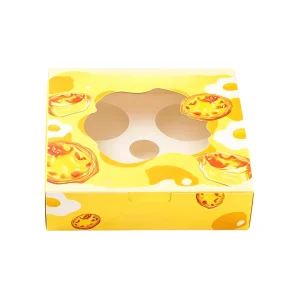
| Grease-Resistant Bleached Board | 280 gsm – 350 gsm | PFAS-Free Plant Oil Coating | Kit 8-12 oil resistance, zero edge-wicking, microwave safe | Pastry roll boxes, egg tart containers, oily bakery items |
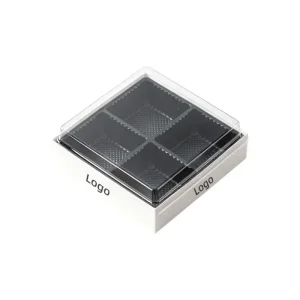
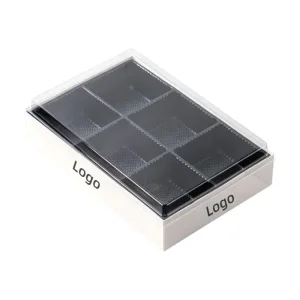
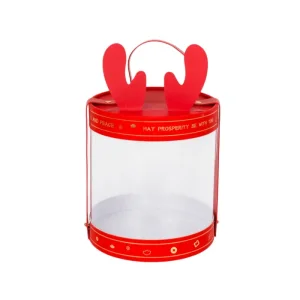
| Food-Grade PET / rPET Sheet | 0.25 mm – 0.45 mm | Anti-Fog / Anti-Static Surface treatment | Ultra-high optical clarity, snap-lock rigid integrity, 100% recyclable | Transparent window lids, dessert cups, multi-compartment trays |
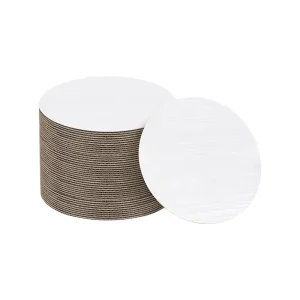
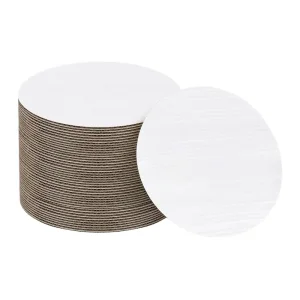
| High-Density Corrugated Base | E-Flute / F-Flute (1.5mm–2.0mm) | Kraft Linerboard / Clay Coat | Exceptional stacking compression strength, thermal insulation | Large celebration cake drums, heavy-duty shipping carry-boxes |
Custom ODM/OEM white-label production relies on high-precision aluminum tooling. CNC-machined mold cavities ensure exact cover-to-base dimensional locking (snap-fit tolerance within ±0.08mm). This eliminates cover pop-offs during transportation while maintaining smooth opening action for retail consumers.
Equipped with automated high-speed flatbed die-cutters, our manufacturing lines maintain zero fiber dust contamination on food-contact surfaces. Integrated high-resolution vision systems check fold scoring accuracy, registration alignment, and adhesive glue-line consistency in real-time at production speeds of up to 8,000 sheets per hour.
For global procurement officers, managing regulatory compliance risk is paramount. Our factory processes adhere strictly to international food-contact safety standards, ensuring smooth customs clearance across major global ports.
Direct food-contact certification for polyethylene phthalate polymers, confirming non-migration under high and low thermal exposure conditions.
Comprehensive heavy metal, overall migration (OM), and specific migration limit (SML) testing verified by independent SGS / TÜV Rheinland laboratories.
German Food and Feed Code certification guaranteeing complete sensory neutrality (organoleptic testing: zero flavor or odor transfer to delicate food products).
Full Chain of Custody (CoC) tracking certifying that paper pulp originates exclusively from responsibly managed, renewable commercial forests.
The continuous advancement of material science and digital technology is creating new opportunities for high-performance packaging. Our R&D engineering roadmap focuses on three primary technology tracks:
Developing ultra-thin, bio-derived nanocellulose coatings that deliver barrier performance equal to traditional synthetic plastic films while enabling 100% repulpability in standard municipal paper recovery systems.
Embedding low-profile, high-density invisible QR / dynamic barcodes within white-label structural graphics to enable full supply chain serialization, consumer engagement, and automated recycling sorting.
Scaling thermoforming processes capable of utilizing up to 80% food-grade Post-Consumer Recycled (rPET) resin derived from certified ocean-bound plastic recovery networks without compromising optical clarity.
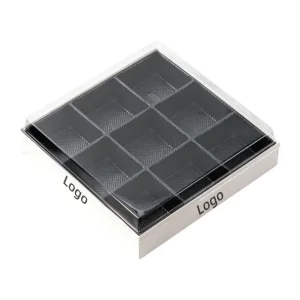
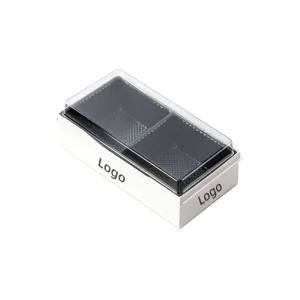
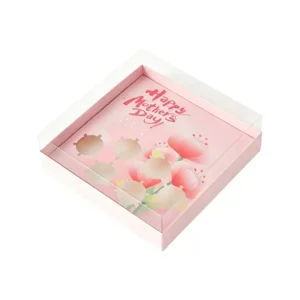
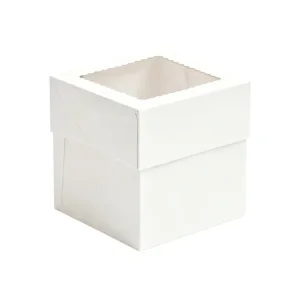
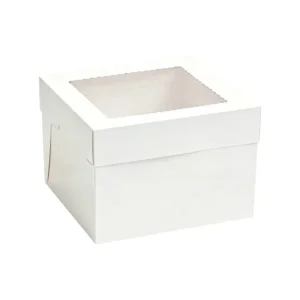
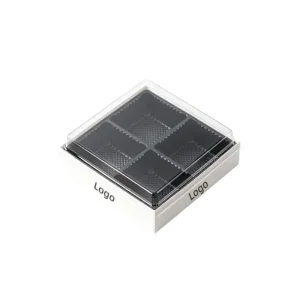
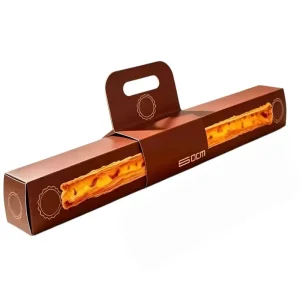
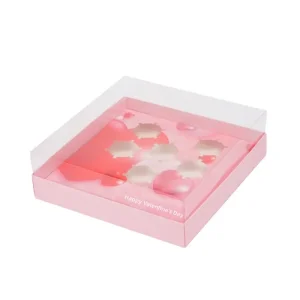
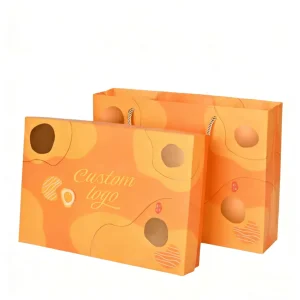
Extensive ODM/OEM structural choices tailored for high-volume retail takeaway, luxury gift bundles, and delicate dessert assortments.
Addressing technical, regulatory, and logistics queries for industrial procurement managers and packaging engineers.