High-precision ODM structural solutions engineered for structural strength, high-clarity merchandising, and food-grade safety compliance.
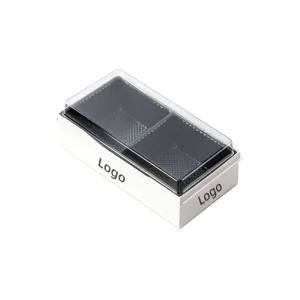
Navigating complex international supply chains requires a shift from transactional purchasing to strategic Original Design Manufacturing (ODM) integration.
Modern commercial buyers—ranging from multinational QSR (Quick Service Restaurant) chains to luxury FMCG brands—no longer evaluate cardboard packaging solely on unit purchasing price. High-volume procurement strategies analyze the total operational footprint: volumetric freight ratios, pallet density optimization, structural stacking collapse thresholds, and line-side assembly speed. Modern ODM factories utilize 3D structural CAD optimization to eliminate excessive tare weight while maintaining Edge Crush Test (ECT) integrity, reducing total logistics costs by up to 22%.
Global disruption events have underscored the necessity of robust material sourcing networks. Leading ODM card packaging manufacturers enforce strict chain-of-custody protocols for virgin wood pulp, recycled linerboard, and barrier coatings. Utilizing automated Enterprise Resource Planning (ERP) tracking, every batch of corrugated board or rigid folding boxboard (FBB) can be traced directly back to certified sustainable forestry operations (FSC/PEFC), guaranteeing raw material continuity under fluctuating market conditions.
High-throughput automated packing operations demand exact structural tolerances. Improperly creased card box blanks or inconsistent scoring depths cause line jams, machine downtime, and product damage. Professional ODM service providers design box structures specifically for high-speed mechanical erecters, automated tray-formers, and robotic loading cells. Micro-tolerance die-cutting guarantees smooth feeding, rapid folding, and flawless lid-lock engagement across high-speed packing channels.
Detailed cross-border industrial breakdown highlighting regulatory constraints, consumer behaviors, and structural packaging preferences across prime markets.
In the North American market (US and Canada), the rapid growth of direct-to-consumer (D2C) shipping and meal-kit subscriptions has elevated requirements for structural compression strength. Packaging must withstand harsh ISTA-6 transit testing protocols without deformation. Simultaneously, state-level legislation (such as California AB 1200 and Washington HB 1054) strictly bans per- and polyfluoroalkyl substances (PFAS) in food-contact fiber packaging. Industrial ODM service partners must supply non-fluorinated, water-based bio-dispersion barrier coatings that comply with FDA 21 CFR standards while maintaining oil and grease resistance (OGR) for heavy bakery, fried foods, and frozen food applications.
The European Union’s Packaging and Packaging Waste Regulation (PPWR) sets aggressive targets for recyclability, circularity, and plastic reduction. European enterprise importers prioritize mono-material fiber constructions that can easily be processed within municipal paper recycling streams without complex material separation. ODM factories catering to the EU market focus heavily on replacing traditional Polyethylene (PE) or Polyethylene Terephthalate (PET) plastic film linings with biodegradable aqueous dispersion barriers or window cutouts made from certified cellulose-based films (e.g., NatureFlex). Minimum post-consumer recycled (PCR) content requirements are built into structural specifications.
As the world’s leading manufacturing hub, Asia-Pacific—particularly industrial clusters in Guangdong, China—houses advanced paper-plastic thermoforming, high-speed offset printing, and automated die-cutting infrastructure. Regional APAC markets are characterized by extremely fast turnaround cycles for seasonal retail promotions (e.g., Mid-Autumn mooncake boxes, Lunar New Year gift sets). Enterprise ODM services in this region leverage concentrated supply chains to offer rapid structural prototyping (24-48 hours), proprietary die-cut mold manufacturing, and scalable mass production capabilities exceeding millions of units per month.
Rapid urbanization, expanding food service delivery networks, and high demand for luxury confectionery drive growth in the GCC (Gulf Cooperation Council) and Latin American regions. Buyers demand premium visual appeal—combining heavy-duty folding boxboard (350-400 GSM) with intricate hot-foil stamping, spot UV finishes, and embossed branding—alongside high thermal stability. ODM cardboard packaging factories engineer specialized insulated corrugated fluting and moisture-barrier coatings to ensure boxed pastries, dates, and hot food items withstand extreme ambient heat and humidity during transit.
Pioneering structural innovations, bio-coating formulations, and automated engineering technologies defining the future of paperboard packaging.
Traditional heavy-duty corrugated board (B and C-flute) is increasingly being replaced in retail packaging by engineered micro-flutes (E, F, N, and O-flute). Ranging in thickness from 0.4mm to 1.5mm, micro-flute board provides exceptional printability comparable to solid folding boxboard while offering superior structural rigidity and crush resistance. Factory engineering teams optimize kraft fiber orientation to achieve maximum Mullen Burst test scores while reducing overall board grammage (GSM) by 15-25%, resulting in significant material cost savings without structural compromise.
The elimination of traditional PE/PP plastic laminations has accelerated the development of water-based aqueous dispersion coatings. Applied inline during board conversion or print operations, these ultra-thin polymer dispersions create a continuous hydrophobic and lipophobic barrier over paper fibers. The resulting cardboard packaging achieves Cobb 60 moisture absorption values under 10 g/m² and Kit 8-12 grease resistance. Crucially, these bio-coatings break down cleanly during standard hydrapulping operations, achieving 100% repulpability in conventional paper mills.
Modern ODM manufacturing platforms integrate closed-loop spectrophotometry and automated vision inspection systems directly into offset and flexographic printing presses. Operating at speeds exceeding 15,000 sheets per hour, high-resolution cameras inspect 100% of printed sheet surfaces against digital master proofs. Color accuracy is maintained within strict Delta E < 2.0 thresholds across massive production runs. Automatic ejection systems immediately discard sheets showing registration shifts, ink hickeys, or die-cut misalignments.
| Paperboard Grade | Grammage Range (GSM) | Caliper / Thickness | Edge Crush Test (ECT) | Primary Target Application |
|---|---|---|---|---|
| FBB (Folding Boxboard) | 230 - 400 GSM | 0.30mm - 0.65mm | N/A (Rigid Folding) | Retail Bakery, Cosmetics, Confectionery |
| E-Flute Corrugated | 350 - 600 GSM | 1.10mm - 1.50mm | 38 - 45 lbs/in | Heavy Duty Cake Boxes, Takeout Trays |
| F-Flute Micro-Corrugated | 300 - 480 GSM | 0.75mm - 0.90mm | 30 - 36 lbs/in | Gourmet Cookie Tins, E-Commerce Mailers |
| Kraft Liner (Unbleached) | 250 - 450 GSM | 0.35mm - 0.70mm | 42 - 52 lbs/in | Eco-Friendly Artisan Bread, Industrial Parts |
Rigorous international certification, factory audit readiness, and seamless cross-border logistics management.
Cardboard packaging used for direct food contact must satisfy rigorous chemical migration limits. Professional ODM factories operate certified cleanroom converting environments under ISO 22000 and BRCGS Global Standards. Raw paperboard and ink formulations undergo periodic heavy metal testing, mineral oil saturated hydrocarbons (MOSH) and mineral oil aromatic hydrocarbons (MOAH) screening, and overall migration testing (OMT) verified by third-party testing bodies such as SGS, TÜV Rheinland, and Intertek.
Navigating ocean freight, import duties, customs tariffs, and port clearances can present operational hurdles for international buyers. Tier-1 ODM service platforms provide complete Delivered Duty Paid (DDP) door-to-door freight management. From container optimization at loading ports (Shantou, Shenzhen, Ningbo) to filing HS Code classifications (e.g., HS 4819.10 for corrugated boxes), dedicated logistics desks manage customs documentation, tariff compliance, and final-mile warehouse trucking seamlessly.
Enterprise procurement divisions enforce strict corporate social responsibility (CSR) supplier criteria. Manufacturing facilities undergo structured annual audits for social compliance (Sedex SMETA, BSCI), environmental management systems (ISO 14001), and quality management systems (ISO 9001). Transparency in labor practices, energy efficiency metrics, waste-paper recovery systems, and hazardous waste containment are fully documented to satisfy tier-1 retail brand standards.
From initial intent mining and structural CAD drawing to high-volume die-cutting and global shipment delivery.
Analysis of product dimensions, weight loads, grease barrier needs, and display environment.
Generation of custom die-lines, structural lock mechanisms, and material optimization models.
Precision digital knife-cutting of physical unprinted samples within 48 hours for fit testing.
CMM color profiling, digital proof matching, and CTP (Computer-to-Plate) offset printing prep.
Automated offset printing, barrier coating lamination, die-cutting, stripping, and gluing.
AQL 2.5 random sampling, drop testing, moisture checks, flat-pack palettization, and shipping.
Detailed technical answers to critical questions regarding ODM cardboard box production, material engineering, and bulk procurement.
Original Equipment Manufacturing (OEM) involves producing cardboard boxes strictly according to client-provided CAD drawings, die-lines, and artwork specs. Original Design Manufacturing (ODM) provides comprehensive end-to-end design engineering. Under an ODM agreement, the factory analyzes your physical product dimensions, shelf-life requirements, weight loads, and shipping stress to create proprietary die-line structures, select optimal paperboard grammage, engineer barrier coatings, and design freight-optimized packaging solutions from scratch.
To achieve 100% recyclability, our ODM engineering team utilizes water-based bio-dispersion coatings applied during board conversion. These dispersion coatings seal paper fibers against oil, grease, and liquid penetration (achieving Cobb values < 10 g/m²) while remaining completely repulpable in standard recycling mills. Plastic viewing windows (PET/PVC) can be replaced with transparent cellulose-based films derived from wood pulp (such as NatureFlex) or engineered open-window die-cut geometries that preserve visual display while maintaining structural integrity.
For existing factory die-lines with custom artwork printing, MOQs typically start at 3,000 to 5,000 units per SKU, depending on box size and paperboard specification. Fully custom ODM projects requiring dedicated die-cutting tooling, custom blister molds, or special paperboard laminations generally carry an MOQ of 10,000 units per design. Combined container orders featuring multiple SKU sizes can be grouped to meet baseline factory production efficiencies.
Pre-assembled rigid boxes carry immense volumetric tare, forcing importers to pay to transport empty air inside shipping containers. Knock-Down (KD) flat-pack engineering redesigns boxes into folding structures with auto-bottom lock bases, pop-up corners, or side-snap tabs. Boxes ship 100% flat on concentrated pallets, increasing container loading capacity by 30% to 50%. Store personnel or automated erecters quickly assemble flat boxes line-side in seconds.
Every manufacturing run undergoes rigorous Quality Assurance protocols aligned with ISO 9001 and AQL 2.5 standards. Key structural tests include Edge Crush Testing (ECT) for corrugated board, Mullen Burst Strength testing, Cobb 60 water absorption evaluation, rub resistance ink testing, and 24-hour climate chamber compression tests. Food packaging lines undergo automated vision camera inspections to ensure zero print defect or adhesive spillover prior to final packing.
Explore our full line of specialized wholesale containers, catering trays, seasonal gift boxes, and bakery display bases.