Explore our high-precision engineered packaging portfolio designed for wholesale suppliers, industrial bakeries, and international retail brands.
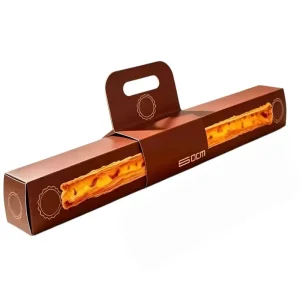
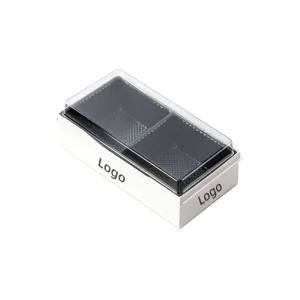
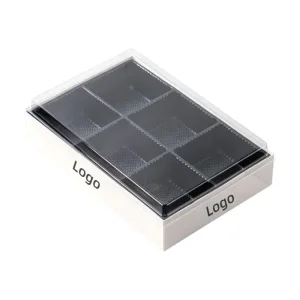
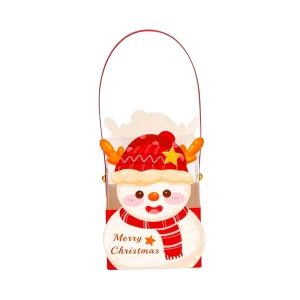
Analyzing semantic intent shifts, light-diffraction barrier technology, and strategic OEM/ODM procurement paradigms for high-growth global consumer sectors.
In the contemporary fast-moving consumer goods (FMCG) ecosystem, packaging has evolved from a passive containment medium into an active driver of brand equity, anti-counterfeiting verification, and shelf-impact differentiation. Among advanced flexible packaging substrates, holographic packaging bags represent the nexus of optical nano-engineering and multi-layer structural barrier defense. Once restricted to novelty cosmetics or high-security authentication labels, holographic films engineered via Original Design Manufacturing (ODM) processes are now fundamental to global enterprise strategies across food, cosmetics, electronics, apparel, and cannabis sectors.
From a technical standpoint, holographic flexible packaging leverages micro-embossed diffraction gratings etched directly onto substrate films—typically Biaxially-Oriented Polyethylene Terephthalate (BOPET), Biaxially-Oriented Polypropylene (BOPP), or Polyethylene (PE). When light strikes these nanometer-scale prismatic grooves, it splits into its spectral components through refraction and interference, producing dynamic, 3D rainbow visual effects without requiring metallic inks that compromise film recycling streams. However, integrating these optical structures into industrial-scale flexible pouches demands deep ODM expertise to balance visual brilliance with vital physical characteristics: Oxygen Transmission Rate (OTR), Water Vapor Transmission Rate (WVTR), seal integrity, and flex-crack resistance.
Global procurement metrics indicate a 14.8% compound annual growth rate (CAGR) for holographic flexible packaging solutions over the 2024–2030 forecast window. This surge is propelled by three macro market dynamics:
Deconstructing B2B buyer search intent: Structural material selection, pouch geometry customization, and mechanical barrier performance.
From standard 3-side seal flat sachets to heavy-duty bottom-gusset stand-up pouches (SUP), quad-seal side-gusset bags, and flat-bottom box pouches. ODM manufacturing supports integrated press-to-close child-resistant zippers, tear notches, degassing valves, and ergonomic die-cut handles.
Custom ODM material structures engineered for target product contents: High-barrier PET / Holographic VMPET / LLDPE multi-layer matrices provide supreme puncture resistance and barrier performance, preventing delamination during vacuum sealing or retort processes.
Select from rainbow seamless patterns, pillar of light, mosaic diffraction, custom enterprise logo hologram embossing, 3D kinetic illusion effects, and transparent holographic overlays designed for windowed food & bakery packages.
| Technical Parameter | Standard Metallized Film (VMPET) | Custom Seamless Holographic VMPET | Eco-Friendly Recyclable Mono-PE Holo |
|---|---|---|---|
| WVTR (g/m²/24hrs @ 38°C, 90% RH) | 1.0 - 1.5 | < 0.5 (Ultra-High Barrier) | 1.2 - 2.0 |
| OTR (cc/m²/24hrs @ 23°C, 0% RH) | 1.5 - 2.5 | < 0.8 (Precision Co-Ex) | 3.0 - 5.0 |
| Optical Effect Integrity | Static Metallic Metallic Gloss | Dynamic 3D Rainbow Diffraction | Clear / Semi-Opaque Holographic refraction |
| Seal Strength (N/15mm) | > 25 N | > 40 N (Reinforced LLDPE) | > 30 N (Direct PE Fusion) |
| Recyclability Code | 7 (Mixed Laminate) | 7 (Custom Structural Laminate) | 4 (LDPE Monomaterial Stream) |
How our automated ODM production line transforms raw polymers into high-performance optical barrier packaging.
Precision execution in ODM holographic pouch manufacturing requires a tightly synchronized four-stage engineering workflow. Unlike standard flexographic printing plants, manufacturing optics-grade flexible packaging involves sub-micron electron-beam lithography, high-vacuum optical metallization, and solventless lamination processes.
Utilizing dot-matrix laser etching and 3D digital head technology to write nano-diffraction gratings onto photoresist nickel master plates at resolutions exceeding 254,000 DPI.
Thermal evaporation of 99.99% pure aluminum in ultra-high vacuum chambers onto micro-embossed PET film, forming a reflective optical layer only 30 to 50 nanometers thick.
Combining the metallized holographic PET film with structural barrier polyolefins using food-grade, 100% solvent-free polyurethane adhesives to eliminate volatile organic compounds (VOCs).
High-speed pouch conversion featuring inline optical inspection cameras that continuously monitor seal integrity, print register alignment, and diffraction uniformity at 300 meters/min.
Bridging optical brilliance with circular economy imperatives and supply chain traceability.
Historical criticisms of holographic packaging centered on the difficulty of recycling multi-material laminates containing non-degradable metallic elements. To resolve this industrial bottleneck, our engineering team has developed two breakthrough eco-friendly ODM material platforms:
Modern ODM holographic packaging serves as a physical-to-digital gateway. By overprinting microscopic, high-density QR codes, NFC (Near Field Communication) antennae, or serialized data matrices directly onto non-diffractive optical windows, global brands achieve complete end-to-end track-and-trace capabilities from factory floor to end consumer.
Rigorous quality assurance standards for international food contact, pharmaceuticals, and retail logistics.
All materials, inks, adhesives, and slip agents used in our manufacturing process strictly conform to US FDA 21 CFR 177.1520, European Commission Regulation (EU) No 10/2011, and Japan Packaging Institute safety parameters for direct food contact.
Our state-of-the-art production cleanrooms operate under BRCGS Packaging Materials Global Standard Grade A Certification and ISO 9001:2015 quality management systems, guaranteeing batch-to-batch structural integrity.
We provide comprehensive export orchestration including FOB, CIF, DDP, and DDU shipping terms. Intelligent flat-pack bundling and nesting design reduces container freight volume by up to 35%, slashing carbon footprint and transit costs.
In-depth technical answers addressing procurement, minimum order quantities, structural engineering, and lead times.
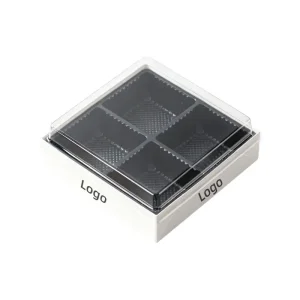
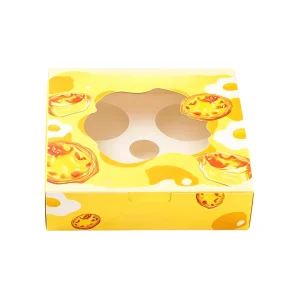
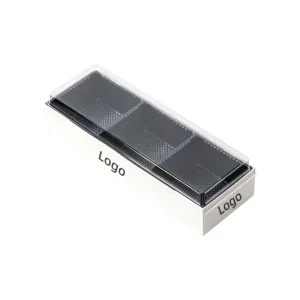
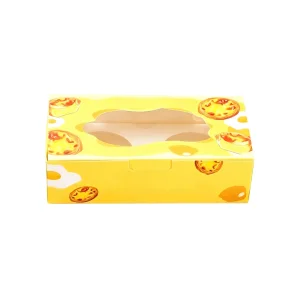
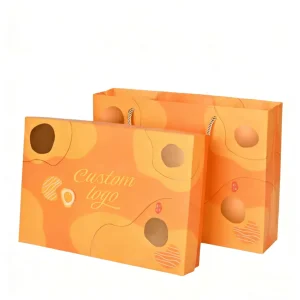
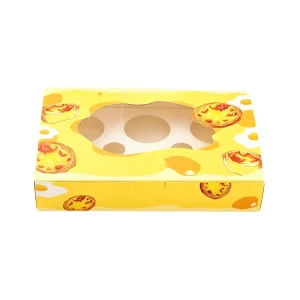
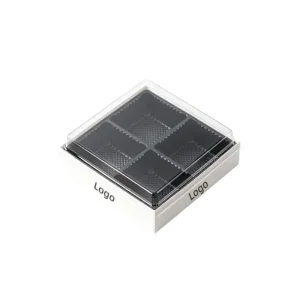
Explore our complete manufacturing lines designed for catering trays, specialized treat packs, and custom bakery presentation.
Partner directly with an industry-leading packaging manufacturer. Send us your physical dimensions, target barrier specifications, and volume requirements to receive an engineered dieline proof and formal quotation within 24 hours.
Request Engineering Consultation & Samples