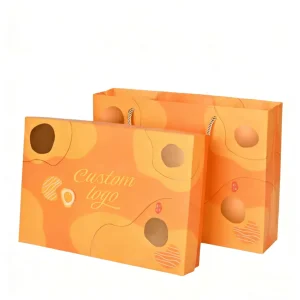
Precision-engineered paperboard structures integrated with high-clarity windows, grease barriers, and structural load containment.
Navigating global regulatory shifts from single-use plastics and PFAS chemistry to recyclable aqueous barrier technologies.
The international commercial packaging domain is undergoing a profound structural metamorphosis. Driven by stringent environmental directives—such as the European Union’s Packaging and Packaging Waste Regulation (PPWR) and extended producer responsibility (EPR) mandates across North America—the global demand for ODM waterproof cardboard packaging has expanded exponentially. Modern supply chains can no longer rely on legacy polyethylene (PE) laminations or wax-coated corrugated boxes, which pose severe kerbside recycling bottlenecks and fail municipal circular economy audits.
Historically, water resistance in paperboard was achieved via per- and polyfluoroalkyl substances (PFAS) or heavy paraffin wax application. However, medical and ecological consensus regarding PFAS persistence has accelerated global legislative bans. High-performance Original Design Manufacturers (ODM) are now required to engineer bio-based dispersion barrier coatings, water-borne acrylic emulsions, and nanocellulose matrix treatments. These advancements deliver water repellency (Cobb60 values < 15 g/m²) and grease containment (Kit Rating > 10) while preserving 100% repulpability in standard paper recycling mills.
Engineered for extreme temperature transitions (-40°C blast freezing to +80°C hot-fill) without moisture-induced delamination or sidewall compression collapse.
Utilizing aqueous dispersion polymers that form a continuous nano-thick protective barrier, blocking moisture vapor ingress while maintaining food safety clearance.
Fully compatible with conventional hydrapulpers. Coatings easily detach from wood fibers during agitation, allowing 98%+ fiber yield recovery.
Comparative technical benchmarks evaluating mechanical performance under high relative humidity (RH 90%) and direct water immersion.
The integrity of waterproof packaging rests upon balancing hydrophobic chemical resistance with structural load dynamics. Fiberboard is inherently hydrophilic; hydroxyl groups within cellulose fibers readily absorb ambient moisture, causing hydrogen bonds to relax. This degradation leads to up to a 60% reduction in Box Compression Test (BCT) strength. Professional ODM factories overcome this vulnerability through precision substrate selection—utilizing Unbleached Kraft Boxboard (UKB) or Solid Bleached Sulfate (SBS)—paired with multi-layer barrier chemistry.
| Barrier Technology Type | Cobb60 Water Absorption | Kit Test Grease Score | WVTR (g/m²/24h @ 38°C, 90% RH) | Thermal Operating Range | Repulpability & Recycling Compliance |
|---|---|---|---|---|---|
| Aqueous Dispersion Coating | 8 - 14 g/m² | Level 10 - 12 | 45 - 65 | -30°C to +120°C | 100% Repulpable (PTS Method RH: 021/97) |
| Extruded Bio-PE / PLA Layer | 4 - 8 g/m² | Level 12 | 20 - 35 | -20°C to +85°C | Compostable (EN 13432 certified) |
| Nanocellulose Matrix (NCC/CNF) | 12 - 18 g/m² | Level 8 - 10 | 60 - 90 | -40°C to +150°C | 100% Bio-based & Home Compostable |
| Legacy Paraffin Wax Dip | 15 - 25 g/m² | Level 6 - 8 | 80 - 120 | -10°C to +40°C | Non-recyclable (Landfill / Incineration only) |
In high-humidity applications such as cold-chain seafood transport or tropical QSR delivery, the Water Vapor Transmission Rate (WVTR) dictates shelf-life limits. By applying automated micro-thin dispersion coatings directly on high-speed coater-finishers, ODM facilities maintain exact pinhole-free film continuity while minimizing structural weight.
From CAD structural prototyping and FEA stress testing to ultra-precise automated die-cutting and barrier integrity assurance.
High-speed gravure and blade coater systems applying uniform dispersion chemistry across raw fiberboard at speeds exceeding 300m/min.
Computer-controlled die dies with micro-ruled creasing channels designed to prevent fiber micro-fracturing along folding lines, keeping moisture barriers intact.
Inline high-resolution cameras scan 100% of manufactured blanks for coating voids, print inconsistencies, or pinhole defects at production speeds.
Elimination of all trace fluoropolymers across 100% of standard production lines. Full implementation of third-generation water-based dispersion barriers.
Integrating plant-derived MFC matrices to achieve grease levels matching synthetic plastics while enabling 100% home-compostable packaging validation.
Development of bio-printed indicators embedded into the cardboard structure to monitor internal container moisture and ambient humidity in real-time during transit.
Tailoring moisture protection to diverse industrial workflows, from international seafood exporters to high-volume fast food networks.
Replaces expandable polystyrene (EPS) boxes for ice-packed fish, berries, and hydroponic produce. Provides full water-submersion resistance during long-haul sea freight.
Prevents oil seepage and condensation buildup in hot bakery items, fried foods, and catering platters, maintaining structural crispness and brand aesthetics.
Heavy-duty multi-wall hydrophobic fiberboard containers optimized for moisture-sensitive bulk powders, agricultural chemicals, and resin granules.
Rigorous quality control frameworks assuring international food contact safety and environmental compliance across key import jurisdictions.
Operating as an enterprise ODM packaging partner requires absolute compliance with target-market health and sanitation laws. Waterproof cardboard packaging intended for direct or indirect food contact undergoes strict toxicological screening to guarantee zero migration of heavy metals, volatile organic compounds (VOCs), or fluorinated residues into food products.
U.S. Food and Drug Administration clearance for paper and paperboard components in contact with aqueous and fatty foods.
European framework certification assuring materials do not transfer constituents to food in quantities that endanger human health.
German Federal Institute for Risk Assessment standard for food-grade paperboard, validating low overall migration limits.
Forest Stewardship Council certification ensuring 100% of raw virgin fibers are harvested from responsibly managed forests.
Analyzing performance outcomes across distinct regional climate zones and distribution environments.
Challenge: Severe humidity (RH 85% - 95%) caused standard pastry boxes to soften, resulting in a 12% box collapse rate during last-mile delivery.
ODM Solution: Deployed aqueous-dispersion SBS cardboard with sealed hydrophobic corner folds. Replaced standard glue with water-resistant EVA hot-melt adhesive.
Outcome: Box collapse rates dropped to 0%, while packaging remained fully repulpable.
Challenge: EPS foam container bans in coastal states left salmon processors without a viable moisture-proof export box.
ODM Solution: Developed a double-wall heavy-duty corrugated board coated with bio-PE lining, engineered to hold direct ice water contact for up to 72 hours.
Outcome: 100% compliance with local plastic bans and a 40% reduction in inbound freight storage volume.
Challenge: Grease bleeding through takeaway containers caused customer complaints and failed municipal recycling collection audits.
ODM Solution: Designed custom printed boxes using PFAS-free Kit Level 12 greaseproof board with integrated moisture vapor vents.
Outcome: Reached 100% compliance with EU PPWR guidelines and enhanced brand presentation.
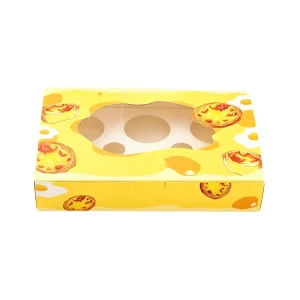
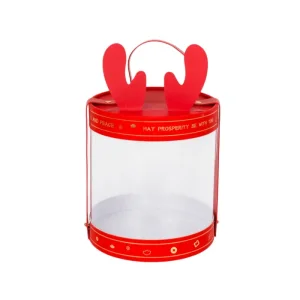
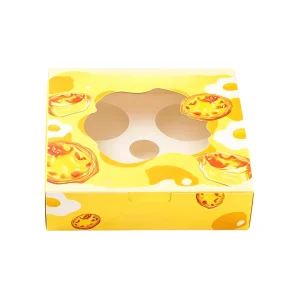
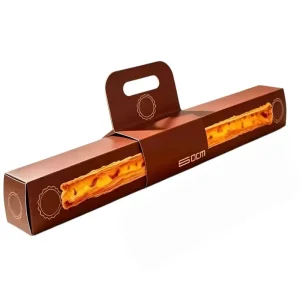
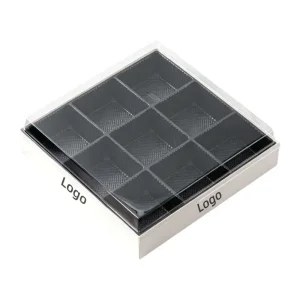
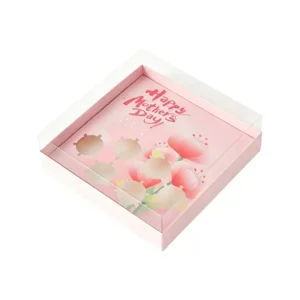
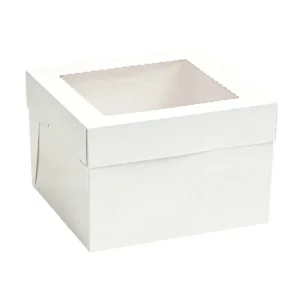
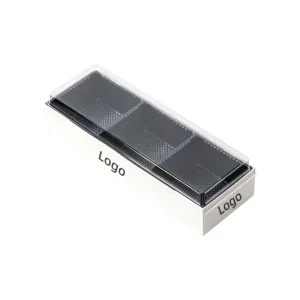
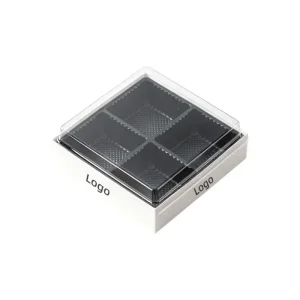
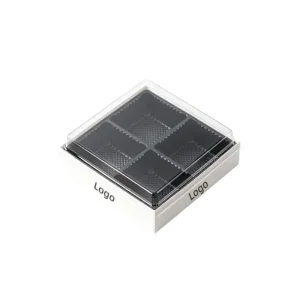
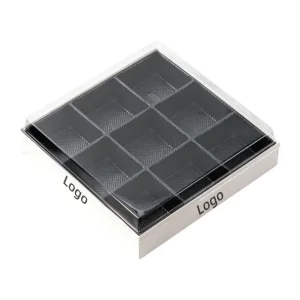
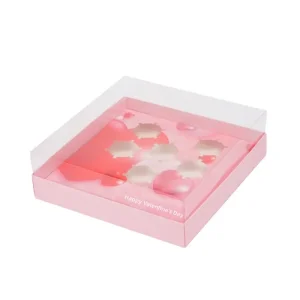
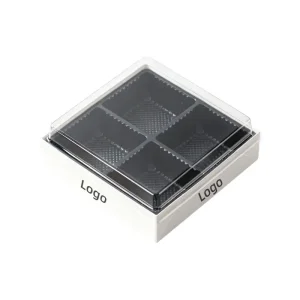
High-capacity bakery, dessert, and takeaway packaging units featuring custom structural branding options.
Addressing engineering inquiries regarding material compliance, barrier performance metrics, structural testing, and custom ODM tooling schedules.
Water resistance is primarily quantified using the TAPPI T 441 Cobb Water Absorption Test, which measures the mass of water absorbed by 100 cm² of paperboard over a specified timeframe (typically 60 seconds, denoted as Cobb60). Standard uncoated cardboard displays Cobb values exceeding 100 g/m², whereas high-performance ODM waterproof packaging maintains Cobb60 values under 15 g/m².
Additionally, structural performance is verified via the Edge Wise Crush Test (ECT) and Box Compression Test (BCT) following 24 to 48 hours of exposure to 90% relative humidity environments.
Yes. Unlike legacy polyethylene (PE) laminates that require specialized industrial separation equipment, modern water-based dispersion barriers are engineered to fragment during standard hydraulic pulping (PTS Method RH: 021/97). The microscopic polymer particles separate cleanly from wood fibers and are filtered out during screen washing, enabling over 98% fiber recovery rate for high-grade recycled paperboard manufacturing.
ODM facilities utilize bio-based polymer emulsions, bio-waxes derived from plant oil derivatives, and modified starch/cellulose micro-networks. These formulations create a dense surface lattice that resists non-polar oil molecules, achieving 3M Kit Test ratings from Level 8 up to Level 12 without perfluorinated compounds.
Standard structural die-cut samples and digital 3D CAD proofs are provided within 3 to 5 business days. Once die-lines and barrier specifications are signed off, custom steel-rule die fabrication takes 7 to 10 days. Mass production lead times range between 15 and 25 days depending on printing finishes (offset spot UV, foil stamping). Minimum order quantities generally start at 3,000 to 5,000 units for standard structures and 10,000 units for fully bespoke die-cut packaging shapes.
Yes. Polymer-modified aqueous coatings remain flexible down to -40°C without micro-cracking, preserving moisture barrier integrity during deep freeze storage. For hot-fill or microwave applications, specialized heat-tolerant formulations withstand temperatures up to +120°C without softening or transferring odors into food products.