Engineered with food-grade substrates, high optical clarity, and precision snap-fit lids for commercial distribution.
Analyzing structural demand shifts, shelf-life chemistry, and automated packaging integration across North American, European, and Asia-Pacific markets.
The global commercial bakery landscape is undergoing a paradigm shift. Rising consumer demand for artisanal sourdoughs, brioche loaves, gluten-free sandwich breads, and specialty pastry loaves has forced commercial bakeries, regional distributors, and retail supermarket chains to re-evaluate their primary packaging strategies. Bread and loaf packaging is no longer merely a passive containment layer; it is an active variable in preserving crumb moisture balance, preventing staling, mitigating mold formation, and enhancing point-of-sale brand equity.
According to industrial packaging intelligence, the market for rigid and semi-rigid bread and loaf containers is projected to expand significantly over the next decade. Driven by the expansion of last-mile e-commerce delivery platforms, meal-prep catering services, and grab-and-go convenience retail, wholesale buyers require containers that offer superior stackability, tamper-evidence, and structural rigidity without inflating dimensional shipping weights.
Core SEO Insight & Technical ROI: In industrial automated packaging lines, a 0.5% defect rate in lid snap-locks or structural box rigidity can cause catastrophic downtime and food waste. Our OEM/ODM container solutions leverage precision thermoforming and automated die-cutting to maintain a micro-tolerance fit across multi-thousand unit production runs.
Tailored structural configurations designed to meet specific moisture, transport, and display parameters across diverse bakery channels.
Artisanal crusty breads require packaging that balances moisture retention with crispness protection. High-clarity PET clear-lid containers with engineered side-ventilation micro-perforations prevent condensation build-up while keeping the crust firm and optically crisp on supermarket shelves.
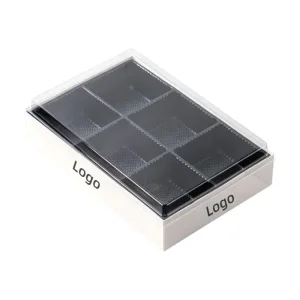
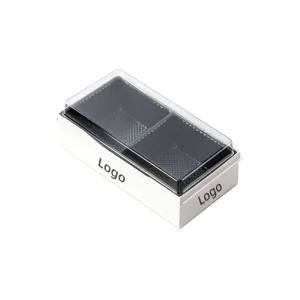
Enriched, soft breads like Japanese milk bread and French brioche demand structural anti-crush protection. Paper-plastic composite tray containers with rigid sidewalls shield delicate crumbs during transport, preventing structural deformation during pallet loading and courier transit.
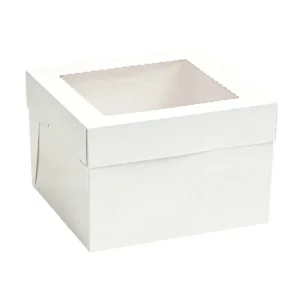
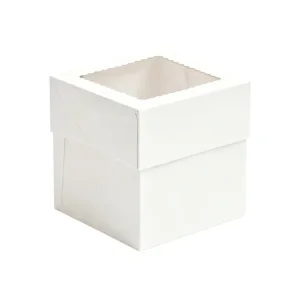
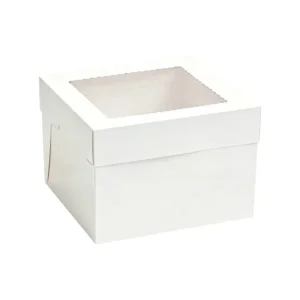
Supermarket aisles rely on rapid scan-and-go efficiency. Clear window boxes and transparent dome containers feature uniform flat tops for automated barcode labeling, anti-fog inner coatings, and perimeter snap-locks that verify tamper resistance for retail customers.
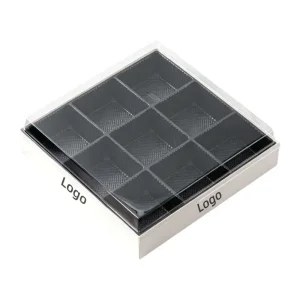
Volume caterers and institutional kitchens utilize oversized, multi-compartment catering loaf and tray boxes. These flat-packed, quick-assembly containers streamline prep, optimize walk-in cooler storage, and stack securely during high-volume event delivery.
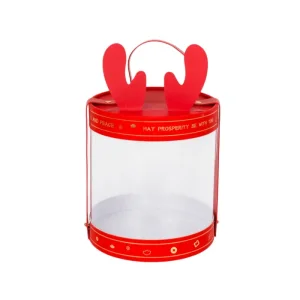
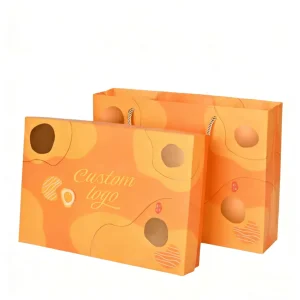
Holiday Panettone, Stollen, and gift-packaged yeast breads demand luxury aesthetics. Custom hot-foil stamped paperboard bases paired with gold-embossed sleeves or ribbon handles transform standard loaf boxes into high-margin premium seasonal gifts.
On-demand delivery apps present aggressive vibration and impact challenges. High-friction bottom linings and interlocking stackable lids prevent container displacement and lid separation during motorcycle and vehicle transport.
Pioneering sustainable barrier chemistry, intelligent freshness monitoring, and low-carbon substrate manufacturing.
The future of commercial bread container manufacturing is defined by three main vectors: material circularity, intelligent barrier performance, and freight optimization engineering. As regulatory frameworks such as the European Single-Use Plastics Directive (SUPD) and extended producer responsibility (EPR) mandates take effect globally, wholesale buyers must migrate toward bio-based or mono-material recyclable configurations.
| Development Phase | Material & Structural Focus | Technical Characteristics | Commercial Advantage |
|---|---|---|---|
| Phase 1: Present Standard | Virgin Paperboard + High-Clarity PET Lids | 250–400 gsm grease-resistant food-grade board paired with 0.25–0.45 mm crystal PET. | Immediate compliance with FDA/LFGB, high optics, structural stability, low production cost. |
| Phase 2: Transition (2025–2026) | rPET (Post-Consumer Recycled) & Aqueous Barrier Coatings | Up to 100% rPET resin utilization; elimination of traditional PE/PLA laminates via water-based dispersion coatings. | Kerbside recyclable paper waste streams, compliance with EU plastics taxes, reduced carbon footprint. |
| Phase 3: Next-Gen Future | Biodegradable PHA/PLA Blends & Micro-Perforated MAP | Bio-based marine-degradable polymers integrated with micro-perforated atmospheric gas exchange control. | Extends mold-free loaf shelf life by 30–50% without chemical preservatives; 100% industrial compostable. |
| Phase 4: Smart Integration | Time-Temperature & Moisture Indicator Smart Labels | Printed bio-sensor inks that change optical color based on internal humidity and starch retrogradation levels. | Eliminates premature retail waste, verifies supply chain integrity, maximizes consumer trust. |
Unlocking cost efficiencies through vertical integration, regional industrial clusters, and precision automated manufacturing.
Located in Anbu Town, Chaozhou—China's premier packaging production hub—our facility benefits from immediate access to raw board mills, polymer sheet extruders, custom tooling die-makers, and printing ink formulators within a 15-kilometer radius.
Operating over 12 high-speed Mengxing thermoformers and Zhongbo automatic die-cutters under one roof. Automated inline inspection systems scan every unit for dimensional accuracy, eliminating manual error and lowering piece costs.
Our structural engineers specialize in flat-pack and stackable nesting geometries. By shipping containers in un-assembled or tightly nested formats, we reduce cubic sea freight volume by up to 35%, significantly lowering landed cost-per-unit for overseas importers.
Rigorous food-contact safety standards, full batch traceability, and comprehensive export documentation for seamless customs clearance.
Navigating global regulatory mandates for food-contact packaging requires absolute material transparency and standardized manufacturing protocols. All bread and loaf containers produced at our 10,000m² Chaozhou factory undergo strict quality assurance checks to comply with destination-market food safety legislation.
Full compliance with FDA 21 CFR 177.1630 for PET polymers, EU Regulation No. 10/2011 for plastic food contact materials, German LFGB food testing requirements, and BRCGS Global Standard for Packaging Materials.
Every shipment is backed by lot-numbered raw material declarations, heavy metal analysis, overall migration testing (OMT), and sensory odor impact reports to protect your bakery's sensory reputation.
We provide full DDP, FOB, or CIF export documentation including Commercial Invoices, Packing Lists, Bills of Lading, Certificates of Origin (Form E/CO), and customized HS Code classification guidance.
Clear, direct answers to common questions about customization options, order minimums, barrier properties, and logistics.
For existing structural moulds with custom-printed paper bases or branded sleeves, our standard MOQ starts at 3,000 to 5,000 pieces per SKU. For fully custom tooling (such as a unique thermoformed PET shape or die-cut dimension), the MOQ is 10,000 pieces to cover dedicated mould tooling setup costs. Mixed-SKU orders can be combined within a 20ft or 40HQ container load.
We offer custom-engineered moisture management options. For crusty sourdoughs, we utilize anti-fog clear PET lids with engineered side ventilation vents that release steam while preventing moisture buildup. For soft loaves, our grease-resistant coated paperboard bases absorb surface fats without compromising moisture barrier performance.
Yes. All raw materials—including virgin paperboard (250–400 gsm), kraft board, PET/rPET resin sheet (0.25–0.45 mm), and water-based soy printing inks—are certified 100% food-safe. Batch-specific SGS or TÜV test reports and FDA/LFGB food contact compliance declarations are provided with every shipment.
Existing-structure samples dispatch within 3 to 5 business days. Custom printed pre-production prototypes take 7 to 10 working days, including digital plate production. Mass production typically requires 15 to 25 days following artwork approval, depending on total volume and seasonal demand cycles.
Shipping pre-assembled packaging creates significant volumetric inefficiency. Our knock-down paper-plastic packaging and nestable PET dome designs lay completely flat during transport. This structural design increases container capacity by up to 35%, substantially reducing freight costs per unit for ocean shipments.
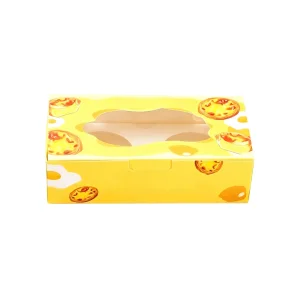
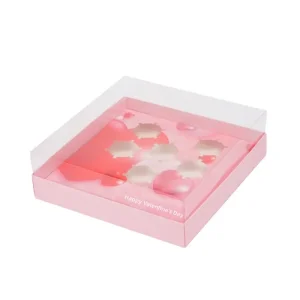
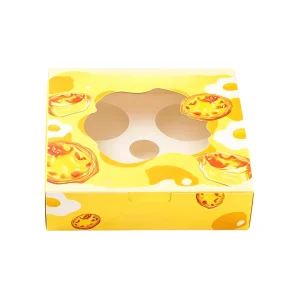
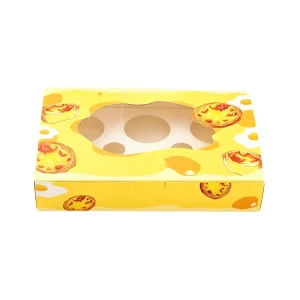
Explore our additional OEM/ODM packaging options designed for catering platters, egg tarts, cupcakes, and seasonal gift sets.