High-rigidity food-grade containers, precision die-cut trays, and custom printed cylindrical packaging engineered for global distribution chains.
In-depth intelligence on structural market shifts, ESG regulatory mandates, and supply chain re-engineering across B2B wholesale markets.
The global industrial and retail cardboard paper tube packaging market is undergoing a structural renaissance driven by stringent decarbonization directives, plastic tax legislation (such as the EU Single-Use Plastics Directive and PPWR framework), and escalating consumer preference for structural circularity. Historically confined to core industrial winder applications, high-density paperboard tubes have evolved into primary, secondary, and tertiary luxury packaging assets across FMCG, cosmetics, pharmaceuticals, and high-end gastronomy.
Industrial demand data indicates that the global paper tube packaging market is expanding at a compound annual growth rate (CAGR) of 6.4%, with projected valuations surpassing $13.8 Billion by 2030. Wholesale paper tube packaging manufacturers who operate integrated OEM/ODM facilities are capturing substantial market share from traditional plastic injection molders by introducing ultra-high radial crush resistance, moisture barrier bio-coatings, and automated precision spiraling technologies.
Understanding structural integrity, ply-adhesion algorithms, and barrier layer integration in professional tube manufacturing.
Spiral winding continuously feeds multiple plies of virgin kraft paper or recycled testliner over a fixed steel mandrel at precise winding angles (θ = 45° to 65°). Bonded with high-tack PVA adhesive, this process achieves superior axial consistency and tensile load capability, vital for high-speed automated filling lines.
Convolute winding wraps a single wide web of paperboard perpendicular to the tube axis. Ideal for luxury telescopes, cosmetic containers, and push-up deodorant tubes, convolute rolling delivers flawless, seamless exterior walls without visible spiral seam lines, optimizing surface print registration.
To support direct food contact (FDA / LFGB compliance) and volatile lipid containment, custom paper tubes integrate interior barrier liners. Options include micro-thin aluminum foil (0.006mm), greaseproof parchment, PLA bioplastics, or aqueous dispersion coatings that block water vapor transmission (WVTR) and oxygen ingress (OTR).
| Engineering Parameter | Standard Commercial Grade | High-Density Food Grade | Luxury / Cosmetic Grade |
|---|---|---|---|
| Board Base Weight (GSM) | 180 – 300 GSM Kraft/Testliner | 250 – 400 GSM Virgin White/Kraft | 300 – 450 GSM Specialty Art Paper |
| Wall Thickness Range | 1.0 mm – 3.0 mm | 1.5 mm – 5.0 mm | 1.2 mm – 4.0 mm (Flush Fit) |
| Radial Crush Strength | 40 – 70 PSI | 80 – 140 PSI | 60 – 100 PSI |
| Inner Lining Coating | Uncoated / Glassine Paper | Aqueous Dispersion / Alu Foil / PE | Wax / Bio-Polymer / Poly-Lined |
| Closure Interface Compatibility | Plastic Caps, Curl Ends | Tinplate Lids, Rolled Edges | Friction-Fit Paper Discs, Wood Caps |
Tailored structural designs deployed across high-growth international commercial sectors.
Rigid paper composite cans designed for loose-leaf tea, artisanal coffee beans, powdered spices, confectioneries, and spirits. Equipped with hermetically sealed tinplate bottoms and foil-lined inner walls, these tubes maintain nitrogen flush environments for extended product shelf life.
Zero-plastic packaging solutions engineered for solid deodorants, lip balms, body butter, and luxury skincare serums. Featuring oil-resistant inner parchment, smooth push-disc bases, and tight friction-fit telescoping caps, these containers satisfy global clean-beauty brand standards.
Heavy-duty spiral wound mailing tubes produced for architectural blueprints, fine art prints, flexible film textiles, and industrial webs. Engineered with heavy wall thicknesses (up to 8mm) to withstand severe transit loads and end-cap insertion pressure.
From raw board conversion to multi-color Heidelberg offset printing and automated lid assembly.
Engineering accurate inner diameter (ID), outer diameter (OD), and telescoping length tolerances (±0.2mm). 3D structural rendering and physical sample cutting within 48 hours for fit verification.
Executing high-definition Heidelberg CMYK offset and Pantone spot-color printing. Advanced decorative options include hot foil stamping (gold/silver/holographic), tactile embossing, soft-touch matte lamination, and selective spot UV.
Multi-ply paperboard feeding through continuous glue baths onto precision mandrel shafts. Servo-driven multi-knife recutters automatically trim burr-free tube edges at high lineal speeds.
Hydraulic edge-curling machines form smooth top lip rings and recessed bottoms. 100% inline camera systems perform automated checks for dimensional accuracy, color drift (Delta E < 1.5), and seam alignment prior to clean packaging.
Detailed answers regarding minimum order quantities, tooling fees, food safety certifications, and logistics.
Our standard minimum order quantity (MOQ) for custom-printed paper tubes with bespoke dimensions is typically 3,000 to 5,000 units per SKU, depending on tube diameter and structural complexity. For stock dimensions utilizing custom printed outer paper sleeves or labels, low-MOQ runs starting at 1,000 units are available to support initial product rollouts.
Yes. We manufacture food-contact tubes within certified clean environments using FSC-certified virgin paperboard, food-grade soy-based printing inks, and solvent-free PVA adhesives. We provide full compliance documentation, including FDA 21 CFR 176.170, EU 1935/2004, and LFGB test reports per batch upon request.
Spiral wound paper tubes offer comparable radial structural strength to rigid plastic containers at 15% to 30% lower material unit costs. Furthermore, because paper tubes are significantly lighter, international shipping freight costs are reduced. We also offer nesting telescoping designs that optimize ocean container volume utilization.
We supply a wide spectrum of closures tailored to product requirements: 100% paperboard rolled-edge caps (biodegradable), friction-fit wooden/cork plugs, embossed tinplate lids, food-grade plastic plugs, and flush-fitting inner paper disc covers.
Structural unprinted CAD prototypes take 3 to 5 working days. Printed pre-production samples require 7 to 10 working days after artwork sign-off. Mass production is completed within 15 to 22 working days, supported by automated high-speed winding lines.
Yes. Tubes constructed with 100% paperboard components or those utilizing our aqueous dispersion barrier coatings are kerbside recyclable. For tubes with removable metal or plastic caps, users can easily separate the components for recycling according to local waste guidelines.
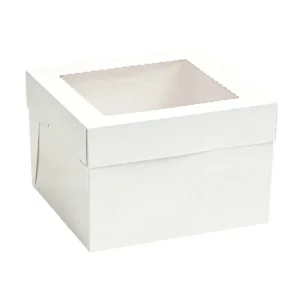
High-strength corrugated bases, clear-lid display containers, and specialized bakery presentation boxes.