High-precision manufactured containers engineered for multi-location supermarket bakeries, food service chains, and commercial retail brands.
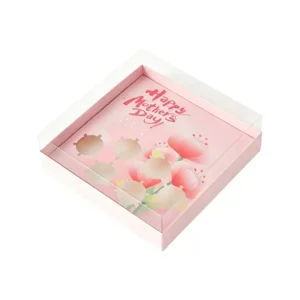
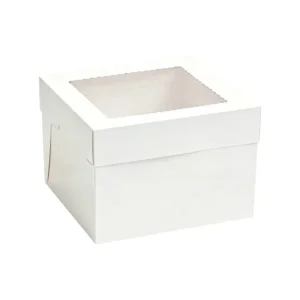
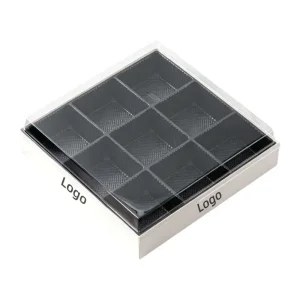
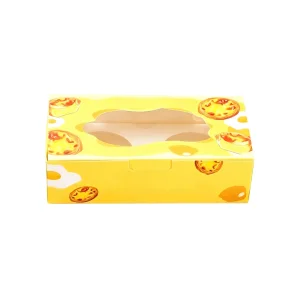
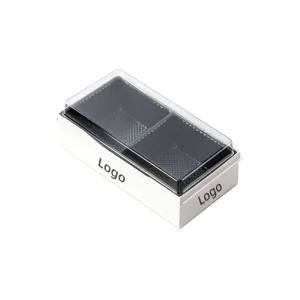
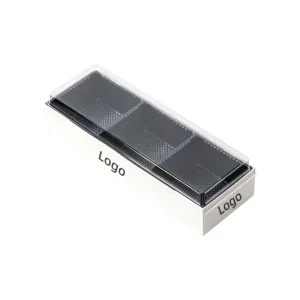
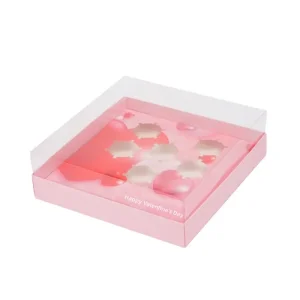
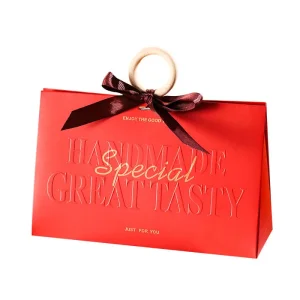
Modern multi-location bakery chains, supermarket deli networks, and quick-service restaurant (QSR) franchises face a critical operational bottleneck: packaging fragmentation across regional hubs. Establishing unified packaging standardization standards across wholesale manufacturing channels is no longer merely a branding preference—it is a core driver of supply chain resilience, operational margin protection, and brand equity enforcement.
As global enterprise buyers shift toward centralized procurement models, working with certified wholesale chain store standardization manufacturers and factories becomes essential. A decentralized supply chain using multiple regional vendors results in mismatched color tolerances (delta E variances > 3.0), structural inconsistencies causing lid pops during last-mile delivery, erratic food-contact compliance declarations, and severe warehouse inefficiency due to non-stackable footprint dimensions.
Achieving true industrial standardization across thousands of retail storefronts requires rigid technical criteria engineered directly into the die-cutting and thermoforming process.
In high-volume commercial bakeries, automated denesting machines require container bases and lids with caliper variations under ±0.015mm. Our Chaozhou production lines utilize automated Mengxing thermoforming and Zhongbo high-speed die-cutters to maintain exact perimeter geometry, preventing jam-ups on customer packing lines.
Brand equity is damaged when a customer sees varying shades of brand colors across stores. We enforce X-Rite Spectrophotometer inline color monitoring on all Heidelberg offset presses, ensuring Pantone spot-colors and CMYK graphics adhere to a Delta E standard under 1.5 across both paperboard bases and printed clear PET covers.
For clear PET container lids and paper tray combinations, key parameters include closure retention force and lid removal ease. Standardized male-female snap buttons are molded with structural ribbing to withstand third-party delivery handling while avoiding accidental popping when stacked up to 5 units high.
Understanding why leading enterprise brands centralize their wholesale packaging manufacturing in Chaozhou, Guangdong, China.
Chaozhou (specifically Anbu Town) serves as China's premier specialized food packaging production hub. Chaozhou Weiting Packaging Products Co., Ltd. (WTPack) operates within this integrated industrial infrastructure, offering global procurement directors unparalleled cost efficiencies and technical agility:
By controlling an in-house CNC mold workshop for blister forming and steel-rule die-cut tools, WTPack eliminates third-party mold markup fees and cuts new custom container prototype lead times down to 7–10 days.
Direct relationships with top-tier paper mills (250–400gsm virgin kraft board, food-grade white SBS board) and virgin PET sheet extruders provide volume pricing stability during volatile global raw material fluctuations.
Located close to Shantou and Shenzhen ports, WTPack optimizes container loading configurations (FOB, CIF, DDP) using custom carton nesting layouts that increase cubic meter utility by up to 35%.
Standardization across international boundaries requires strict compliance with regional food contact laws, safety standards, and environmental directives.
Global enterprise food service buyers cannot risk store shutdowns or customs seizures caused by non-compliant packaging materials. OEM/ODM manufacturing at WTPack is executed under strict quality systems, ensuring all finished paper boxes, clear PET containers, and toast window bags meet regional food safety regulations:
| Target Region | Regulatory Framework | Compliance Material Specification | WTPack Factory Testing Protocol |
|---|---|---|---|
| North America (USA / Canada) | FDA 21 CFR 177.1630 (PET) & 21 CFR 176.170 (Paperboard) | Virgin food-grade paperboard free of recycled post-consumer sludge; heavy metal free (<100ppm combined). | Extractables testing (n-heptane, water, 8% alcohol); SGS third-party certified per batch. |
| European Union (EU) | Regulation (EC) No 1935/2004 & EU No 10/2011 | Grease-resistant bio-coating replacing traditional PFAS chemicals; overall migration limits (OML) < 10mg/dm². | Overall and specific migration testing (Simulants A, B, D2); sensory odor and flavor transfer screening. |
| Germany (DACH Region) | LFGB §§ 30 & 31, BfR Recommendation XXXVI | Food-contact white board with strict mineral oil hydrocarbon (MOSH/POSH) barrier protection layers. | GC-MS analysis for volatile organic compounds and thermal transfer migration check. |
| United Kingdom | UK Plastic Packaging Tax (PPT) Compliance | Clear PET container lids available with certified 30%+ post-consumer recycled (rPET) sheet content. | EFSA/FDA food-grade recycled resin traceability documentation and batch certificate issuance. |
How corporate procurement officers evaluate, audit, and scale OEM/ODM packaging contracts for 100+ location retail footprints.
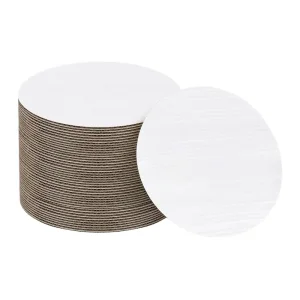
Large retail networks rarely order a single SKU. Managing 20 to 50 distinct container sizes (cake boards, dessert cups, sandwich platters, toast bags) creates severe logistics complexity. Standardized packaging manufacturers design nested container profiles that interlock during transit, allowing diverse SKUs to be consolidated into single 40HQ container loads without wasting volume.
Modern enterprise buyers require direct factory verification covering social accountability, environmental management, and fair labor practices. WTPack operates under strict ISO-aligned quality management systems, encouraging client-side third-party audits (SGS, Intertek, Bureau Veritas) to verify shop floor safety, traceability, and material authenticity.
Key market transitions shaping chain store food packaging over the next decade.
Eliminating mixed plastic-paper laminates that fail kerbside recycling. Transitioning toward 100% paperboard boxes with windowless die-cut handles or easily separable mono-PET clear covers.
Implementing next-generation water-based dispersion coatings on 250–400gsm boards, ensuring oil and moisture resistance for buttery baked goods without fluorinated compounds.
Utilizing food-grade recycled PET sheet with anti-fog technology, maintaining crystal-clear visual clarity for chilled dessert displays even in high-humidity retail cabinets.
Engineered quick-fold pop-up bases that ship 100% flat to minimize warehouse footprint, assembling at the bakery counter in under 3 seconds.
Tailoring standardized packaging systems to specific retail operational environments.
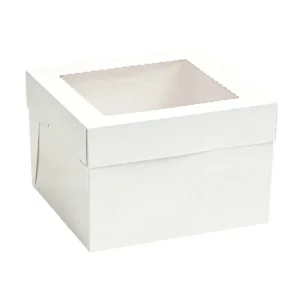
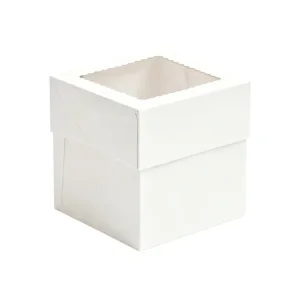
In high-traffic supermarket chains, speed-of-packing and barcode clarity are paramount. Standardized clear window cake boxes and flat-base dessert containers enable rapid scanning at self-checkout terminals while shielding delicate frosting from shelf degradation.
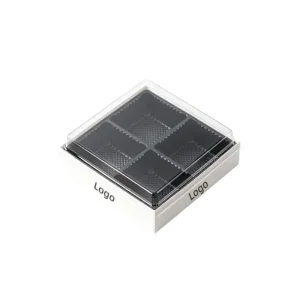
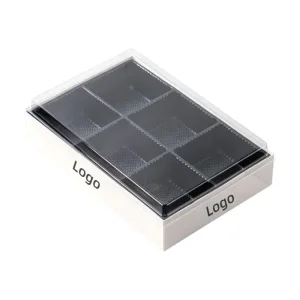
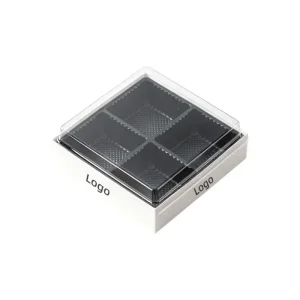
Franchise operators require foolproof, pre-creased folding boxes so seasonal staff across 100+ stores achieve identical presentation. Uniform grid inserts hold cupcakes, tarts, and mousses securely during customer takeaway.
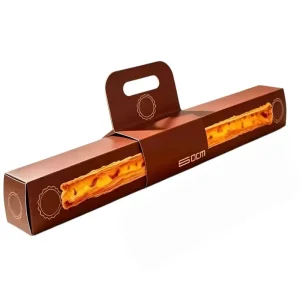
Third-party delivery platforms demand leak-resistant construction. Standardized rectangular catering platters with reinforced side-wall locks maintain structural rigidity when stacked inside thermal delivery bags.
Quantifying the operational impact of unifying packaging manufacturing under a single direct China supplier.
| Operational Parameter | Direct Wholesale Factory Standardization (WTPack) | Fragmented Regional Vendor Sourcing |
|---|---|---|
| Color & Print Consistency | Centralized press management; strict Delta E < 1.5 across all SKUs and materials. | High color deviation (> 3.5 ΔE); inconsistent brand identity across regional outlets. |
| Custom Tooling & Mold Costs | Zero third-party tooling markups; direct access to 500+ existing structural dies. | Repeated mold charges per regional supplier; high initial CAPEX. |
| Food Safety Compliance Audit | Single unified batch declaration (FDA / LFGB / SGS) issued directly per shipment. | Inconsistent compliance letters; risk of missing test reports during health audits. |
| Freight & Warehouse Cubing | Flat-pack & nested engineering cuts container cubic meters by 35%. | Pre-assembled or poorly designed boxes waste up to 40% of container space. |
| Procurement Lead Time | Scheduled batch production runs (15–25 days); priority re-order tooling storage. | Variable lead times; stockouts across individual store locations due to vendor delays. |
Technical answers to critical questions asked by retail procurement teams and global packaging importers.
We establish master engineering CAD die-lines and digital CAD proofs for every standardized SKU before tool production. Standardized paperboard grammages (250–400gsm) and PET sheet thicknesses (0.25–0.45mm) are controlled via inline laser micrometers. Automated Zhongbo die-cutters hold tolerances to ±0.015mm, guaranteeing that snap-fitting lids, inner compartment grids, and folding bases lock together seamlessly across millions of units.
For existing structural tooling with custom brand printing (offset CMYK or Pantone spot colors), the standard MOQ starts at 3,000 to 5,000 pieces per SKU size. For completely new structural dimensions requiring custom CNC blister molds or steel-rule die tooling, the MOQ is 10,000 pieces per SKU. Multi-SKU chain store orders can be combined within a single 20ft or 40HQ container load to achieve volume pricing brackets.
All virgin board, grease-proof coatings, and PET sheet raw materials undergo raw material lot verification prior to production. WTPack provides full food-grade compliance documentation, including FDA 21 CFR 177.1630 / 176.170 certifications for the North American market, EU 1935/2004 compliance letters for Europe, and LFGB test declarations for DACH markets. Third-party SGS or Intertek laboratory test reports are updated per batch upon buyer request.
Yes. Freight engineering is a core aspect of our ODM service. By re-engineering rigid box structures into collapsible flat-pack formats or designing nestable PET lid geometries, we reduce shipping volume by up to 35%. This significantly lowers container freight cost per unit and maximizes warehouse pallet density for enterprise distribution hubs.
Existing mold samples ship within 3–5 working days. Printed pre-production physical samples require 7–10 working days, including prepress plate production. Mass manufacturing is completed within 15–25 working days following sample approval. For recurring chain store accounts, we maintain safety stock forecasting to support rapid 7-day container dispatch from Shantou or Shenzhen ports.
Explore additional standardized packaging options for dessert bases, pastry trays, window cake boxes, and takeaway containers.