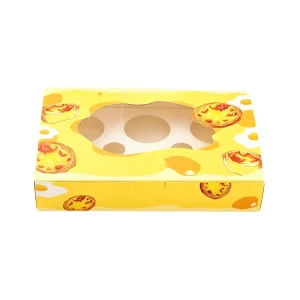
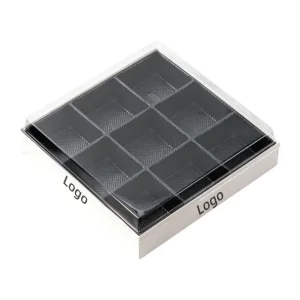
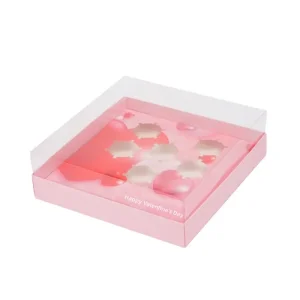
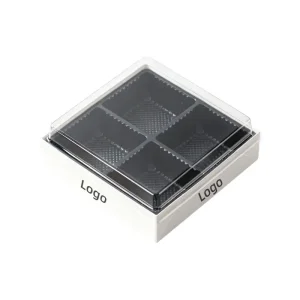
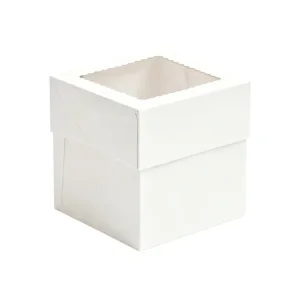
Direct factory OEM/ODM precision engineered packaging structures for bakery, confectionery, and retail catering.
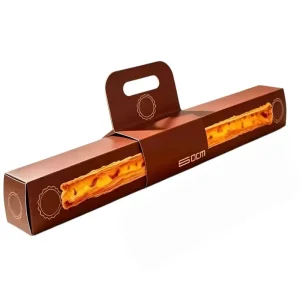
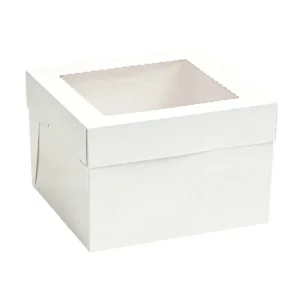
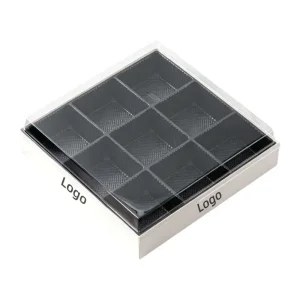
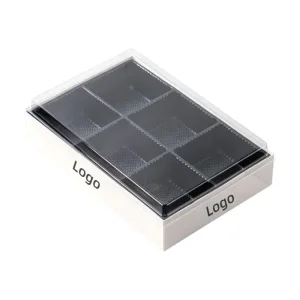
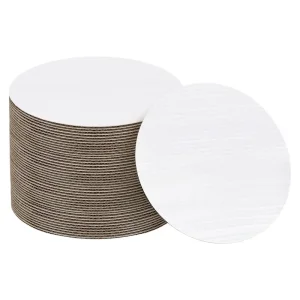
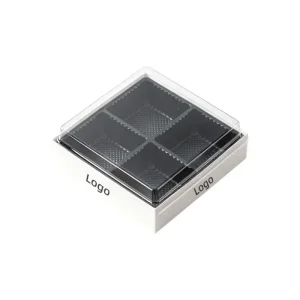
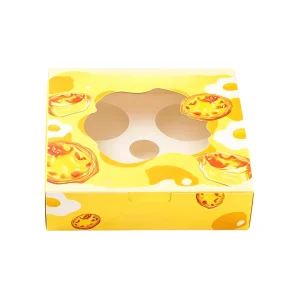
In the competitive global fast-moving consumer goods (FMCG) and artisanal bakery sectors, packaging serves a dual function: structural protection and visual conversion. The strategic selection of Wholesale High-Clarity PET Window Boxes Suppliers has shifted from a mere procurement transaction to a critical component of brand equity and sell-through efficiency. Consumer research indicates that over 74% of retail purchasing decisions in bakery and ready-to-eat confectionery are driven by visual appraisal. Consequently, optical clear packaging windows operate as silent sales ambassadors on retail shelves.
Historically, packaging manufacturers relied on Cellulose Acetate, Oriented Polypropylene (OPP), or Polyvinyl Chloride (PVC) for window patching. However, Polyethylene Terephthalate (PET) has emerged as the definitive polymer benchmark across high-end food packaging applications. PET provides an unmatchable combination of optical purity, mechanical toughness, barrier performance, and environmental recyclability.
Technical Insight: PET (Polyethylene Terephthalate) demonstrates an optical refractive index of approximately 1.57, achieving visible light transmission exceeding 91.5% with haze values under 1.5%. Compared to OPP films—which suffer from directional distortion and surface scuffing—amorphous PET (aPET) maintains crisp crystalline transparency without chromatic aberration.
| Polymer Property Matrix | Amorphous PET (aPET) | Oriented Polypropylene (OPP) | Polyvinyl Chloride (PVC) | Cellulose Acetate |
|---|---|---|---|---|
| Optical Transmittance (%) | 91.5% – 93.0% | 88.0% – 90.0% | 85.0% – 88.0% | 90.0% – 92.0% |
| Haze Factor (%) | < 1.2% | 2.5% – 4.0% | > 4.5% | 1.5% – 2.0% |
| Tensile Strength (MD, MPa) | 170 – 220 | 120 – 150 | 50 – 80 | 70 – 100 |
| Water Vapor Barrier (g/m²/24h) | 15 – 25 | 4 – 6 | 30 – 40 | 150 – 250 |
| Food Contact Safety / Plasticizer Free | 100% Inert / Safe | 100% Inert / Safe | Contains Phthalates | Varies / Hydrophilic |
| Recyclability & Resin Code | RIC #1 (Highest Global Yield) | RIC #5 (Limited Stream) | RIC #3 (Toxic / Restricted) | Compostable / Non-RIC |
From a molecular perspective, high-clarity PET windows utilized by premier packaging factories undergo specialized biaxial orientation or controlled thermoforming. This process aligns polymer chains to eliminate internal micro-cavities that cause light scattering. The resulting film exhibits exceptional surface energy, enabling precise corona treatment. This treatment facilitates robust adhesion of non-toxic, water-based food-grade inks and high-speed hot-melt adhesives directly to structural paperboard bases.
As international environmental regulations tighten—such as the European Union’s Packaging and Packaging Waste Regulation (PPWR) and Extended Producer Responsibility (EPR) mandates in North America—the technical roadmap for clear window packaging is undergoing a profound evolution. Leading manufacturers are investing heavily in material engineering innovations that align crystal-clear visibility with circular economy objectives.
Advance thermoforming processes now integrate 30% to 100% food-grade rPET. Super-cleaning decontamination processes ensure virgin-equivalent optical clarity while reducing cradle-to-gate carbon footprints by up to 65%.
Hydrophilic nano-coatings applied to internal PET window faces lower water droplet contact angles to below 15°. This prevents condensation fogging in refrigerated displays, preserving product visibility even in high-humidity ambient transitions.
Next-generation window patching utilizes specialized water-dispersible adhesives. During recycling pulping, the PET window automatically separates cleanly from paper fibers, guaranteeing 100% paperboard repulpability.
Furthermore, chemical vapor deposition (CVD) coatings applying ultra-thin silicon oxide ($SiO_x$) barrier layers onto PET substrates are expanding window packaging into oxygen-sensitive sectors. This breakthrough enables extended shelf-life packaging for delicate fat-containing treats, gourmet pastries, and nuts without requiring opaque aluminum foil laminates or heavy plastic barriers.
Global procurement teams must match packaging structural configurations with target commercial sales environments. A high-clarity PET window box designed for a local boutique patisserie requires distinct structural parameters compared to a high-speed automated filling line for retail grocery distribution.
Boutique bakeries require rapid, friction-free assembly combined with premium tactile sensory appeal. Heavyweight virgin white cardstock or unbleached kraft board (300 gsm to 400 gsm) paired with a high-clarity PET window creates a rigid frame that resists oil migration from high-butter recipes. Features such as integrated handles, locking tab closures, and grease-resistant interior barrier coatings safeguard structural integrity during consumer transportation.
For supermarket delis and quick-service restaurant (QSR) environments, packaging must withstand stacking pressures in refrigerated display cases while maintaining seal integrity. Rigid PET clear-lid containers bonded to folding paperboard bases offer exceptional compressive strength. Engineered snap-locks provide audible closure confirmation, while anti-fog PET windows prevent condensation buildup during display cooling cycles.
The explosion of direct-to-consumer (DTC) gourmet food gifting demands packaging engineered for transit stress. Modular multi-compartment boxes with crystal-clear PET lids incorporate inner corrugated support inserts or custom thermoformed trays. These elements immobilize fragile items—such as macarons, egg tarts, or sushi platters—preventing impact damage during last-mile courier transport.
Modern global food packaging supply chains rely heavily on advanced manufacturing clusters in China, notably concentrated in Chaozhou and the broader Guangdong industrial region. These hubs combine raw material synthesis, precision tooling design, and automated high-speed converting under single enterprise ecosystems.
Leading facilities operate cleanroom-certified thermoforming lines (such as Mengxing series formers) integrated directly with automated Kohmann window-patching and Zhongbo die-cutting machinery. By replacing manual multi-stage assembly with automated inline windowing and folding, production tolerances are maintained within $\pm 0.2\text{ mm}$ while throughput reaches speeds exceeding 12,000 units per hour per line.
This level of automation yields four critical supply chain advantages for international buyers:
Navigating cross-border food contact compliance requires strict adherence to international safety standards. Reliable **Wholesale High-Clarity PET Window Boxes Suppliers** maintain fully documented traceability protocols covering every batch of polymer resin, paperboard, ink, and adhesive utilized in production.
| Target Market / Region | Regulatory Compliance Standard | Testing Parameters & Certification Documentation |
|---|---|---|
| United States (FDA) | FDA 21 CFR 177.1630 (Polyethylene Phthalate Polymers) & 21 CFR 176.170 | Overall Migration Testing, Heavy Metal Analysis (CONEG), Chloroform-Soluble Extractives. |
| European Union (EU) | Commission Regulation (EU) No 10/2011 & Framework Regulation (EC) No 1935/2004 | Specific Migration Limits (SML) for monomers/additives, Sensory Odor & Taste Transfer (DIN 10955). |
| Germany (BfR / LFGB) | LFGB Sections 30 & 31 / BfR Recommendation XXXVI for Paper & Board | Formaldehyde transfer, Transfer of Antimicrobial Components, Optical Brightener Non-migration. |
| Global Sustainability | FSC Chain of Custody & REACH / RoHS Compliance | 100% Forest Stewardship Council certified sustainable timber sources; zero SVHC (Substances of Very High Concern). |
Factories issue complete compliance dossiers per shipment, including SGS or TÜV Rheinland lab analysis certificates. This documentation ensures rapid, seamless clearance through international customs checkpoints including US FDA import inspections and EU port health authorities.
When evaluating global manufacturing partners for high-clarity PET window boxes, procurement directors must evaluate vendors beyond initial piece-part pricing. A comprehensive Total Cost of Ownership (TCO) model incorporates freight efficiency, defect risk mitigation, tooling amortization, and inventory holding costs.
Standard structures utilizing existing factory tooling support low MOQs starting at 3,000 to 5,000 units for branded print runs. Fully custom structural tooling typically requires a 10,000-unit threshold to amortize custom die and mold setup charges efficiently.
Standard export contracts should enforce Acceptable Quality Limit (AQL) standards of 0/1.0/2.5 (Critical/Major/Minor defects) under ISO 2859-1 sampling plans, ensuring minimal waste upon container unloading.
To reduce inventory exposure, buyers can combine complementary product lines—such as cake drums, window pastry boxes, and clear PET dessert cups—within a single 40ft High Cube container load.
Our food-grade virgin PET sheets undergo strict optical quality testing, guaranteeing visible light transmittance exceeding 91.5% and a haze rating under 1.2%. Unlike low-grade PVC or polypropylene films, our PET windows remain perfectly transparent without yellowing, hazing, or visual distortion, ensuring maximum shelf appeal for displayed food items.
We utilize high-speed automated Kohmann window-patching equipment equipped with specialized low-temperature food-grade hot-melt adhesives. The bonding zone undergoes corona surface treatment prior to adhesive application, ensuring an unbreakable chemical bond between the non-porous PET window and the porous paperboard base. This bond resists shear failure across temperatures ranging from -18°C up to +65°C.
Yes. We offer material options incorporating up to 100% GRS-certified post-consumer recycled PET (rPET), as well as compostable PLA (Polylactic Acid) window films derived from plant starches. Additionally, our paperboard substrates can be specified with FSC (Forest Stewardship Council) certification to comply with corporate sustainability and EU circular economy mandates.
Existing-structure unprinted physical samples ship in 3 to 5 business days. Custom printed pre-production samples (including custom die-cutting and plate creation) require 7 to 10 business days. Upon final sample approval and artwork sign-off, mass production lead times typically range from 15 to 25 calendar days depending on order volume and structural complexity.
Our structural engineering team designs folding box structures to ship 100% flat or densely nested. By eliminating empty air volume inside shipping master cartons, flat-pack engineering increases pallet load density and reduces total container volume requirements by up to 35%. This drastically lowers per-unit ocean freight costs from our Shenzhen or Shantou loading ports.
Every shipment is accompanied by a full technical compliance package. This includes Declarations of Compliance (DoC) for food contact safety, material batch mill certificates, and independent third-party lab test reports from SGS or TÜV confirming compliance with US FDA 21 CFR 177.1630, EU Regulation 10/2011, and German LFGB food safety standards.
Explore our extended line of custom-printed bakery containers, cake boards, and multi-compartment dessert boxes.