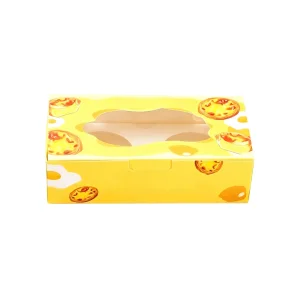
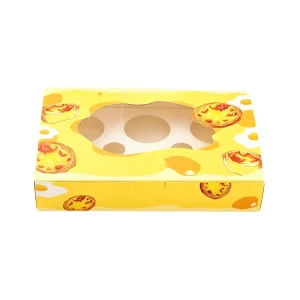
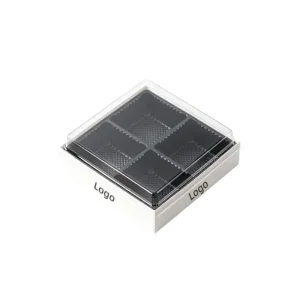
Explore our top-tier engineered food containers, rigid pastry tubs, and precision paper-plastic hybrid packaging optimized for global wholesale distribution.
The global industrial packaging landscape is experiencing a paradigm shift. Rigid plastic food tubs—primarily manufactured from High-Density Polypropylene (PP), Random Copolymer (rCo-PP), Polyethylene Terephthalate (PET), and Post-Consumer Recycled polymers (pcr-PP)—serve as the foundational structural container across FMCG food manufacturing, industrial dairy processing, commercial catering, and retail packaging sectors. Valued at over USD 38.5 Billion globally and expanding at a Compound Annual Growth Rate (CAGR) of 5.8%, rigid plastic tubs are superseding traditional metal, glass, and unlined paperboard options due to superior strength-to-weight ratios, gas-barrier scalability, thermal stability, and automated denesting capability.
As food manufacturing facilities transition toward ultra-high-speed automated filling lines operating at speeds exceeding 300 to 600 units per minute, packaging specification tolerance margins have contracted to fractional millimeter variances. B2B procurement managers and packaging engineers are no longer searching merely for commodity plastic containers; they require engineered containment solutions capable of maintaining structural integrity across volatile ambient temperatures, high-humidity cold chains, pressure-seal retorting, and prolonged mechanical vibration during intercontinental logistics.
Holding over 62% of the rigid food tub raw material market share, virgin and clarified PP delivers an optimal combination of heat resistance (up to 120°C), flexural fatigue strength for living hinges, and chemical inertness against fatty, acidic, or saline food matrixes.
Modern food safety mandates demand tamper-evident tear bands, peelable lidding foils, and double-bead peripheral snap-fits that eliminate liquid micro-leakage during high-altitude transit and rapid cold-chain pressuring.
Precision thin-wall injection molding guarantees uniform wall thickness distribution (typically 0.4mm to 0.8mm), ensuring reliable automated stacking, pneumatic de-nesting, and vacuum-pick placements without mechanical jamming.
The rigid plastic packaging sector is undergoing a rapid evolution driven by stringent international environmental regulations (such as the EU Packaging and Packaging Waste Regulation - PPWR) and changing consumer preferences. Wholesale buyers and factory supply chains must align with three primary technological vectors to maintain market competitiveness and regulatory compliance.
Transitioning from multi-layer un-recyclable laminates toward mono-material Polypropylene structures. By unifying the tub body, lid, and decorative label under a single PP polymer family, containers achieve 100% kerbside recyclability without requiring manual disassembly at material recovery facilities (MRFs).
In-Mold Labeling integrates a pre-printed polypropylene label directly into the mold cavity during the injection process. The label fuses seamlessly with the tub wall, providing photographic printing quality (up to 1200 DPI), superior barrier protection against moisture, and zero risk of label peeling or scuffing during freezing or microwaving.
Using Finite Element Analysis (FEA) computer simulation, modern mold engineering places load-bearing geometry—such as radial ribbing and vertical corner columns—precisely where stress concentrations occur. This allows up to 18% reduction in resin usage while maintaining identical vertical compression strength (top-load resistance).
Rigid plastic food tubs are specified across a wide variety of commercial and industrial food production environments. The structural and thermal demands vary significantly depending on the operational environment:
| Industry Application | Primary Substrates Used | Temperature Requirements | Key Technical Specifications |
|---|---|---|---|
| Industrial Dairy & Margarine Processing | In-Mold Labeled (IML) Polypropylene | -20°C to +85°C (Hot-fill capable) | High grease resistance, hermetic induction seal surface, oxygen transmission rate (OTR) protection. |
| Commercial Catering & Meal Prep Kits | Clarified Co-PP / Mineral-Filled PP | -40°C Deep Freeze to +120°C Microwave | Tamper-evident latching locks, stackable interlocking bases, dishwasher-safe reusable rating. |
| Deli, Salads & Dip Retailing | Ultra-Clear PET / High-Clarity PP | 0°C to +4°C Refrigerated Display | Crystal-clear product visibility, anti-fog inner lid coating, perimeter liquid-tight seal. |
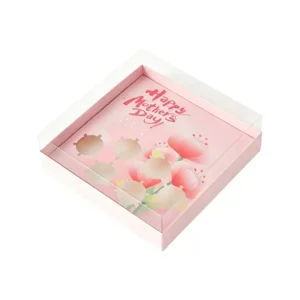
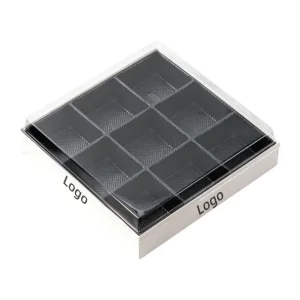
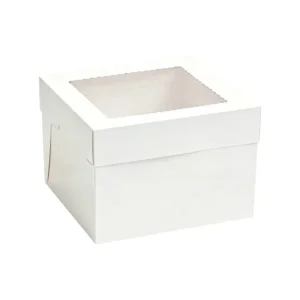
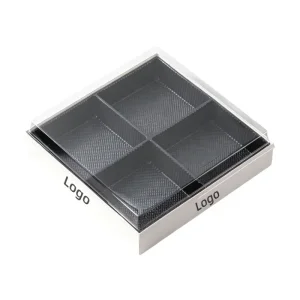
| Bakery, Confectionery & Pastry Platters | Paperboard + PET / PS Hybrid Tubs | Ambient to +4°C Refrigerated | Rigid structural rim to prevent crushing during stacking, decorative custom offset printing. |
| Seafood, Frozen Meats & Cold Chain Logistics | Impact-Modified Cold-Resistant PP | -40°C Flash Freezing | High impact strength at sub-zero temperatures (shatter-proof drop test from 1.5 meters). |
The future of industrial food containment lies at the intersection of material science, digital traceability, and bio-polymer synthesis. Advanced production facilities are implementing high-efficiency technology roadmaps to meet zero-waste mandates and smart factory demands.
Integrating micro-thin Ethylene Vinyl Alcohol (EVOH) inner barrier layers into PP tubs via multi-cavity co-injection molding. Reduces Oxygen Transmission Rates (OTR) to less than 0.1 cm³/m²·day, extending ambient shelf life of oxygen-sensitive foods from 3 months to over 18 months without chemical preservatives.
Embedding invisible optical watermarks across the surface of rigid plastic molds. When passing through municipal sorting centers, high-speed optical cameras instantly detect the container material type, food-grade vs. non-food grade history, and brand specifications, achieving 99% sorting purity.
Commercializing ISCC PLUS certified Bio-Polypropylene derived from organic waste oils and forestry residues. Yields physical properties identical to traditional fossil-based polymers while cutting net carbon footprints by over 60% across the cradle-to-gate life cycle.
For enterprise packaging buyers, selecting a wholesale manufacturing partner requires assessing overall risk mitigation, international regulatory alignment, and long-term Total Cost of Ownership (TCO) optimization.
Our rigid plastic food tubs comply fully with US FDA 21 CFR 177.1520 (Olefin Polymers), EU Regulation No 10/2011 (Plastic Materials intended to come into contact with food), and BRCGS Global Standard for Packaging Materials. Batch-level migration testing confirms non-detection of heavy metals, phthalates, BPA, and MOSH/POSH mineral oils.
Rigid plastic food containers are engineered with precision draft angles to enable high nesting ratios during transit. Nested packaging saves up to 45% of shipping space compared to non-nestable alternatives, directly mitigating global ocean freight costs and lowering carbon emissions per unit shipped.
From CAD die-line design and 3D SLA prototyping to full 32-cavity hardened steel injection mold fabrication, our direct factory facilities streamline turnaround times. Custom container development cycles are completed in as little as 21 to 30 days, supported by complete CMM dimensional inspection reports.
Direct insights from our senior packaging engineers addressing core technical and commercial considerations for high-volume wholesale sourcing.
Our standard food-grade Polypropylene (PP) rigid tubs exhibit an operational thermal window ranging from -20°C up to +120°C. This renders them fully suitable for flash freezing, hot-filling up to 85°C–90°C, and standard microwave reheating. For deep sub-zero logistics requiring -40°C cold storage without brittleness, we incorporate specialized impact modifiers into our copolymer resin blends.
In-Mold Labeling (IML) provides significant advantages over pressure-sensitive labels: 1) Total Monomaterial Fusion: The label and container body merge into a single PP resin structure, rendering the container 100% recyclable. 2) Environmental Resistance: IML labels cannot peel, wrinkle, or disintegrate in high humidity, cold water baths, or deep-freeze environments. 3) Production Speed: Labeling occurs inside the injection mold, eliminating offline labeling equipment costs and labor.
For standard stock structures without custom printing, MOQs start as low as 3,000 to 5,000 units. For custom-printed offset or In-Mold Labeled (IML) containers, MOQs generally start at 10,000 to 30,000 units depending on container volume and press configuration. Fully custom mold fabrications require a production run aligned with specific press multi-cavity capacities.
Hermetic seal integrity is achieved through two complementary features: first, precision-engineered perimeter snap-fit locking profiles featuring double-lip contact points; second, a flat, uniform top-rim surface designed specifically for peelable conduction heat-sealing foils (aluminum foil or clear barrier films). All mold runs undergo vacuum leak testing to verify zero liquid or gas bypass under negative pressure.
Explore additional high-demand packaging solutions, clear lid boxes, and custom bakery containers manufactured at our factory.