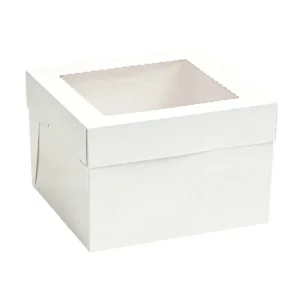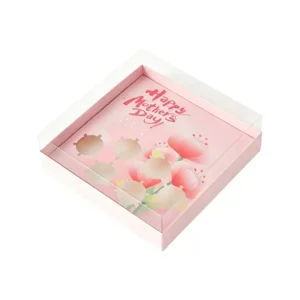
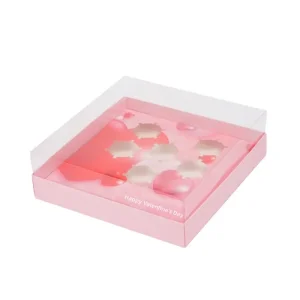
Japan represents one of the world's most sophisticated and demanding food packaging markets. Characterized by strict consumer safety expectations, hyper-detailed visual aesthetics, and an obsessive focus on "Omotenashi" (unboxing experience and user functionality), supplying Japanese enterprise buyers requires far more than generic box converting.
Japanese retail networks like convenience store giants (Combini) and department store food halls (Depachika) operate under strict Acceptable Quality Limit (AQL) standards. Micro-scratches on PET lids, misaligned window cutouts, or slight glue bleed are considered unacceptable defects that jeopardize retail presentation.
Packaging aesthetics in Tokyo, Yokohama, and Osaka lean heavily toward refined minimalism, soft pastels, metallic hot-stamping, and ultra-clear window enclosures. Structural elements must balance rigid stackability with delicate structural curves that elevate the perceived value of Wagashi and Western confectionery.
The Japanese retail packaging market revolves around seasonal shifts—Sakura in spring, Ochugen summer gift sets, Halloween, Autumn Chestnut editions, and Christmas/Oseiru winter bundles. Factories must maintain modular tooling capabilities to yield short lead-time custom variations without astronomical tooling expenses.
Custom brand packaging deployed in Japan must fulfill dual requirements: structural physical protection during transit across Japan's automated express delivery networks (Sagawa, Yamato Transport) and frictionless, tear-proof opening for the end consumer. Partnering with a specialized B2B manufacturer equipped with dedicated Japanese QA procedures eliminates expensive customs rejections and retail chargebacks.
Entering the Japanese retail landscape requires strict adherence to national food sanitation and environmental recycling laws. Our direct production lines operate with full compliance frameworks engineered specifically for Japanese trade import inspection.
All food-contact paperboards, clear PET films, and barrier coatings adhere strictly to Ministry of Health, Labour and Welfare (MHLW) Notice No. 370 and the updated Positive List System for Synthetic Resins. Our materials undergo rigorous laboratory testing for heavy metals, migration of phthalates, residual solvents, and overall chemical inertness, ensuring 100% compliance when clearing Japanese Quarantine Stations.
Japan's Container and Packaging Recycling Law (容器包装リサイクル法) mandates clear sorting identification marks. We provide precision pre-press vector integration of the standard Japanese "Paper" mark (紙マーク) and "Plastic" mark (プラマーク) directly into custom offset printing layouts, ensuring complete legal retail readiness across Japan's 47 prefectures.
Operating from our 10,000 m² automated facility in Chaozhou, Guangdong—China's premier packaging manufacturing hub—we deliver scalable cost efficiency combined with rapid logistics corridors directly serving Japanese seaports.
By owning our structural die-cutting tools and thermoforming blister molds in-house, we eliminate broker markups and middleman commission fees. OEM buyers gain direct factory volume pricing with dedicated mold retention for seamless re-orders.
Equipped with high-precision Mengxing thermoforming units and Zhongbo automatic die-cutters, our factory delivers up to 500,000 units per week. Precision optical cameras detect print imperfections and edge burrs before cartoning.
With close proximity to Shantou and Shenzhen deep-water container ports, ocean freight shipments to major Japanese hubs—Tokyo, Yokohama, Nagoya, Osaka, and Kobe—arrive in just 3 to 5 nautical days, securing JIT replenishment schedules.
Comprehensive material selection charts tailored for procurement managers, structural engineers, and QA directors sourcing custom brand packaging solutions.
| Material Category | Grammage / Thickness | Key Barrier & Physical Properties | Primary Japanese Application | Regulatory Certifications |
|---|---|---|---|---|
| Virgin Ivory Paperboard | 250 - 400 gsm | High stiffness, smooth surface for micro-embossing & foil stamping | Wagashi gift boxes, Depachika pastry cartons | MHLW Notice 370, FDA Food-Contact |
| Grease-Resistant Kraft | 280 - 350 gsm | Oil-proof PE/Bio-coating barrier, moisture resistant | Toast bags, fried pastry containers, bakery retail | SGS Food-Safe, Compostable optional |
| High-Clarity PET Film | 0.25 - 0.45 mm | Ultra-transparent, anti-fog option, high snap-lock tension | Transparent cake box lids, dessert cups, fruit trays | Japan Resin Positive List, REACH |
| Recycled Content (rPET) | 0.30 - 0.40 mm | 30%-100% Post-consumer recycled content, eco-certified | Sustainable retail packaging, eco convenience lines | GRS (Global Recycled Standard) certified |
| Single-Material Folding Paper | 300 - 380 gsm | 100% Mono-material, windowless design, easy kerbside recycling | Zero-plastic eco bakeries, sustainable gift boxes | FSC-Certified, Paper Recycling Mark (紙) |
To capture competitive advantages in Japan's evolving retail market, corporate buyers must align with three macro structural packaging shifts driving consumer purchasing behavior.
Soaring maritime container freight rates and Japanese domestic warehouse storage costs make spatial efficiency critical. Our engineering team specializes in knock-down, flat-pack folding structures that cut ocean freight cubic volume (CBM) by up to 35%, while assembling rapidly at retail store counters.
With environmental legislation banning harmful fluorinated chemicals globally, Japanese food brands lead the charge in adopting PFAS-free water and oil-resistant coatings. We offer plant-based nano-barrier technology that maintains grease resistance without compromising recyclability.
Chycled dessert display cases in Japanese convenience stores require high visibility without condensation buildup. Our proprietary anti-fog PET lids ensure crystal-clear product presentation even under refrigerated retail conditions.
Custom structural engineering tailored for diverse commercial channels throughout Japan.
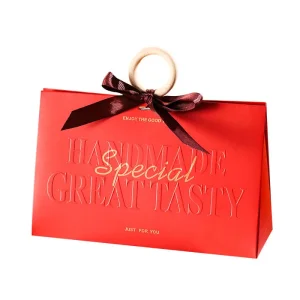
Located in the flagship basement floors of major Japanese department stores (Isetan, Mitsukoshi, Takashimaya), luxury food shops demand rigid presentation boxes with gold foil stamping, silk ribbon loops, and pristine clear-top covers designed for delicate French pastries and artisanal Japanese Wagashi.
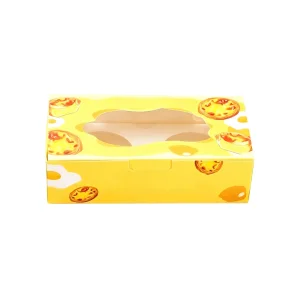
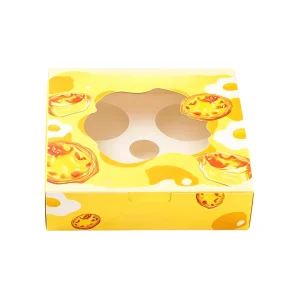
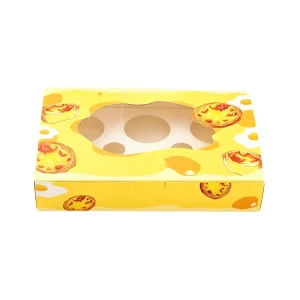
High-volume retail chains require robust, stackable cake slice containers, egg tart boxes, and pudding cups engineered with automated high-speed snap locks. Structures must survive rapid last-mile delivery and transit in shopping bags without crushing contents.
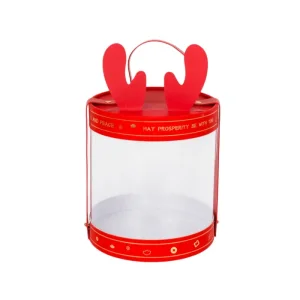
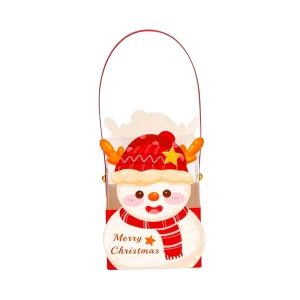
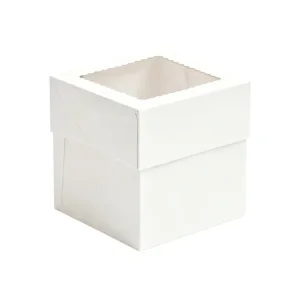
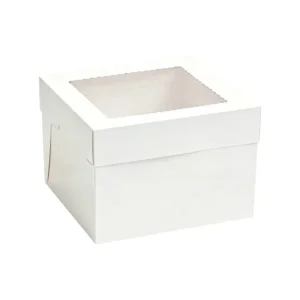
Detailed operational insights addressing compliance, MOQs, lead times, and structural customization.
Partner directly with Chaozhou Weiting Packaging (WTPack). Connect with our engineering team to request CAD dielines, food-contact compliance declarations, or tiered factory pricing today.