Precision-engineered containers designed for high-end retail, bakery chains, and gift packaging across Aichi Prefecture.
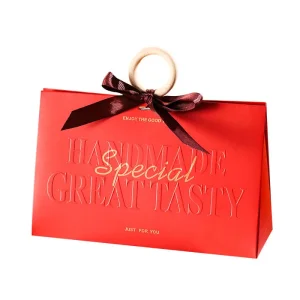
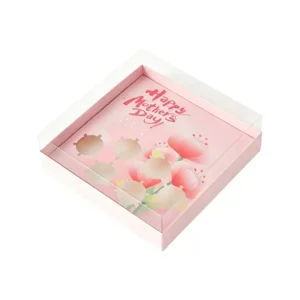
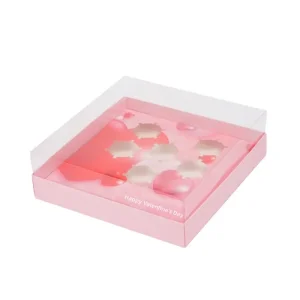
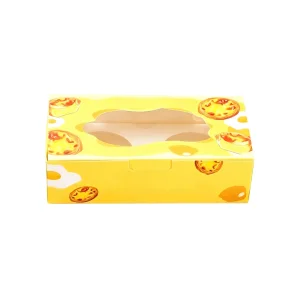
As the economic heart of Japan's Chubu region and Aichi Prefecture, Nagoya represents a unique intersection of advanced manufacturing precision and rich culinary heritage. Globally renowned as an automotive and aerospace stronghold, Nagoya’s consumer market demands an exceptional standard of structural integrity, aesthetic refinement, and material safety across retail packaging solutions. Enterprise buyers, regional bakery franchise networks, and artisanal confectionery brands within Nagoya’s premier commercial districts—such as Sakae, Meieki (Nagoya Station area), and Osu—are actively seeking high-performance Original Design Manufacturing (ODM) and Original Equipment Manufacturing (OEM) partners who can bridge cost efficiencies with uncompromising Japanese Quality Control (Monozukuri standards).
Search intent for "ODM Custom Brand Solutions Suppliers & Factory in Nagoya" reveals a sophisticated procurement migration. Traditional Japanese packaging procurement often faces high localized overheads, rigid minimum order quantities (MOQs), and protracted tooling lead times. Modern Nagoya-based procurement directors and packaging engineers require direct factory partnerships that offer rapid structural prototyping, bio-based material alternatives, and fully compliant food-contact packaging under the Japan Food Sanitation Act (Law No. 233) alongside global certifications (FDA, LFGB, ISO 22000).
To capture market share in Aichi Prefecture’s competitive food retail sector—where souvenir packaging (Omiyage) for regional specialties like Ogura toast, Miso-katsu, and artisanal Wagashi commands elevated shelf appeal—brands must deploy packaging that serves a dual purpose: unyielding protection during cold-chain or last-mile delivery, and unforgettable unboxing experiences that drive customer lifetime value.
The commercial packaging landscape is experiencing a fundamental paradigm shift driven by legislative mandates, decarbonization goals, and shifting consumer behavior. Suppliers serving the Nagoya market must align with four structural trends:
Transitioning complex multi-layer laminates toward high-clarity recyclable PET (rPET) and biodegradable virgin paperboards. Mono-material packaging simplifies kerbside waste sorting, matching Japan's stringent Containers and Packaging Recycling Act requirements.
Structural engineering now focuses heavily on knock-down designs. Shipping rigid boxes pre-assembled wastes up to 70% of shipping container volume. Advanced interlocking snap-lock mechanisms allow boxes to ship flat and assemble in seconds at retail counters.
High-humidity refrigeration environments in Japanese convenience store chillers (Chubu supermarket chains) demand advanced anti-fog PET lids that prevent condensation build-up, ensuring pristine product visibility without compromising barrier protection.
Modern enterprise buyers operating across Nagoya and international markets no longer evaluate custom packaging suppliers solely on per-unit pricing. Sourcing audits now focus on supply chain resilience, total cost of ownership (TCO), and rigorous ESG compliance.
Enterprise brands launching seasonal campaigns (e.g., Nagoya Cherry Blossom specials, Autumn Chestnut Wagashi, Valentine’s sets) cannot commit to 100,000-unit runs. Direct factory partnerships offering hybrid stock-structure modification (3,000–5,000 pcs) alongside dedicated custom tooling (10,000+ pcs) allow brands to test markets with minimal inventory risk.
Global procurement teams mandate batch-level material traceability. Paperboards must provide FSC / PEFC chain-of-custody tracking, while PET resins require food-grade purity declarations. Factory audits inspect inline optical cameras, snap-lock compression resistance, and heavy-metal migrate tests.
To satisfy Nagoya’s demand for ultra-precise, cost-efficient packaging, Chaozhou Weiting Packaging Products Co., Ltd. (WTPack) operates as a vital manufacturing engine. Situated in Anbu Town, Chaozhou—China’s premier food-packaging manufacturing cluster—our 10,000 m² facility delivers end-to-end ODM/OEM services that seamlessly feed into the Japanese industrial ecosystem.
Utilizing high-speed Mengxing blister thermoforming machinery and Zhongbo automatic die-cutters, we achieve tight tolerances (±0.1mm) on PET lid-to-paper base snap fittings. This eliminates lid popping during transit across Nagoya’s transit networks.
Our dedicated structural design team delivers 3D CAD dielines and digital proofs within 48 hours. By housing plate-making, offset printing, laminating, and die-cutting under one roof, we eliminate third-party delays and reduce tooling costs by up to 40%.
With direct sea routes connecting Shantou/Shenzhen ports to the Port of Nagoya (Meiko), flat-packed cargo achieves rapid sea-transit cycles, supported by complete export documentation (Bill of Lading, CO, Food Sanitation Declarations).
Our custom brand packaging solutions are tailored to specific commercial operational environments across Nagoya’s economic landscape:
| Commercial Sector | Target Location / District | Structural Packaging Challenge | WTPack ODM Engineered Solution |
|---|---|---|---|
| Artisanal Wagashi & Confectionery | Sakae & Meieki Retail Boutiques | High moisture barrier required for delicate rice cakes; elegant visual display needed for gifting. | Grease-resistant 350gsm white board with anti-fog PET lid and gold foil hot-stamping. |
| Franchise Bakery Chains | Suburban Nagoya & Chubu Malls | High counter velocity requiring rapid assembly; stacking strength for multi-layer slice displays. | Flat-pack interlocking base with side snap-locks, reducing store assembly time by 50%. |
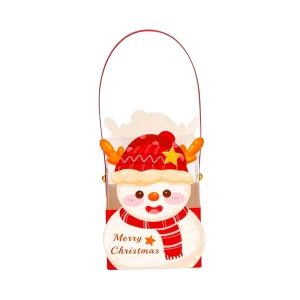
| Corporate Event Gifting | Nagoya International Exhibition Hall (Portmss Nagoya) | Custom brand integration with luxury feel; easy transport for international conference attendees. | Integrated ribbon treat bags & luxury handle buckets with matte lamination and metallic foil branding. |
| Chilled Takeaway & Cafe Menu | Osu Shopping Street & Transit Hubs | Leakage during last-mile delivery; thermal resistance for short-term chilling. | Recyclable rPET dessert cups with leak-proof snap-fit lids and integrated eco-spoon slots. |
Detailed technical parameters for industrial buyers and packaging engineers specifying orders for Japanese market import:
| Parameter | Paperboard Components | Plastic & PET Covers | Hybrid Packaging Assemblies |
|---|---|---|---|
| Base Substrate | Virgin White Cardboard / Kraft Board (250–400 gsm) | Food-Grade Virgin PET / Recyclable rPET (0.25–0.45 mm) | Poly-Coated Paperboard Base + Crystal PET Dome Lid |
| Printing Capabilities | Offset CMYK, Pantone Spot Colors, Metallic Inks | Silk-screen direct printing, Clear spot embossing | Matched color sleeve printing + High-clarity PET cover |
| Food Safety Compliance | SGS / FDA 21 CFR Compliant, LFGB Food-Contact Safe | Japan Food Sanitation Law Notification No. 370 Compliant | Batch-level compliance certificate provided per shipment |
| Thermal Range | -18°C to +80°C (Grease-resistant inner coating) | -20°C to +60°C (Anti-cracking formulation) | Engineered for ambient display & standard commercial chillers |
| Structural Features | Pre-folded crash-lock bottom, Flat-packed shipping | Anti-fog inner surface, Dual side snap-lock system | Stackable nesting channels to prevent shelf tipping |
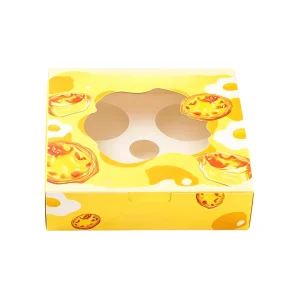
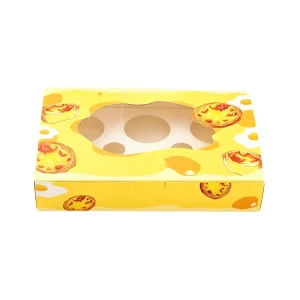
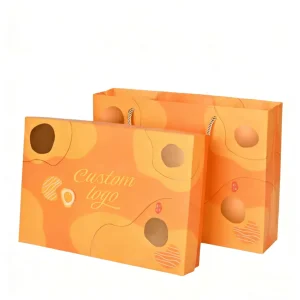
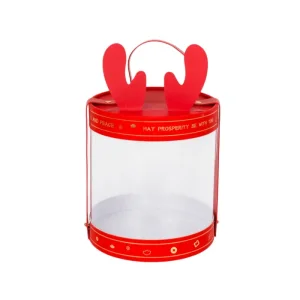
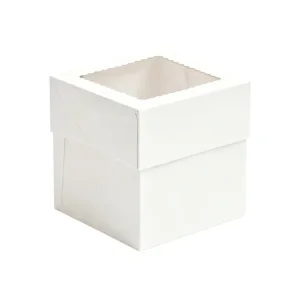
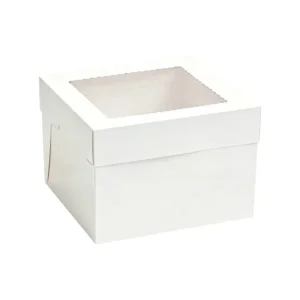
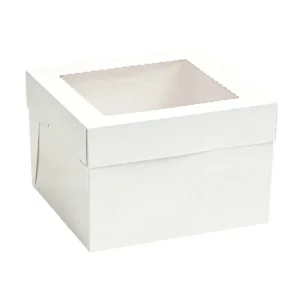
Explore our full range of OEM/ODM custom bakery containers, seasonal gift packaging, and dessert boxes engineered for mass volume distribution.
In-depth technical answers addressing compliance, logistics, minimum quantities, and tooling management for Nagoya buyers:
Partner directly with Chaozhou’s leading food-grade packaging factory. Receive engineering dielines, material technical datasheets, and direct factory pricing within 24 hours.