Industrial-grade precision paperboard, grease-resistant barriers, and structural clear-lid combinations manufactured under strict ISO 22000 and food-contact compliance standard operating procedures.
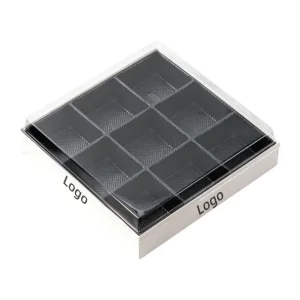
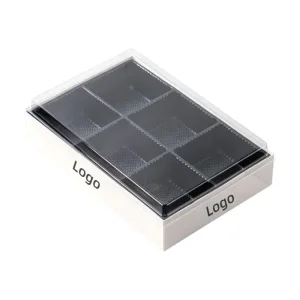
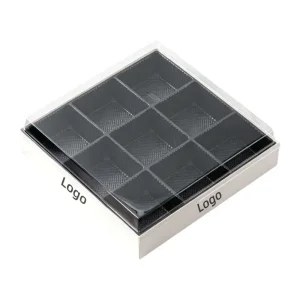
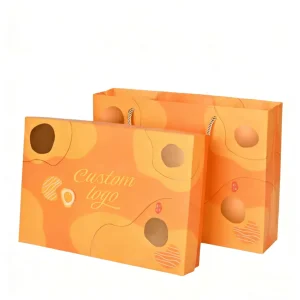
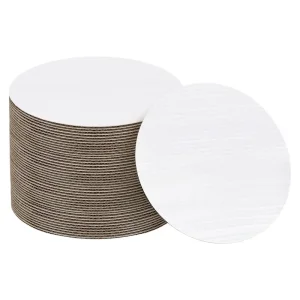
Navigating the paradigm shift from petroleum-derived polymers to mycelium-bound agricultural fibers and high-performance cardboard packaging.
The global packaging supply chain is currently undergoing an unprecedented structural transition. Rising regulatory pressures—such as the European Union Packaging and Packaging Waste Regulation (PPWR), North American Extended Producer Responsibility (EPR) mandates, and global bans on Polyfluoroalkyl Substances (PFAS)—have rendered traditional Expanded Polystyrene (EPS) and single-use plastics commercially obsolete for forward-thinking brands. In this evolving regulatory framework, ODM Mushroom Cardboard Packaging Manufacturers operate at the intersection of biological material science and high-speed mechanical paperboard converting.
Mushroom cardboard packaging—technically classified as mycelium-bound agricultural lignocellulosic bio-composites integrated with structural paperboard—leverages the root structure of fungi (specifically species such as Ganoderma lucidum and Pleurotus ostreatus) to bind agricultural by-products such as hemp hurdle, cotton burrs, and sugarcane bagasse. When paired with high-tensile virgin or recycled cardboard outer shells, ODM (Original Design Manufacturing) factories can engineer rigid, lightweight, shock-absorbing, and moisture-resistant packaging systems that serve multi-industry applications including bakery retail, fresh agricultural produce, luxury cosmetics, cold-chain logistics, and consumer electronics.
Water-based aqueous micro-coatings applied to cardboard shells eliminate grease penetration without harmful fluorochemicals.
Mycelium core inserts exhibit superior drop-test damping metrics, cushioning delicate items during transit.
Fully repulpable cardboard liners combined with home-compostable fungal cores fulfill 100% circular economy targets.
How direct ODM factories transform agricultural residue and paperboard into precision bio-engineered structural packaging.
Developing scalable ODM mushroom cardboard packaging requires tight synchronization between biological incubation protocols and automated mechanical manufacturing processes. Unlike standard corrugated box factories that rely solely on slitting, slotting, and gluing, an ODM factory offering mushroom fiber packaging operates a dual-stream production system:
Agricultural waste (hemp, wood chips, bagasse) is pasteurized, conditioned for moisture balance, and inoculated with fungal strain inoculum under sterile cleanroom conditions.
Inoculated substrate is packed into custom thermoformed CAD molds. The mycelium grows over 4–6 days, weaving a dense, self-binding fibrous network around the substrate particles.
Molded forms pass through industrial drying kilns (80°C–100°C) to completely stop fungal growth, eliminate spores, and cure the material into a inert structural composite.
Precision die-cut cardboard outer sleeves, folding boxes, or rigid bases are joined with the mycelium core using food-grade starch adhesives and automated folding lines.
| Performance Parameter | Mycelium-Cardboard Hybrid | Expanded Polystyrene (EPS) | Standard Corrugated Box |
|---|---|---|---|
| Density Range (kg/m³) | 120 – 220 | 15 – 30 | 600 – 800 (board density) |
| Compressive Strength (kPa) | 250 – 450 | 150 – 300 | Depends on fluting (B/C/E) |
| Thermal Conductivity (W/m·K) | 0.040 – 0.055 | 0.033 – 0.040 | 0.065 – 0.090 |
| Water Vapor Permeability | Controlled via Aqueous Coating | High Barrier (Hydrophobic) | Low unless film laminated |
| End-of-Life Biodegradation | 100% Home Compostable (45-90 Days) | Non-Biodegradable (500+ yrs) | Recyclable / Compostable |
Engineered structural solutions designed for global retail chains, bakery networks, food packaging importers, and high-end logistics.
The versatile nature of ODM mushroom cardboard packaging allows global buyers to tailor physical geometry, surface printability, and barrier performance to localized market demands. By leveraging modular die-cutting, folding box structures, and molded mycelium inserts, manufacturers offer targeted solutions across four primary commercial verticals:
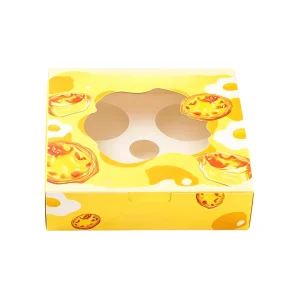
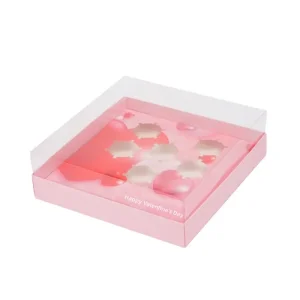
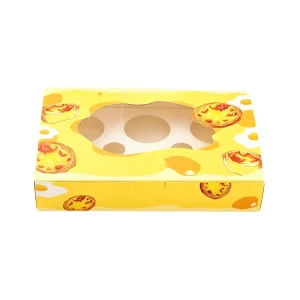
Custom printed cardboard outer boxes with internal bio-composite inserts keep delicate products—such as multi-tier cakes, artisanal tarts, egg tarts, and macarons—vibration-dampened and thermally stable during transport.
Micro-perforated cardboard trays with mushroom fiber cushioning regulate relative humidity and ethylene build-up, extending the shelf-life of premium berries, organic mushrooms, and soft fruits in supermarket display chillers.
Nested mushroom cardboard container panels replace EPS coolers for direct-to-consumer meal kit deliveries, pharmaceutical samples, and chilled specialty cheeses, cutting shipping storage space by 35% via flat-pack assembly.
Combining matte-finished kraft paperboard, foil stamping, and velvet-textured mycelium beds creates a high-end tactile unboxing experience for organic cosmetics, wine bottles, and holiday gift sets.
Verifiable certification pathways ensuring seamless international customs clearing and rigorous food-contact safety compliance.
For enterprise procurement officers and packaging importers, material compliance is a critical prerequisite. ODM mushroom cardboard packaging produced in specialized facilities undergoes stringent third-party laboratory verification (SGS, TUV, Intertek) to ensure conformance across international regulatory jurisdictions:
Cardboard liners and surface barriers comply with FDA 21 CFR 176.170 (paper components in contact with aqueous/fatty foods) and European Regulation (EC) No 1935/2004 for overall migration limits (OML).
Mycelium core materials fulfill EN 13432 (European industrial composting), ASTM D6400 (North American standard), and OK Compost HOME standards, guaranteeing 100% breakdown without phytotoxic residues.
All printing inks, board substrates, and adhesives are certified free of heavy metals (Lead, Cadmium, Mercury, Hexavalent Chromium per CONEG/REACH) and fluorine-based PFAS/PFOS grease-proofing agents.
Next-generation innovations in bio-composite structural density tuning, smart active packaging, and high-speed automated manufacturing.
As manufacturing algorithms and bio-engineering techniques advance, the next decade will transform ODM mushroom cardboard packaging from a sustainable alternative into an intelligent, active performance material:
Future ODM manufacturing facilities are scaling automated growth chamber robotics, reducing mycelium incubation cycles from 6 days down to 3 days using tuned environmental lighting, CO₂ concentration control, and localized acoustic stimulation. Furthermore, parametric AI CAD software now calculates exact cellular density gradients across a single cardboard-mycelium tray—placing higher shock absorption at fragile corners while minimizing weight at structural walls.
Detailed technical responses from our senior engineering and export desk to assist packaging buyers, supply chain heads, and brand managers.
Explore additional specialized food-grade packaging formats, cake bases, and high-clarity tray systems engineered for global supply chains.