Comprehensive Technical Guide on Custom Packaging Manufacturing, Global Supply Chain Architecture, Regulatory Compliance, and Material Science Innovations for B2B Importers & Brands.
High-grade food container structures, cake drums, and custom-printed gift boxes developed under rigorous ISO & BRCGS quality protocols.
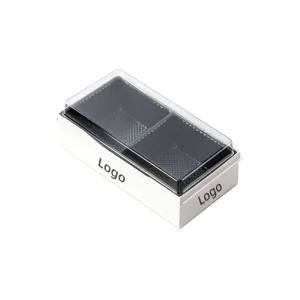
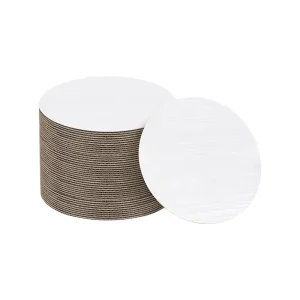
How modern FMCG brands, supermarket chains, and food service franchises leverage direct factory OEM partnerships to optimize unit costs, secure supply chain resiliency, and enforce compliance.
In the contemporary FMCG and bakery retail sectors, custom packaging is no longer merely a passive vessel for transport—it represents an essential vector for brand positioning, shelf differentiation, and structural food safety. As global consumer markets demand heightened sustainability, regulatory rigor, and visually arresting unboxing experiences, global brand owners are shifting away from intermediate trading agents and establishing direct relationships with specialized OEM Private Label Packaging Factories.
An Original Equipment Manufacturer (OEM) in the packaging domain functions as a fully integrated engineering and manufacturing extension of the buyer's organization. By utilizing advanced CAD structural design, automated thermoforming, high-speed offset printing, and precision die-cutting, direct OEM factories eliminate margin stacking, shorten innovation cycles, and ensure full batch-level traceability from raw pulp or resin to final port of discharge.
Direct factory alignment allows enterprise buyers to amortize steel tooling and die-cutting plates across high-volume production runs. Eliminating intermediary markups yields a 18% to 32% reduction in overall landing packaging costs.
Enterprise food packaging requires zero-tolerance defect limits. Factory-direct OEM integration applies Statistical Process Control (SPC) across material thickness, grease barrier ratings, and stacking strength.
Integrated factories shorten product-to-market lead times through automated material staging and rapid mold swapping, crucial for seasonal holiday releases and quick-turn retail campaigns.
Unpacking the structural, logistical, and technological advantages offered by Guangdong's specialized packaging manufacturing hubs.
The concentration of packaging technology within China’s primary manufacturing corridors—specifically Chaoshan and the broader Guangdong industrial matrix—presents global buyers with an unmatched competitive advantage. Unlike fragmented regional producers, China’s specialized packaging clusters operate under a dense ecosystem model where virgin paperboard mills, polymer formers, ink chemists, toolmakers, and export logistics providers co-exist within a 50-kilometer radius.
This industrial density translates directly into operational benefits for private label procurement teams: rapid material sourcing, lower logistics overhead, and access to sophisticated machinery such as high-precision 10-color Heidelberg offset presses, automated thermoforming thermo-plastic lines, and high-speed box glue folding machinery.
Immediate access to food-grade virgin Bleached Softwood Kraft (SBS), unbleached natural kraft board, and high-clarity virgin PET / rPET resin sheets. Bulk material procurement shields OEM clients from volatile commodity price spikes.
Deployment of fully automated Mengxing thermoformers and Zhongbo automatic die-cutters ensures sub-millimeter tolerances on closure latches, folding scores, and window film positioning.
Direct ocean freight staging via Shantou and Shenzhen deep-water container ports provides global buyers with flexible shipping terms (FOB, CIF, DDP) and reduced transit door-to-door cycles.
Fulfilling the complex vendor onboarding requirements of global supermarket chains, QSR groups, and multinational food distributors.
Procurement directors managing global food packaging categories operate under strict risk-mitigation frameworks. Vendor selection requires rigorous evaluation across social accountability, environmental stewardship, manufacturing sanitation, and structural safety. A modern OEM Private Label Packaging Factory must maintain audit-ready facilities aligned with international governance standards.
Production environments for food-contact paper containers and PET clear lids must prevent particulate contamination, biological hazards, and chemical migration.
Global retail brands mandate compliance with Sedex SMETA and BSCI social audit frameworks, ensuring fair labor practices, safe working conditions, and transparent operational governance.
Packaging failure leads to food waste, customer claims, and brand erosion. OEM factories conduct physical laboratory testing prior to volume shipping.
Navigating North American, European Union, Middle Eastern, and Asian regulatory landscapes with certified material choices.
Food packaging regulations are evolving rapidly across global target jurisdictions. Importers face heavy penalties, port detentions, and retail bans if packaging fails to comply with localized environmental taxes, food contact migration limits, or chemical restrictions. A qualified OEM packaging partner provides pre-tested material formulations backed by official lab declarations.
All virgin paperboard, PET sheet resins, inks, and inner barrier coatings strictly conform to US FDA 21 CFR 177 standards and EU Regulation (EC) No 1935/2004 for direct food contact. Certified free from heavy metals, phthalates, and bisphenol compounds.
To assist EU and US buyers in navigating PFAS prohibition mandates and plastic packaging levies (e.g., UK Plastic Packaging Tax), our OEM factory offers bio-based barrier coatings, water-based dispersion coatings, and up to 100% rPET recycled PET options.
In-house artwork adaptation team supports multi-language nutrition panels, French Triman logos, UKCA/CE markings, GS1 barcode compliance, and localized recycling identification codes directly incorporated into printing plates.
How structural engineering and sustainable material science are redefining private label packaging performance.
The private label packaging sector is undergoing a rapid technological evolution. Drive towards circular economy models, coupled with soaring sea freight costs, has placed structural efficiency and reusability at the top of brand priorities. Modern OEM packaging factories are integrating three main breakthrough vectors:
By engineering pre-folded, knock-down paper-plastic hybrid structures, packaging can be shipped flat in dense master cartons. This reduces transit cubic volume by up to 35-40%, dramatically reducing per-unit container freight expenses while minimizing store back-room storage footprints.
Innovations in post-consumer recycled PET (rPET) processing now allow for up to 100% recycled content without sacrificing visual clarity, anti-fog performance, or snap-lock structural rigidity for bakery lids and deli displays.
Replacing traditional polyethylene (PE) or fluorinated PFAS coatings, aqueous dispersion coatings allow paper boxes and cake bases to remain fully repulpable and kerbside recyclable within standard paper recovery streams.
Tailored OEM private label packaging configurations engineered for specific retail and food service operating models.
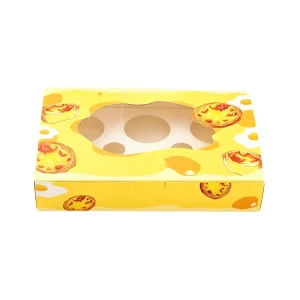
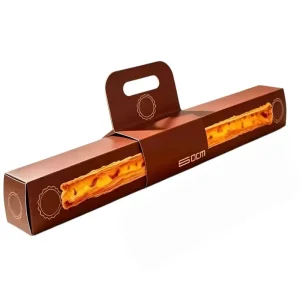
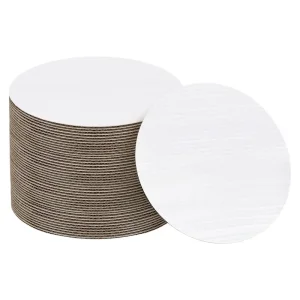
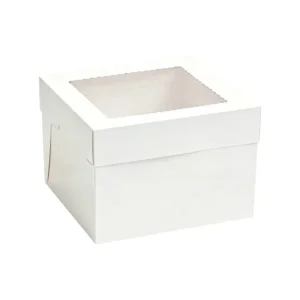
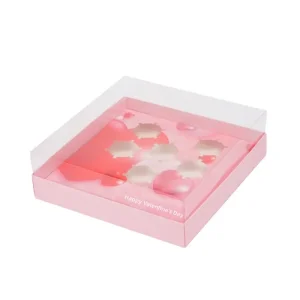
High-clarity window cake boxes, long pastry trays, and heavy-duty cake drums that protect delicate frosting during motor courier transportation while highlighting artisan craftsmanship under retail lighting.
Tamper-evident, stackable clear PET dessert portion cups, multi-compartment meal platters, and heat-sealable food boxes optimized for high-volume automated store packing and scanner handling.
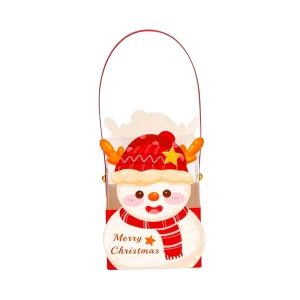
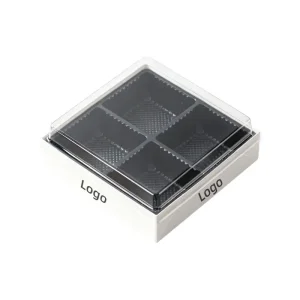
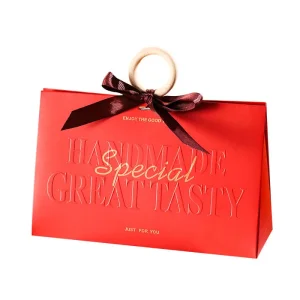
Luxury holiday treat boxes, foil-stamped candy packs, and dual-compartment gift containers featuring custom ribbon handles, metallic pantone printing, and premium inner insert trays.
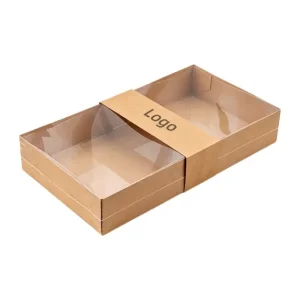
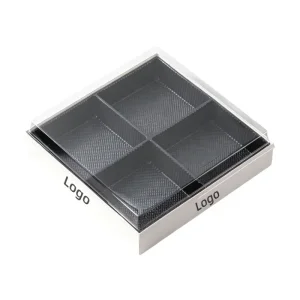
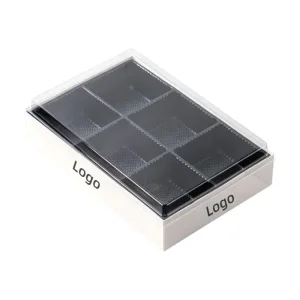
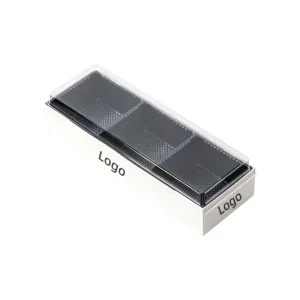
Explore our custom multi-compartment containers, artisan bread packaging, and specialty gift bags available for OEM private labeling.
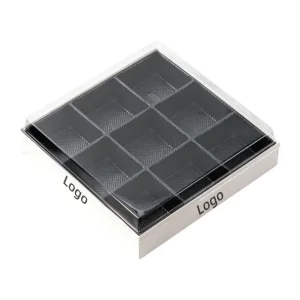
Expert insights on MOQs, tooling investment, artwork pre-press, food contact certifications, and export logistics.
For standard existing structural dies with custom brand offset printing, MOQs typically range between 3,000 and 5,000 pieces per SKU. For fully custom structural shapes requiring new steel die-cutting tooling or custom PET blister molds, the MOQ is 10,000 units to optimize machine setup and material staging economies of scale.
Tooling fees are charged upfront for dedicated steel cutting dies or aluminum blister molds. However, we offer full tooling fee rebates once the buyer reaches agreed cumulative production order thresholds (e.g., rebate credited upon reaching 100,000 units within a 12-month period).
Yes. All raw paperboard substrates, PET polymers, aqueous barrier coatings, and soy-based offset inks carry full food-contact safety compliance. We supply batch-specific SGS / Intertek test reports verifying compliance with FDA 21 CFR 177, EU Regulation 1935/2004, and LFGB standards on request.
Physical CAD structural unprinted samples ship within 3 working days. Pre-production printed samples require 7 to 10 working days, including CTP plate preparation. Mass production lead time is standardly 15 to 25 calendar days post sample/artwork approval, excluding ocean freight shipping duration.
Master cartons use heavy-duty 5-ply corrugated shipper boxes loaded onto moisture-proof plastic pallets with edge-guard protectors and stretch wrapping. Containers feature desiccant packs to eliminate humidity damage during tropical sea transit.
Absolutly. Our in-house structural design team provides 2D dieline vector files (AI / PDF / CAD) based on your exact product dimensions, allowing your creative brand agency to effortlessly overlay artwork graphic elements.