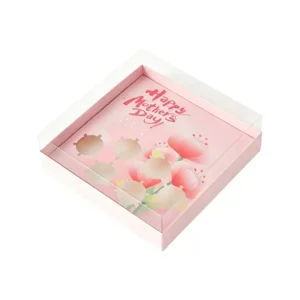
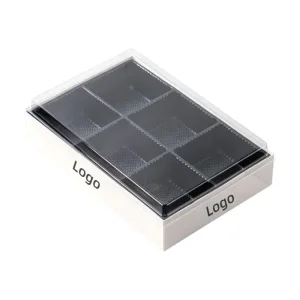
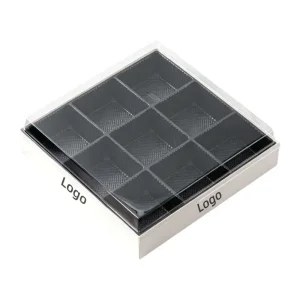
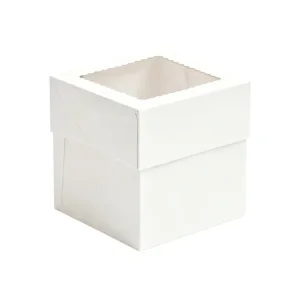
Direct OEM structural designs engineered for bakery, food service, and luxury retail procurement.

Navigating global regulatory shifts, Extended Producer Responsibility (EPR), and barrier engineering for sustainable food packaging systems.
The global enterprise food and retail sector is undergoing a structural paradigm shift driven by the European Union’s Packaging and Packaging Waste Regulation (PPWR), North American state-level EPR enforcement, and evolving environmental consumer intent. Choosing a qualified OEM Recyclable Packaging Supplier is no longer merely a procurement transaction; it represents a core risk mitigation strategy and a driver of brand equity. Modern procurement directors must balance strict food safety compliance (FDA 21 CFR, EU 10/2011, LFGB), structural protection, shelf-life integrity, and closed-loop recyclability.
Leading OEM packaging manufacturers are pioneering mono-material folding paperboard structures, high-clarity bio-PET/rPET transparent windows, and water-based dispersion barrier coatings that fully replace toxic PFAS (per- and polyfluoroalkyl substances) and fluorinated wax formulations. By engineering packaging designs specifically for modern automated MRF (Materials Recovery Facility) optical sorting algorithms, enterprise brands ensure their secondary and primary packaging achieves true kerbside recyclability without sacrificing structural rigidity or grease resistance.
Architecting next-generation bio-polymers, nanocellulose barriers, and digital traceability for 2026–2035.
Transitioning from traditional PE/PP extrusion lamination to ultra-thin bio-dispersion polymers. These coatings provide high water vapor transmission rate (WVTR) and oxygen barrier protection while repulping cleanly in conventional paper recycling mills without microplastic residue.
Integrating up to 100% post-consumer recycled food-grade rPET into transparent lids and bakery containers. Utilizing enzymatic recycling pathways to yield crystal-clear optical properties equivalent to virgin polymers while reducing carbon footprints by up to 68%.
Embedding invisible digital watermarks (HolyGrail 2.0 protocol) and dynamic QR codes into printed structural packaging. This empowers automated sorting in recycling facilities and gives consumers real-time end-of-life disposal guidance.
Tailored structural frameworks optimized for bakery chains, fast-casual takeout, supermarket delis, and luxury gifting.
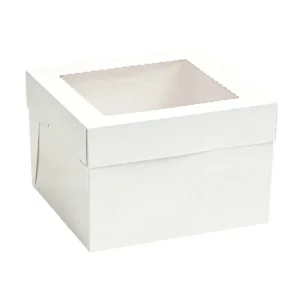
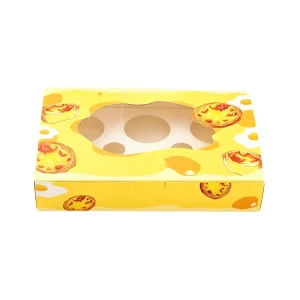
Engineered anti-fog rPET windows paired with grease-resistant virgin kraft/white boards (250–400 gsm). Built to withstand high-fat bakery items, butter-laden pastries, and hot toast without structural softening or grease bleed-through.
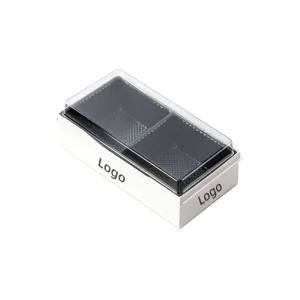
Precision-moulded snap-lock lids and multi-compartment containers built for high-speed delivery platform handling. Designed to prevent sauce migration between compartments and preserve food texture during 30+ minute transit windows.
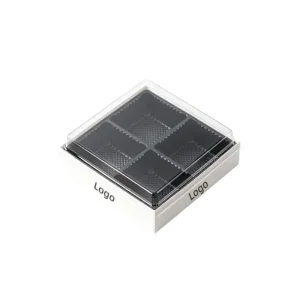
Crystal-clear PET and paper-plastic hybrid formats engineered for refrigerated self-service display cases. Maximizes shelf appeal, product visibility, and optical clarity under store lighting while supporting automated barcode scanning.
Inside our 10,000 m² Chaozhou manufacturing complex: Precision blister forming, automated die-cutting, and scale advantages.
Located in the heart of Chaozhou's world-renowned packaging manufacturing cluster, our facility combines automated structural tooling with advanced lean production workflows. Operating over 12 automated high-speed production lines—including high-precision Mengxing blister thermoformers and Zhongbo automatic die-cutting machinery—we manage the entire manufacturing lifecycle under a unified Quality Management System (QMS).
| Production Capability | Technical Metric / Equipment Spec | Procurement Value Advantage |
|---|---|---|
| Tooling & Mold Library | In-house CAD/CAM tooling facility, 500+ stock structural dies | Zero mould setup fees on stock structures; rapid custom sample turnaround in 3–5 days |
| Precision Thermoforming | High-speed Mengxing blister lines with ±0.1mm tolerance | Flawless lid-to-base snap fit, eliminating lid pop-offs during food transit |
| Offset & Flexo Printing | 8-color heavy offset press with inline UV varnish & foil stamping | Pantone spot accuracy, crisp fine-line typography, and high-impact brand expression |
| Flat-Pack Engineering | 3D nested structure modeling and automated carton packing | Cuts ocean freight container volume by up to 35%, drastically reducing unit logistics costs |
| Quality Assurance (QA) | Inline optical sensor inspection & batch-level AQL 1.5 testing | 100% traceable food-grade material declarations supplied with every bill of lading |
Structured procurement protocols for international packaging buyers, importers, and multi-location retail chains.
Before mass production commences, comprehensive structural drawings, board grammages (gsm), caliper specs, and ink migration limits are frozen in a signed master specification agreement. Pre-production physical samples are delivered for real-world stress testing.
Every raw material substrate—from virgin SBS board to PET sheet—undergoes strict heavy metal, phthalate, and primary aromatic amine screening. Batch-specific migration testing certificates guarantee compliance across US FDA, EU 10/2011, and GCC food contact norms.
Our packaging engineers analyze your entire logistics chain: freight volumetric weight, warehousing stack heights, retail shelf density, and store assembly speed. We design custom knock-down structures that maximize container fill rates while keeping store-level labor minimal.
Ensuring seamless market entry with fully compliant documentation, regional logistics, and international standards.
Exporting to over 40 countries across Europe, North America, the Middle East, and Oceania requires deep mastery of regional regulatory frameworks. We supply comprehensive documentation packages with every shipment, enabling smooth customs clearance and regulatory audit readiness.
Direct technical answers from our engineering, quality control, and export management teams.
For existing structural dies with custom-printed graphics, our standard MOQ starts at 3,000 to 5,000 units per SKU. For entirely new structural designs requiring custom steel-rule die-cuts or thermoforming blister molds, the standard MOQ is 10,000 units per SKU to amortize tooling setups efficiently. Buyers can aggregate multiple SKUs into a single 20ft or 40HQ container to optimize freight costs.
We utilize advanced water-based poly-dispersion coatings and bio-wax formulations applied during the paperboard mill coating process. These bio-coatings create a dense, cross-linked microscopic matrix that repels lipids and moisture. During repulping in paper recycling plants, the dispersion layer breaks down cleanly without forming sticky contaminants, allowing standard kerbside paper stream recovery.
Plain structural unprinted samples using existing tooling are dispatched within 3 to 5 business days. Fully custom-printed pre-production samples require 7 to 10 business days for plate making and proofing. Mass production turnaround averages 15 to 25 calendar days post sample approval, subject to volume scale and seasonal peak capacity (e.g., pre-holiday booking windows).
Yes. Our 8-color heavy offset press delivers precise Pantone Matching System (PMS) spot-color fidelity alongside CMYK process printing. We offer eco-friendly water-based spot UV, embossing, debossing, and plastic-free metallic hot-foil stamping using ultra-thin recyclable transfer foils.
Our structural engineering desk specializes in knock-down (KD) paper-plastic packaging formats. Lids nest compactly together, and paperboard bases fold completely flat with automatic pop-up assembly joints. This reduces packed volume by 25% to 35% compared to pre-assembled boxes, significantly decreasing shipping container counts and total carbon-equivalent transport emissions.
Complete your procurement portfolio with our specialized clear-lid, holiday, and multi-compartment series.