Precision-Engineered Packaging Solutions Produced with Low-VOC, Food-Safe Soy-Based Inks
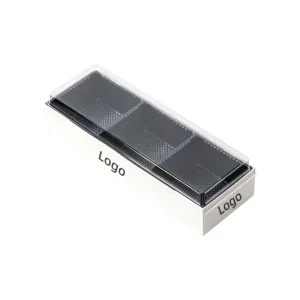
Evaluating the chemical transition from petroleum mineral oils to refined soy triglyceride chemistry in high-speed industrial printing.
The global packaging and printing sector is undergoing an unprecedented structural transition driven by corporate decarbonization targets, stringent chemical safety mandates, and consumer pressure for zero-toxicity food packaging. At the core of this transition is the obsolescence of traditional petroleum-based inks—historically favoured for rapid drying times—and the rise of Soy-Based Ink Offset and Flexographic Systems. As an authoritative OEM/ODM manufacturer specializing in food-grade custom paper packaging, Chaozhou Weiting Packaging Products Co., Ltd. (WTPack) operates at the bleeding edge of this eco-lithographic revolution.
Soy-based inks are formulated by replacing the Volatile Organic Compound (VOC) petroleum oil fraction of offset printing inks with refined soybean oil (a bio-renewable triglyceride vehicle composed of linoleic, oleic, and linolenic fatty acid chains). Unlike mineral oil inks containing hazardous aromatic hydrocarbons (MOSH/MOAH), refined soy oil undergoes controlled heat polymerization and bodying processes. When combined with specialized alkyd resins, pigment concentrates, and organic driers, soy oil yields a printing vehicle that delivers superior pigment dispersion, enhanced dot gain control, and exceptional optical density across bleached virgin cardboards, kraft boards, and grease-resistant substrates.
Traditional petroleum inks release up to 25%–35% VOCs during flash drying. High-purity soy-based inks reduce VOC off-gassing to under 1%–4%, creating cleanroom manufacturing environments and eliminating toxic chemical residues in finished food packaging.
Eliminating Mineral Oil Saturated Hydrocarbons (MOSH) and Mineral Oil Aromatic Hydrocarbons (MOAH) prevents toxic molecular migration through paperboard fibers into lipid-rich bakery items, ensuring strict FDA 21 CFR 176.170 and EU No. 1935/2004 compliance.
During municipal paper recycling, soy oil ink vehicles break down significantly easier during alkaline flotation de-inking processes. This preserves paper fiber tensile strength and enables paperboard upcycling into high-grade post-consumer recycled (PCR) pulp.
In high-volume commercial printing on multi-color Heidelberg Speedmaster and Komori Lithrone presses, ink selection directly influences press uptime, color fidelity, rub resistance, and unit production cost. Below is an engineering audit comparison verified across our 10,000 m² Chaozhou manufacturing plant:
| Technical Parameter | Traditional Petroleum Ink | OEM Soy-Based Ink Formulation | Operational & Safety Advantage |
|---|---|---|---|
| VOC Content (% Weight) | 25.0% - 35.0% | < 2.0% - 4.0% | 90%+ reduction in atmospheric emissions; zero toxic off-gassing. |
| Color Gamut & Density | Baseline (Standard) | +12% Brighter Chromatic Yield | Soy oil's natural clarity allows higher pigment loading and deeper saturation. |
| Rub & Scuff Resistance | Moderate (Requires heavy coat) | High (Oxidative Polymerization) | Enhanced scuff resistance on long-haul logistics cake and pastry boxes. |
| MOSH / MOAH Contamination | High Risk (> 150 mg/kg) | Zero Non-Detectable | Eliminates carcinogenic hydrocarbon migration risk into food products. |
| Flotation De-inking Index | 45% - 60% Recovery | 82% - 94% Flotation Recovery | Higher quality recycled fiber pulp; essential for circular packaging audits. |
How international environmental directives and corporate ESG frameworks are mandating soy ink integration in primary packaging.
The global packaging ecosystem is governed by an increasingly intricate web of statutory environmental compliance laws. Regulatory bodies across North America, the European Union, the Middle East, and Asia-Pacific are enforcing zero-tolerance policies regarding synthetic chemical migration in secondary and primary food packaging. For procurement officers, brand owners, and packaging importers, aligning with an certified OEM supplier proficient in soy-based ink printing is no longer a marketing option—it is a legal compliance necessity.
Under the updated European Packaging and Packaging Waste Directive (PPWR) and France’s groundbreaking Arrêté du 13 avril 2022, the use of mineral oils containing MOSH and MOAH in printing inks applied to packaging intended for consumers is strictly restricted or banned outright. French law enforces severe penalization for mineral oil ink application due to proved bioaccumulation in bodily tissues. Soy-based inks, derived purely from vegetable oils, offer complete immunity from mineral oil enforcement actions across all EU member states.
For baked goods, dessert trays, egg tart containers, and takeaway packaging, greasy vapors and elevated ambient temperatures inside folded cartons can accelerate the transfer of printing chemicals through board pores. Inks formulated with soybean oil triglycerides possess higher molecular weights and lower vapor pressure, dramatically reducing overall migration limits (OML) and specific migration limits (SML) below European Chemicals Agency (ECHA) thresholds.
Global retail giants, supermarket networks, and international bakery franchises actively compute Scope 3 greenhouse gas (GHG) emissions across their supply chains. Petroleum refining for traditional ink chemistry yields heavy carbon dioxide equivalents. Conversely, soybean crops naturally sequester atmospheric carbon dioxide during growth. Sourcing paper packaging printed with soy-based inks grants procurement directors verifiable carbon credits and measurable reductions in LCA (Life Cycle Assessment) metrics.
Key quality assurance metrics, spectrophotometric criteria, and structural specifications required by multinational packaging buyers.
To successfully deliver OEM/ODM packaging solutions to high-volume buyers—ranging from bakery chains in Saudi Arabia and the UAE to gourmet retail distributors in Europe and North America—a manufacturing supplier must demonstrate rigorous industrial execution. At WTPack, our production matrix integrates strict engineering benchmarks across every stage of paperboard converting and soy ink application.
Using automated closed-loop X-Rite spectrophotometers, our press operators maintain Delta E (ΔE) color variance below 1.5 across millions of press sheets, ensuring precise Pantone PMS matching for global corporate brand guidelines.
Because soy oil inks dry primarily through oxidation rather than chemical absorption, our formulation incorporates specialized synthetic wax additives. Printed samples undergo 1,000+ dry and wet stroke Sutherland Rub Tests to prevent smudging in transit.
Soy ink layers must seamlessly bond with underlying water-based barrier coatings and oil-resistant paperboard finishes without flaking, pinholing, or surface delamination when exposed to hot bakery oils and ambient moisture.
How WTPack leverages automated converting technology, raw material vertical integration, and cluster logistics to maximize buyer value.
Located in Anbu Town, Chao'an District, Chaozhou City, Guangdong Province—the epicenter of China's premier food packaging and film converting cluster—Chaozhou Weiting Packaging Products Co., Ltd. (WTPack) provides global buyers with an unassailable competitive advantage in cost, precision, and delivery speed.
Operating a modernized 10,000 square meter standardized production plant staffed by 60+ skilled engineers, R&D technicians, and QC specialists, WTPack maintains full in-house control over the structural and graphic packaging pipeline. Rather than outsourcing key production phases, our facility houses state-of-the-art Mengxing automated blister thermoforming lines, Zhongbo high-speed die-cutters, multi-color offset printing presses equipped with soy ink inline curing systems, and automated box gluing machinery.
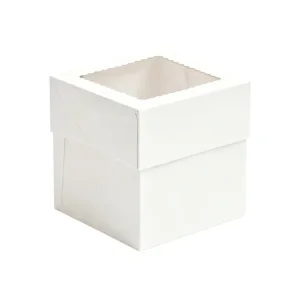
Outsourcing die-line cutting and blister mould creation adds weeks of lead time and inflated capital expenditure for B2B buyers. WTPack maintains an extensive proprietary structural mould library covering paper-plastic composite cake containers, clear PET dome covers, multi-grid egg tart trays, and folding window boxes. For custom OEM projects, our engineering design desk produces digital 3D mock-ups and physical CAD structural samples within 48 hours.
With international ocean freight volatile, shipping pre-assembled paperboard boxes or rigid containers incurs exorbitant volumetric fees. WTPack’s structural team specializes in knock-down, flat-packed engineering designs. By re-engineering corner interlocking tabs, pre-glued side walls, and stackable nested PET lids, we consistently compress ocean freight cube requirements by 30% to 35%, drastically reducing landed unit costs for importers loading 20ft, 40ft, and 40HQ containers at Shantou and Shenzhen ports.
Quality control at WTPack is governed by standardized AQL (Acceptable Quality Limit) protocols. Every production run undergoes automated inline optical scanning for printing defect detection, followed by destructive edge-crush resistance testing (ECT), box compression test (BCT) scoring, snap-lock closure pull force verification, and batch-level food-contact compliance certifications (FDA, LFGB, SGS reports) accompanying export documentation.
Exploring real-world retail, commercial, and food service applications for custom soy-printed paper packaging.
Primary Requirements: Grease resistance, zero odor transfer, crystal-clear window visibility.
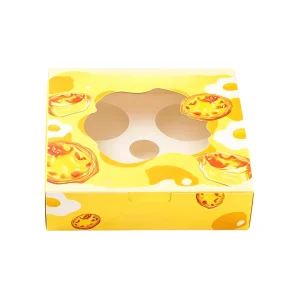
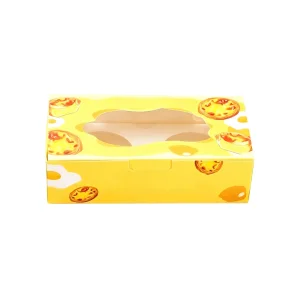
WTPack Solution: High-density white cardboard egg tart and cupcake boxes printed with custom brand graphics using soy-based inks. Moisture-resistant internal coatings prevent butter soak-through while maintaining vibrant exterior branding.
Primary Requirements: Stacking rigidity, automated scan-and-go barcodes, cold case endurance.
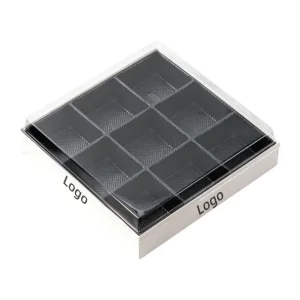
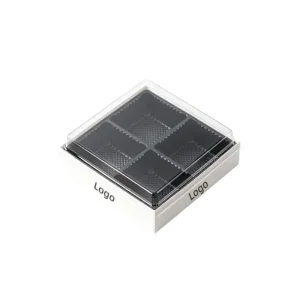
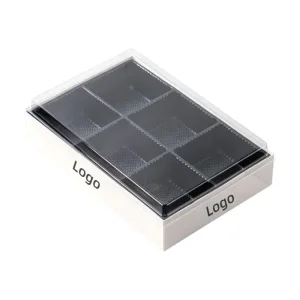
WTPack Solution: Heavy-duty tall square food boxes and multi-compartment catering trays. Soy ink formulations resist condensation smudging during refrigerated display while holding high-resolution 1D/2D barcode printing.
Primary Requirements: Luxury finishing, hot foil stamping, structural elegance.
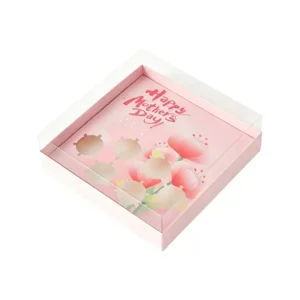
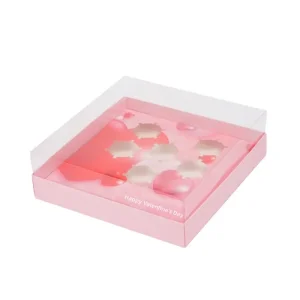
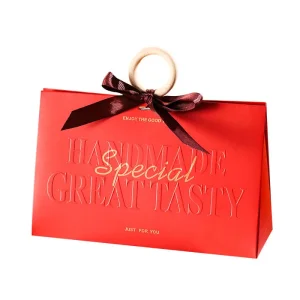
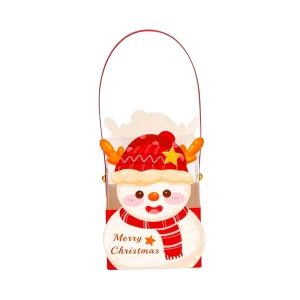
WTPack Solution: Premium Valentine’s, Mother’s Day, and Christmas gift containers featuring rich soy ink coverage matched with selective metallic gold/silver foil stamping, ribbon closures, and high-clarity PET clear lids.
Comprehensive engineering and procurement answers provided by WTPack’s export technical director.
Soy-based inks eliminate hazardous petroleum hydrocarbon solvents (MOSH/MOAH) and reduce Volatile Organic Compound (VOC) emissions by over 90%. Chemical safety aside, soybean oil’s superior clarity allows higher pigment concentrations, delivering richer color saturation, superior dot gain control, and brighter graphic fidelity on paperboard. Furthermore, soy-printed paperboard achieves up to 94% flotation recovery during recycling, strengthening your brand's sustainability credentials under EU PPWR regulations.
While raw soybean oil ink formulations incur a slight 3% to 5% material cost premium per kilogram compared to raw petroleum inks, the actual unit packaging cost difference is virtually negligible (often less than $0.001 per printed box). Because soy ink exhibits higher mileage—providing approximately 15% greater square-meter coverage per kg due to efficient pigment dispersion—and reduces press setup cleaning downtime, the net total cost of ownership (TCO) remains equal to or lower than conventional printing.
For existing standard structural die-cuts in our factory library (e.g., standard egg tart boxes, square cake containers, toast bags), custom branded soy ink printing starts at 3,000 to 5,000 pieces per SKU. For entirely new fully custom CAD structural tooling (new die-line geometry or unique thermoformed PET blister moulds), our base MOQ is 10,000 pieces. Multi-SKU orders can be combined into shared production runs to maximize 20ft/40HQ container loading efficiency.
WTPack operates under strict ISO 9001:2015 and food packaging sanitation guidelines. Every exported order is accompanied by material safety declarations and third-party test reports (SGS / TUV) verifying compliance with US FDA 21 CFR 176.170 (paperboard in contact with aqueous and fatty foods), EU Regulation No. 1935/2004, and REACH/RoHS heavy metal limits (CONEG standard).
Digital pre-press proofs and physical plain CAD structural samples are prepared within 48 to 72 hours. Printed pre-production physical samples utilizing actual soy ink offset runs take 7 to 10 working days including plate cutting. Upon sample sign-off, mass production lead times are typically 15 to 25 calendar days. We coordinate FOB, CIF, or DDP ocean and air freight shipments directly from Shantou and Shenzhen shipping ports.
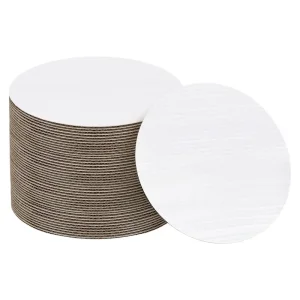
High-Load Cake Drums, Clear-Lid Catering Trays, & Specialized Pastry Packaging
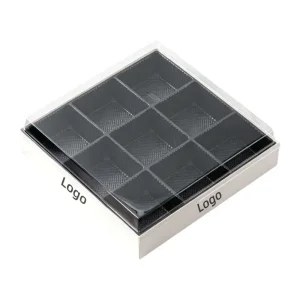
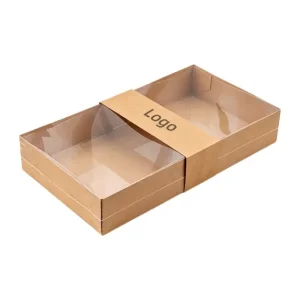
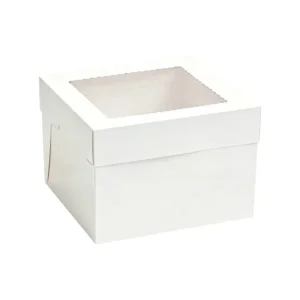
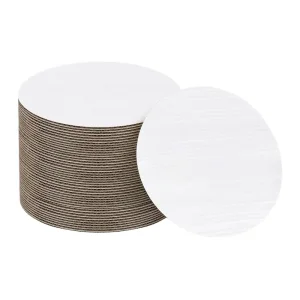
Partner with Chaozhou's leading OEM/ODM food packaging manufacturer. Request custom CAD structural die-lines, soy ink print samples, and direct factory pricing within 24 hours.
Request Complete Catalog & Quotation