Direct factory wholesale items engineered for bakery chains, catering providers, and retail food distributors worldwide.

Analyzing structural shifts, material substitution economics, and compliance frameworks across international supply chains.
The global industrial and commercial packaging sector is undergoing a profound structural pivot. Driven by aggressive legislative mandates such as the European Union’s Packaging and Packaging Waste Regulation (PPWR), extended producer responsibility (EPR) schemes in North America, and corporate ESG pledges, procurement directors are rapidly phasing out expanded polystyrene (EPS) and single-use plastic rigid containers in favor of engineered cardboard tray packaging solutions. The market for paperboard and corrugated trays is projected to expand at a compound annual growth rate (CAGR) of over 6.4% through 2030, exceeding a global valuation of USD $14.2 Billion.
Today’s commercial cardboard tray is no longer a simple folded paper base; it represents a sophisticated convergence of substrate engineering, bio-based barrier chemistry, and high-clarity hybrid window technology. From automated quick-service restaurant (QSR) assembly lines to high-stress cold chain logistics for bulk food catering and fresh produce distribution, modern cardboard trays must deliver uncompromised mechanical integrity while adhering to stringent food-contact safety standards including US FDA 21 CFR 176.170 and EU Regulation (EC) No 1935/2004.
Engineered corner-column locking mechanisms, double-walled sidewalls, and fluted inner cores ensure zero vertical buckling during multi-tier pallet transportation and retail display stacking.
Eliminating legacy fluorochemicals (PFAS), our paperboard substrates leverage advanced aqueous dispersion coatings and PLA bio-based films for superior grease proofing (Kit 12 standard) and water resistance.
Designed for space-constrained commercial distribution. Nested and flat-fold packaging die-lines reduce warehouse footprint and lower transoceanic container shipping costs by up to 35%.
Selecting the optimal fiber grammage, flute profile, and surface treatment to meet operational load requirements.
| Cardboard Substrate Type | Grammage (GSM) / Thickness | Key Barrier & Mechanical Property | Primary Industrial / Commercial Application |
|---|---|---|---|
| Solid Bleached Sulfate (SBS) | 250 GSM - 450 GSM | 100% Virgin Fiber, High Brightness, Superior Printing Surface | Luxury Bakery, Confectionery, High-End Retail Gift Sets |
| Folding Boxboard (FBB) | 230 GSM - 400 GSM | Multi-ply mechanical/chemical pulp, High Stiffness to Weight | Frozen Food Packaging, Takeaway Catering Boxes, Dessert Trays |
| Unbleached Kraft Board | 280 GSM - 450 GSM | Ultra-High Tear Strength, Natural Rustic Eco Aesthetic | Heavy-Duty Produce Trays, Fast-Food Burger/Fries Trays, Industrial Parts |
| E-Flute Corrugated | 1.5 mm Flute Height (250-350 GSM liners) | High Crush Resistance, Thermal Insulation, Crush Protection | Heavy Pastry Carriers, Pizza Trays, Multi-Item Bulk Catering Platters |
| F-Flute & N-Flute Micro-Corrugated | 0.8 mm - 1.2 mm Flute Height | Ultra-Smooth Die-Cutting, Compact Stacking, Premium Folding Strength | Custom Printed Small Square Bakery Trays, Gourmet Delicatessen Packs |
| Aqueous Dispersion Coated Board | 250 GSM - 400 GSM Base + 12-15 GSM Coating | Water-based polymer film, 100% Repulpable & Recyclable | Oily Baked Goods, Moist Ready-Meals, Cold Meat & Cheese Platters |
In high-speed commercial packaging lines, structural integrity is determined by rigorous technical metrics such as the Edge Crush Test (ECT), Mullen Bursting Strength, and Cobb Water Absorption Value. Standard virgin kraft cardboard trays manufactured at our Guangdong facility undergo precise calibration to maintain a Cobb 30-minute water absorption rate under 25 g/m², ensuring that cold-chain condensation or grease ingress does not compromise structural rigidity during delivery cycles.
Why leading global packaging distributors and food chains partner with our 10,000 m² Chaozhou production complex.
Situated within Chaozhou, Guangdong—the primary manufacturing cluster for Asian food-grade paper and plastic packaging—our factory integrates the complete production value chain under one roof. Unlike pure trading intermediaries or fragmented converters, our fully integrated operational infrastructure delivers three decisive advantages to enterprise procurement officers:
Every lot produced undergoes rigorous automated quality control checks, including inline color spectrophotometry to guarantee brand color consistency across printing batches within ΔE < 1.5.
Tailored structural configurations designed for international retail, food service, and industrial environments.
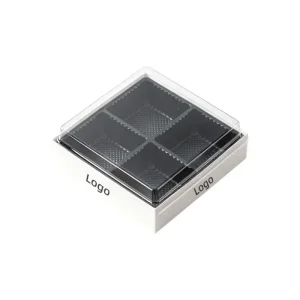
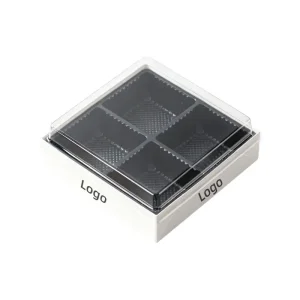
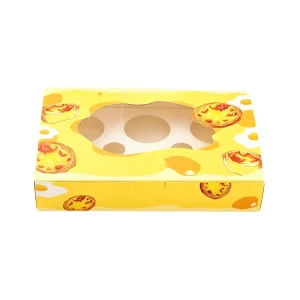
High-clarity anti-fog PET lids snap-locked to greaseproof paperboard bases allow delicate pastries, egg tarts, and mousses to retain freshness while maintaining 360-degree shelf visibility.
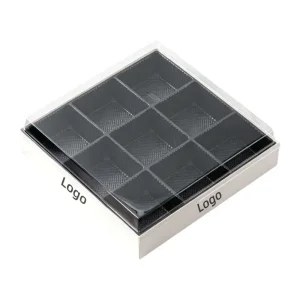
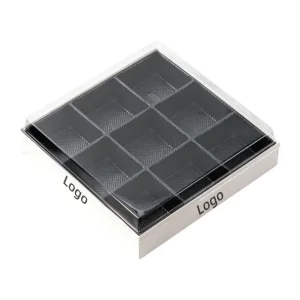
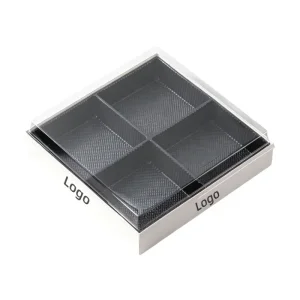
Oversized rigid corrugated trays featuring custom inner compartments isolate individual food portions, preventing cross-contamination and aesthetic degradation during high-speed transit.
Hydrophobic and moisture-resistant barrier coatings allow cardboard produce trays to withstand high-humidity cold rooms, offering a 100% curbside recyclable alternative to plastic meat trays.
Rigid setup trays enhanced with metallic foil hot-stamping, embossed brand logos, and satin or velvet ribbons for high-margin seasonal packages (Christmas, Eid, Mid-Autumn Festival).
Reinforced locking tabs and tamper-evident closure sleeves protect ready-meal portions against accidental spills during motorcycle or bicycle courier transport.
Heavy-duty anti-static fluted cardboard trays designed for electronic assembly, automotive parts sorting, and warehouse storage solutions.
Key financial, legal, and operational metrics for international purchasing managers.
When evaluating wholesale cardboard tray packaging suppliers, looking solely at FOB per-unit price creates a blind spot. A comprehensive TCO model incorporates three additional expense pillars:
We streamline international custom manufacturing through a structured 5-stage procurement protocol:
Explore specialized formats engineered for portion control, delicate pastries, and festive gift programs.

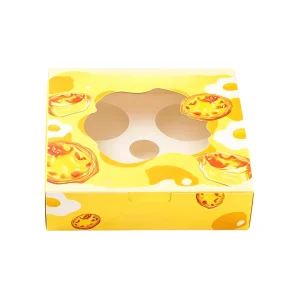
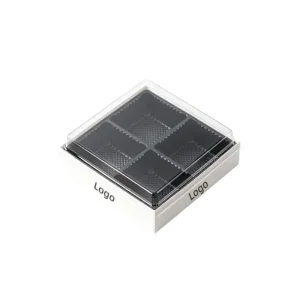
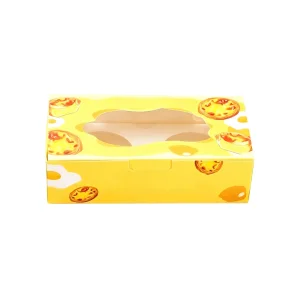
Aligning paperboard structural engineering with international environmental mandates and smart retail developments.
Moving away from plastic-laminated boards toward single-material mono-substrates and bio-dispersion aqueous barriers that disintegrate fully in conventional pulp recycling systems.
With strict bans across North America and Europe on per- and polyfluoroalkyl substances in food contact materials, our production line utilizes certified plant-based oil barriers.
Integrating high-density 2D barcodes, variable QR codes, and invisible anti-counterfeiting digital watermarks directly onto cardboard tray die-lines for real-time inventory tracking.
In-depth technical answers provided by our engineering and export compliance specialists.