Engineered for food service chains, industrial bakeries, and automated retail packaging lines.
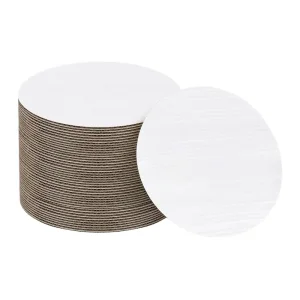
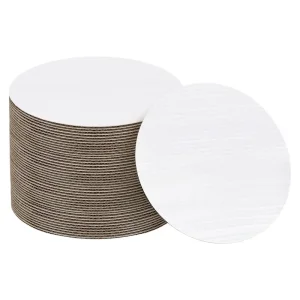
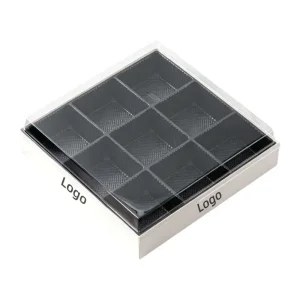
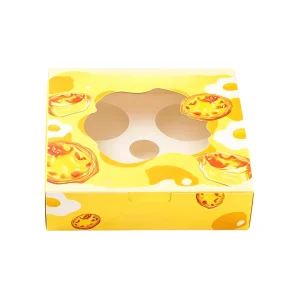
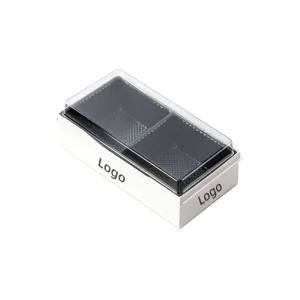
Strategic structural adaptations addressing regulatory pressures, micro-barrier polymer engineering, and circular economic mandates.
As global environmental directives enforce strict bans on per- and polyfluoroalkyl substances (PFAS), traditional fluorinated greaseproofing treatments are obsolete. Modern paper boxes for food manufacturing utilize advanced water-based acrylic dispersion coatings. These bio-polymer emulsions yield superior grease resistance (Kit 12 compliance) and moisture barrier properties without hindering repulpability during municipal paper recycling.
Industrial food processing and quick-service operations subject disposable packaging to thermal fluctuations ranging from flash freezing (-40°C) to hot-fill warming (+120°C). By combining virgin Solid Bleached Sulfate (SBS) and Folding Boxboard (FBB) with high-density ribbed geometry, structural deformation and lid dislodgement are completely mitigated under extreme stacking loads.
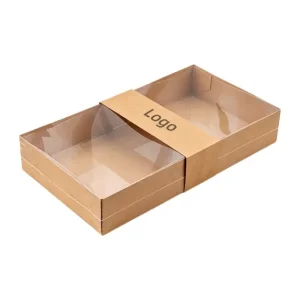
Leading consumer packaged goods (CPG) brands demand post-consumer recycled (PCR) content and mono-material compatibility. Modern manufacturing incorporates up to 100% certified unbleached kraft paperboard paired with ultra-clear recycled PET (rPET) window films, ensuring end-of-life kerbside recyclability aligned with European Packaging and Packaging Waste Directive (PPWR) benchmarks.
Key economic, operational, and supply metrics prioritized by multi-national packaging buyers and Tier-1 food distributors.
Enterprise procurement directors look beyond factory-gate unit prices. True cost evaluation encompasses nesting ratios (cubage per ocean container), automatic denesting speed on filling lines, structural transit breakage rates, and warehousing footprint efficiencies. A 35% improvement in flat-pack nesting dramatically offsets international shipping surcharges.
Commercial bakeries and food plants require paper boxes designed with microscopic structural tolerances (±0.3mm). Boxes must seamlessly integrate with automatic folder-gluers, robotic pick-and-place arms, and high-speed thermoforming lid applicators without jamming, preventing downtime on lines producing over 10,000 units per hour.
Procurement teams require comprehensive technical dossiers upfront: batch-specific food contact clearance reports, heavy metal analyses, migration limits for aqueous and fatty foods, and chain-of-custody documentation (FSC/PEFC) to withstand rigorous retail compliance audits.
Combining industrial cluster scale, automated quality control vision systems, and agile OEM/ODM tooling capacity.
Operating state-of-the-art Mengxing thermoforming lines and Zhongbo automatic die-cutting complexes. Precision steel-rule dies guarantee crisp creasing lines, crisp locking tab engagements, and burr-free edge trim across millions of units monthly.
Every inline printing and folding run passes through high-speed CCD camera vision systems. Real-time neural networks identify print smudges, color variances (ΔE > 1.5), adhesive gaps, or structural pinholes, automatically ejecting defective units prior to final bundle packaging.
Located in the heart of China’s premier food packaging industrial hub in Guangdong, our facility benefits from immediate access to raw paperboard mills, specialized non-toxic ink compounders, and port logistics (Shantou/Shenzhen), minimizing lead times to under 20 days.
Strategic technology developments driving the next generation of disposable paper food packaging solutions.
Phasing out conventional synthetic polymer films in favor of Micro-Fibrillated Cellulose (MFC) coatings. MFC barriers impart exceptional oxygen and oil resistance while remaining 100% home-compostable under EN 13432 standards.
Integration of printed time-temperature indicators (TTI) and micro-encapsulated antimicrobial vapor emitters directly onto paperboard liners, extending bakery product shelf life by up to 40% without chemical preservatives.
Utilizing finite element analysis (FEA) software to engineer micro-fluted structural patterns. This achieves identical box compression test (BCT) values while reducing raw paperboard fiber consumption by 18% per square meter.
Rigorously tested to satisfy stringent food safety certifications across North American, European, Middle Eastern, and Asia-Pacific markets.
| Regulatory Standard | Jurisdiction | Target Testing Scope | Compliance Status |
|---|---|---|---|
| FDA 21 CFR 176.170 | North America (USA) | Components of paper and paperboard in contact with aqueous and fatty foods | Fully Certified (Batch Traceable) |
| EU Regulation 1935/2004 | European Union | General safety requirements for materials intended to come into contact with food | SGS Certified / Pass |
| EU Regulation 10/2011 & 2024/1245 | European Union | Overall migration limits (OML) and specific migration limits (SML) for PET window films | Compliant |
| LFGB § 30 & 31 | Germany / EU | Sensory evaluation (flavor/odor transfer), heavy metal leachability, formaldehyde tests | Certified Clean |
| FSC® Chain-of-Custody | Global | Sustainable forest management and paperboard raw material sourcing traceability | FSC-C123456 Verified |
| US State PFAS Legislation | USA (CA, NY, WA, etc.) | Total Organic Fluorine (TOF) < 100 ppm threshold for food packaging | 100% PFAS-Free Verified |
Our dedicated global trade team handles door-to-door (DDP), FOB Shantou/Shenzhen, and CIF terms. We issue complete documentation sets including Commercial Invoice, Packing List, Bill of Lading, Certificate of Origin (Form E/Form F), and Food-Grade Declarations for hassle-free customs clearance.
In-house structural and graphic designers assist global brands with multi-lingual typesetting, barcode precision validation (GS1 standards), nutritional panel formatting, and localized recycling logo placements (e.g., French Triman logo, UKCA, mobius loop).
Tailored structural packaging configurations addressing the unique micro-environments of distinct commercial food channels.
Clear, direct answers from our technical production desk to streamline your factory procurement process.
For existing standard box sizes and structural dies, our minimum order quantity starts at 3,000 to 5,000 pieces per design. For fully custom engineered dimensions, unique window die-cuts, or dedicated thermoforming blister molds, the MOQ is 10,000 pieces per SKU. Buyers can mix multiple SKUs within a single 20ft or 40HQ container to optimize total freight economics.
Yes. We exclusively process virgin food-grade white cardboards (FBB/SBS) and unbleached kraft paperboard ranging from 250 gsm to 400 gsm. All offset printing utilizes low-odor, vegetable-based soy inks complying with EU Resolution AP (02) 1 and US FDA guidelines. Every shipment is accompanied by a batch-specific compliance certificate and SGS chemical migration test reports.
We apply bio-based water-dispersed polymer barrier coatings or PE/PLA lamination directly onto the inner liner of the board. Furthermore, our structural box corners feature folded gusset designs or ultrasonic sealed edges, eliminating open corner joints where liquid or hot oil might leak during delivery.
Sampling takes 3 to 5 working days for standard stock structures, and 7 to 10 working days for printed pre-production prototypes. Full mass production typically completes within 15 to 25 calendar days after artwork approval and deposit receipt, depending on order complexity and seasonal factory schedules.
Absolutely. As a dual paper-forming and plastic thermoforming facility, we engineer both the paperboard tray base and the matching clear PET / rPET lid in parallel under one roof. This ensures exact snap-fit tolerances (groove geometry matched within ±0.2mm), preventing unexpected lid detachment while maintaining effortless opening for consumers.
Our structural engineers design pop-up auto-bottom boxes, knock-down gift cartons, and nesting trays that ship completely flat. By packing units flat in heavy-duty corrugated export master cartons, cubic meter volume (CBM) is reduced by up to 35-50% compared to pre-assembled rigid containers, significantly reducing freight costs per unit.
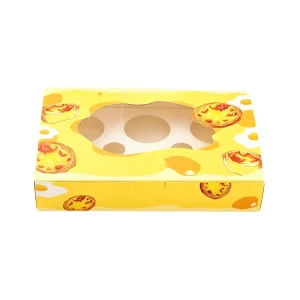
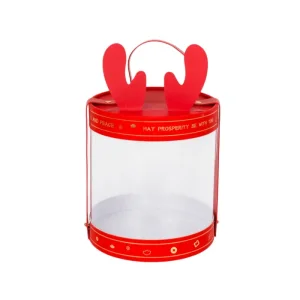
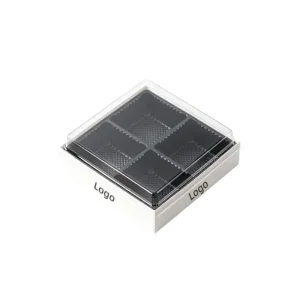
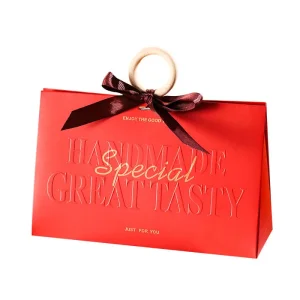
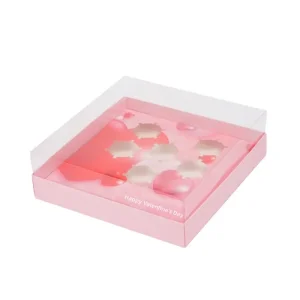
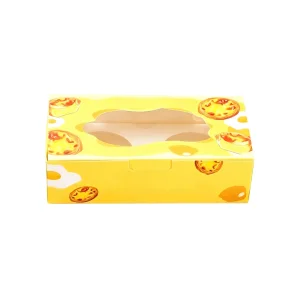
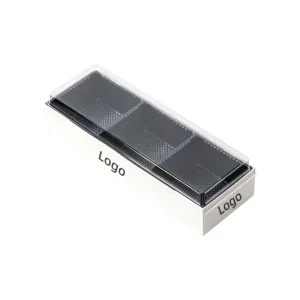
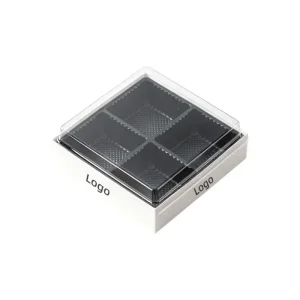
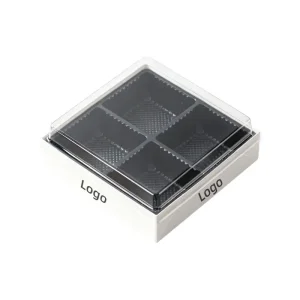
High-visibility window boxes, portion-controlled grid inserts, and customized gift containers.