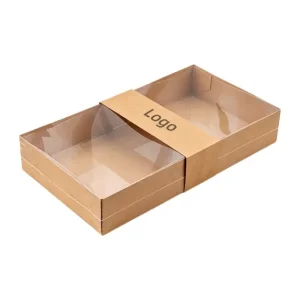
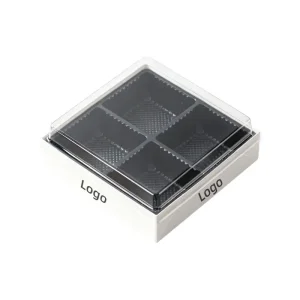
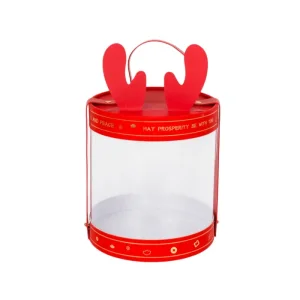
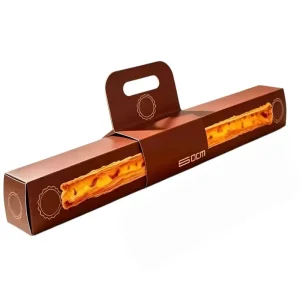
Explore our premium factory-direct packaging solutions engineered for bakery chains, food service providers, and global retail distributors.
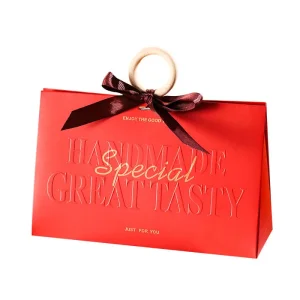
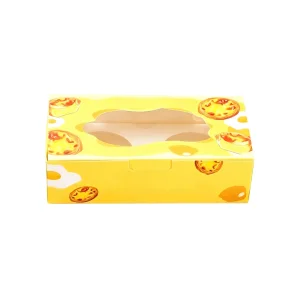
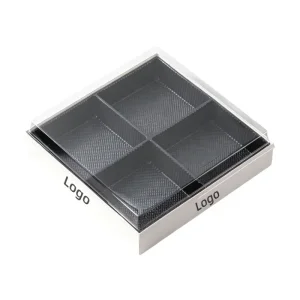

Analyzing global commercial transitions from single-layer paper carryalls to multi-substrate barrier engineered packaging structures.
In the contemporary B2B eco-system, sourcing high-performance laminated paper bags requires navigating complex intersections of substrate chemistry, barrier barrier physics, environmental regulatory frameworks, and brand shelf impact. As global retail, quick-service restaurant (QSR), artisan bakery, and luxury consumer sectors shift away from un-laminated virgin plastics, wholesale laminated paper bags have emerged as the paramount structural solution.
Lamination is not merely an aesthetic surface finish; it is an engineered multi-layer material synthesis. By bonding food-grade bleached or unbleached Kraft paper, art paper, or specialty boards with micro-thin barrier films—ranging from Polyethylene (PE), Polypropylene (OPP/BOPP), Polyethylene Terephthalate (PET), to advanced bio-based Polylactic Acid (PLA) and water-dispersed aqueous coatings—manufacturers can tailor exact physical properties. This structural synthesis solves historic vulnerabilities of paper packaging, notably low tensile strength when wet, high moisture permeability, and grease migration.
Unlaminated paper inherently possesses open porous cellulose structures with high Water Vapor Transmission Rates (WVTR). Laminated paper bags integrate extrusion or dry-laminated film barriers that compress WVTR down to sub-1.0 g/m²/24h, preventing crispness loss in baked goods and aroma degradation in roasted coffee beans.
Lamination dramatically upgrades burst resistance, tear propagation resistance, and handle tension thresholds. Multi-layer laminates prevent bottom-bursting failures during high-mass retail transport, delivering static weight capacity exceeding 15kg without structural degradation.
For hot food service, buttery pastries, and fried items, lipophilic oils easily penetrate standard paper fibers. Laminated interior linings form a hydrophobic and oleophobic boundary wall, completely containing lipids and preserving external optical presentation.
Engineering parameters for high-volume commercial buyers, quality assurance teams, and brand procurement directors.
Understanding the exact chemical composition and mechanical properties of multi-layer laminates is essential for calculating total cost of ownership (TCO) and matching package performance with shelf-life requirements. The matrix below outlines standardized technical configurations supplied across global industrial pipelines.
| Substrate Combination | Typical Grammage (GSM) | Barrier Layer Type | WVTR (g/m²/24h) | OTR (cc/m²/24h) | Primary Industrial Application |
|---|---|---|---|---|---|
| Kraft Paper + PE Extrusion | 70 - 120 GSM Kraft + 15-25µ PE | Food-Grade Polyethylene | < 5.0 | High Permeability | Bakery Takeaway, Flour & Sugar Bags, Standard Fast Food |
| Art Paper + Matt BOPP Lamination | 150 - 250 GSM Art Board + 18µ BOPP | Biaxially Oriented Polypropylene | < 2.5 | Medium Permeability | Luxury Retail, Fashion Apparel, Boutique Gift Packaging |
| Kraft Paper + Metallized PET + PE | 80 GSM Kraft + 12µ VMPET + 30µ PE | Aluminum-Vaporized PET Film | < 0.5 | < 0.5 | Specialty Coffee Beans, Milk Powder, Dehydrated Spices |
| Unbleached Kraft + Bio-PLA Film | 60 - 100 GSM Kraft + 20µ PLA | Compostable Bio-Polyester | < 8.0 | High Permeability | Eco-Certified Organic Markets, Zero-Waste Retailers |
| Paper + Aqueous Dispersion Coating | 80 - 150 GSM Paper + 8-12 GSM Water-Based | Polymer-Free Water Dispersion | < 10.0 | High Permeability | 100% Repulpable & Recyclable Food Containers & Bags |
Selecting the optimal laminate structure requires balancing product water activity (a_w) against shipping ambient relative humidity (RH). For example, coffee beans emit CO2 while requiring near-total exclusion of ambient oxygen and moisture. A tri-plex laminate incorporating VMPET or AL-foil paired with a one-way degassing valve delivers superior shelf-life performance (up to 18 months) compared to standard dual-layer PE laminates.
How leading wholesale manufacturers resolve shipping volume constraints, tooling costs, and print run efficiencies.
The global market for wholesale laminated paper bags is defined by rigorous margin management, container cubic-space optimization, and automated high-speed conversion efficiency. Freight rates directly impact landed costs per unit, making flat-pack engineering and precise carton nesting vital considerations for international importers across North America, Europe, the Middle East, and Oceania.
Shipped empty, rigid or semi-rigid paper bags can waste up to 70% of shipping container space with trapped air. Advanced structural scoring and automatic creasing enable bags and window boxes to collapse completely flat, increasing container load density by up to 35% and cutting ocean freight cost per unit.
Developing custom tooling for every packaging run introduces high fixed costs and delays lead times. Working with an OEM/ODM supplier equipped with over 500+ pre-engineered standardized dies allows buyers to bypass initial setup costs and reduce sample production times to 3–5 working days.
By leveraging continuous high-speed roll flexo and web-fed offset printing, manufacturing facilities lower unit costs dramatically at higher volume breaks (e.g., 5,000 vs. 50,000 vs. 200,000 units). Automated roll-fed bag making machines handle up to 250 bags per minute with inline handle attachment.
Ensuring compliance across regional food contact safety standards and circular economy legislation.
B2B importers operating in multi-jurisdictional environments must guarantee that wholesale laminated paper packaging satisfies strict localized statutory requirements. Failure to comply can result in border custom seizures, heavy regulatory fines, and reputational damage. Reliable suppliers maintain comprehensive batch-level test records and material declarations.
In the United States, paper coatings must comply with FDA 21 CFR 176.170 and 176.180 for direct food contact. Crucially, recent state-level legislation (e.g., California AB 1200, New York Hazardous Packaging Act) mandates strict zero-added PFAS (per- and polyfluoroalkyl substances) in grease-resistant paper treatments.
EU markets mandate adherence to Framework Regulation (EC) No 1935/2004 and Good Manufacturing Practice (EC) No 2023/2006. Under the emerging Packaging and Packaging Waste Regulation (PPWR), laminated paper bags must either be recyclable within standard kerbside paper streams (PE content < 5-10%) or fully industrial compostable according to EN 13432.
Importers into the UAE, Saudi Arabia, and GCC states require ESMA and SASO oxo-biodegradable or food-grade certification verification for plastic-laminated paper products. Materials must withstand elevated transport temperatures and high ambient humidity without delamination.
Anticipating next-generation material science advancements in sustainable, high-barrier smart paper packaging.
The flexible packaging sector is undergoing unprecedented technological transformation. Over the next decade, advances in green chemistry, digital printing automation, and intelligent inventory tracking will reshape the operational benchmarks for laminated paper bag manufacturing.
Next-generation bio-laminates leverage nano-engineered wood fiber coatings (MFC) applied directly to paper substrates. MFC forms a dense, non-porous crystalline matrix providing oxygen and grease barriers matching synthetic PET, while remaining 100% biodegradable and repulpable in standard paper mills.
Closed-loop inline spectrophotometers automatically scan printed paper webs at speeds of 300m/min, adjusting ink key feeds in real-time to guarantee ΔE (Delta E) color variance remains strictly under 1.5. Automated robotic die-cutting reduces setup scrap by up to 80%.
Embedding ultra-thin, printable RFID tags and conductive ink QR codes directly between laminate layers allows real-time supply chain traceability, anti-counterfeiting verification for luxury carry bags, and consumer engagement analytics upon smartphone scanning.
Comprehensive engineering and commercial responses to high-frequency procurement inquiries from international buyers.
Glossy BOPP (Biaxially Oriented Polypropylene) delivers high visual clarity, vibrant color contrast, and high scratch resistance, making it ideal for high-impact retail branding. Matt BOPP provides a soft-touch, non-reflective premium finish that excels in luxury and artisanal packaging applications. PE (Polyethylene) film is primarily functional; it is often extruded directly onto Kraft paper to create an inner moisture/grease barrier and provide superior heat-sealing integrity for bag bottoms and seams.
Traditional lamination relies on solvent-based adhesives containing ethyl acetate or polyurethane dissolved in organic solvents. During curing, residual solvent vapors (VOCs) can migrate into packaged food, causing off-odors and compliance failures under FDA/LFGB food contact regulations. Solvent-free lamination utilizes 100% solid reactive polyurethane adhesives applied at controlled temperatures. This eliminates VOC emissions, prevents solvent migration, accelerates curing times to 24–48 hours, and significantly reduces industrial energy consumption.
For existing stock structural sizes requiring overprinting or custom paper sleeves, MOQs typically range from 3,000 to 5,000 pieces per artwork design. For fully customized bag dimensions, specialized window die-cuts, or multi-layer custom laminations (e.g., Kraft + VMPET + PE roll stocks), MOQs start at 10,000 to 20,000 pieces per SKU. Higher volume runs amortize plate cylinder engraving fees (for rotogravure) or flexographic plate costs, yielding substantial cost reductions per unit.
Quality control laboratories execute standardized mechanical testing according to ASTM standards. Heat seal tensile strength is evaluated via ASTM F88 (standard test method for seal strength of flexible barrier materials), measuring the peak force required to separate a 25mm wide sealed strip. Burst resistance is tested using ASTM F2054 (restrained plate pressurization testing), inflating the bag with compressed air to quantify maximum internal pressure before seal failure occurs.
Recyclability depends on film thickness and substrate separation capability. Paper laminated with standard PE or OPP under 5% total weight can be processed in modern paper recycling mills equipped with repulping hydrapulpers. For 100% circular compliance, paper bags laminated with PLA (Polylactic Acid) or aqueous dispersion coatings achieve industrial compostability certification (EN 13432 / ASTM D6400), breaking down into water, CO2, and biomass within 90–180 days in commercial composting facilities.
Pre-press artwork should be submitted in vector formats (Adobe Illustrator .AI, vector .PDF, or .EPS) with all fonts converted to outlines and embedded raster images at minimum 300 DPI resolution. Spot color critical elements must designate exact Pantone Matching System (PMS) codes. For large volume orders, high-definition flexographic or 8-10 color rotogravure printing ensures pinpoint ink density, sharp micro-text clarity, and seamless spot UV foil alignment.
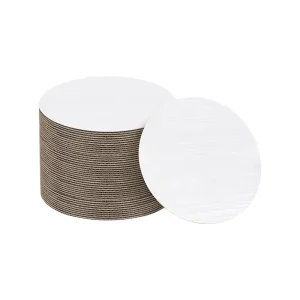
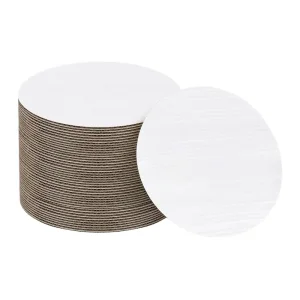
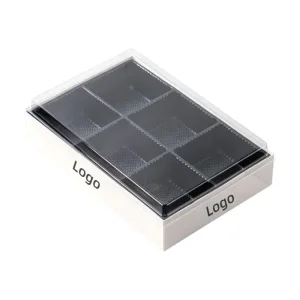
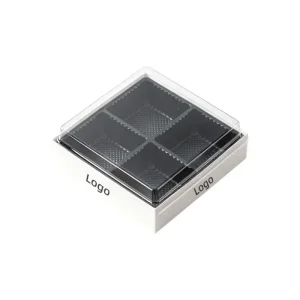
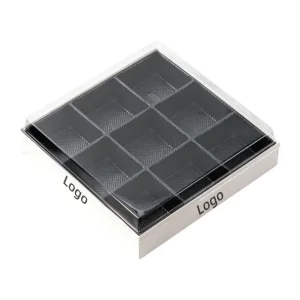
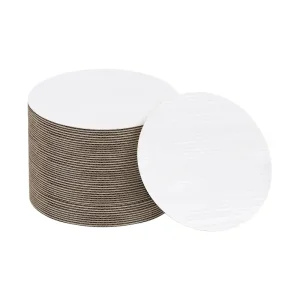
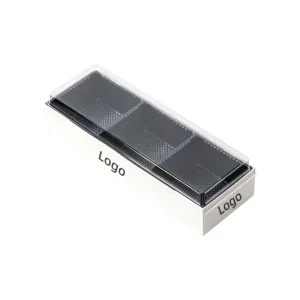
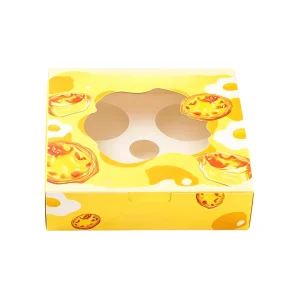
Explore our complete commercial range including artisan window bags, pastry boxes, cake drums, and multi-compartment food platters.