Explore our certified non-toxic UV printed food containers, eco-friendly window packaging, and precision-molded bakery displays engineered for high-volume international procurement.
The global printing and packaging ecosystem is experiencing a structural paradigm shift away from traditional solvent-based printing toward advanced photo-curing technology. Industrial buyers, international retail chains, and food packaging importers now demand zero-VOC emissions, chemical inertness, low migration rates, and instant curing capabilities.
At the center of this industrial evolution is Non-Toxic UV Printing—a highly specialized manufacturing methodology utilizing photo-polymerizable oligomers, monomers, and photoinitiators cured cross-linkingly under specific ultraviolet wavelengths (365–395 nm). Modern non-toxic UV printing eliminates volatile organic compounds (VOCs) and toxic heavy metals, establishing a rigorous standard for food contact materials, primary cosmetics packaging, and high-end pharmaceutical applications.
As regulatory scrutiny intensifies under the European Food Safety Authority (EFSA), the U.S. Food and Drug Administration (FDA 21 CFR 175.300), and China’s National Food Safety Standards (GB 4806.1-2016), non-toxic UV printing factories have transitioned from niche eco-friendly providers to essential tier-one supply chain infrastructure. Modern enterprise procurement teams rely on specialized B2B non-toxic UV printing factories to achieve zero-odour, smudge-proof, and regulatory-compliant customized packaging at global scale.
To fully grasp the competitive advantage of non-toxic UV printing service providers, procurement specialists must evaluate the core chemical reaction: free-radical photopolymerization. Unlike traditional inks that dry via solvent evaporation or thermal absorption, UV inks instantly solidify when exposed to targeted UV energy.
Technical Insight: Standard legacy UV inks often contain unreacted low-molecular-weight photoinitiators (such as Benzophenone or ITX) that can migrate through paperboard substrates into food products. Modern Non-Toxic Low-Migration LED-UV Inks utilize high-molecular-weight polymeric photoinitiators (molecular weight > 1,000 Daltons) that become permanently bound within the cross-linked polymer matrix, rendering migration chemically negligible.
Below is a comparative technical breakdown of printing processes across modern industrial packaging manufacturing:
| Metric / Process | Solvent-Based Flexo/Gravity | Water-Based Aqueous Inks | Standard UV (Mercury Lamp) | Non-Toxic Low-Migration LED-UV |
|---|---|---|---|---|
| VOC Emissions | High (> 45%) | Very Low (< 3%) | Low (< 1%) | Zero VOCs (0%) |
| Migration Potential | High Risk (Solvent Residues) | Low Risk | Moderate (Unreacted Monomers) | Ultra-Low (< 10 ppb / Compliance Certified) |
| Drying / Curing Speed | Thermal Tunnel (Slow) | Air/Heat Tunnel (Moderate) | Instant (< 0.1 sec) | Instant LED Photopolymerization (< 0.05 sec) |
| Substrate Compatibility | Limited (Paper/Foil) | Absorbent Substrates Only | Universal (Paper, PET, PP, Foil) | Universal Heat-Sensitive Plastics & Boards |
| Thermal Distortion | High Risk on Thin Films | Moderate Risk | High Surface Heat (IR Emission) | Zero Heat Impact (Cool LED-UV Wave) |
| Energy Consumption | Extremely High (Drying Ovens) | High Thermal Demand | High (Mercury Discharge) | Ultra-Low (Up to 70% Energy Reduction) |
By deploying narrow-spectrum LED-UV light source modules (specifically calibrated to 385nm and 395nm wavelengths), modern factories eliminate ozone generation during curing, protect heat-sensitive synthetic substrates (like ultra-clear PET plastic containers), and achieve instant cross-linking hardness (measuring up to 4H-5H pencil hardness rating).
Global procurement directors increasingly partner with advanced OEM/ODM factories in China due to unmatched supply chain aggregation, structural die-making efficiency, and automated inline UV printing capabilities. Modern Chinese packaging hubs—such as the Chaozhou packaging cluster in Guangdong—integrate material synthesis, high-speed offset/flexographic printing, precision blister thermoforming, and structural die-cutting under unified operational roofs.
Leading Chinese factories maintain internal toolrooms with 5-axis CNC machining, drastically reducing die-line and thermoforming blister mould turnaround from weeks to 48-72 hours. This eliminates expensive third-party mould surcharges for buyers.
Factory lines are outfitted with multi-color offset systems (e.g., Heidelberg Speedmaster, KBA Rapida) featuring inline UV inter-deck dryers. These systems enable multi-color CMYK plus spot Pantone, anti-scratch matte varnishing, and tactile spot UV in a single continuous pass at speeds up to 18,000 sheets per hour.
Chinese packaging structural engineers optimize folding box structures, interlocking tab layouts, and nested plastic tray bases to ship completely flat. This smart engineering cuts volumetric shipping space by up to 35%, drastically lowering ocean freight expenditures per unit.
Non-toxic UV printing technology services serve diverse retail, food, pharmaceutical, and consumer goods sectors. Regional market nuances govern specific functional and aesthetic packaging demands:
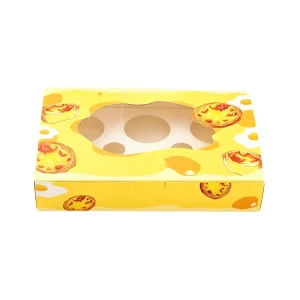
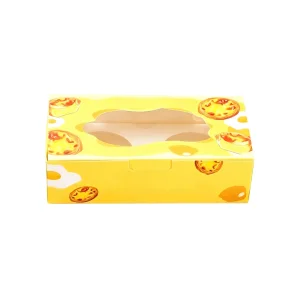
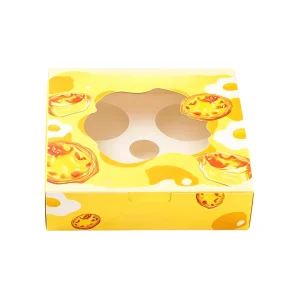
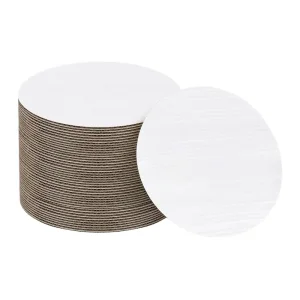
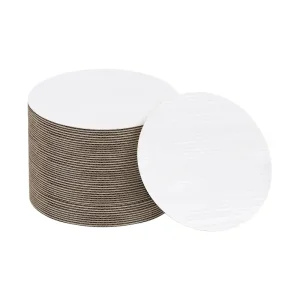
In North America and Europe, commercial bakery chains and supermarket deli counters enforce strict low-odour packaging guidelines. Non-toxic UV varnishes applied to grease-resistant virgin cardboard ensure pastry boxes (such as egg tart boxes, cake drums, and toast bags with PET windows) maintain zero chemical taint while standing up to oil penetration.
Across the Middle East and East Asia, premium chocolate packaging, festive mooncake boxes, and holiday gift sets require vibrant metallic foil stamping, high-gloss spot UV accents, and deep tactile textures. Non-toxic UV printing allows fine micro-embossing and rich contrast without compromising environmental recyclability.
Skincare cartons and luxury perfume boxes demand scuff-resistant coatings that survive high-friction transport. Non-toxic UV curing creates a resilient, crystal-clear protective armor on white virgin board and metallic paperboard, preserving shelf elegance in retail environments.
The non-toxic UV printing industry is rapidly evolving towards renewable chemical inputs and digital quality verification systems. Forward-thinking enterprise buyers look for two key technological vector developments:
1. Bio-Based & Renewable UV Monomers: Researchers and chemical manufacturers are replacing petroleum-derived acrylic monomers with plant-based polyols synthesized from soybean oil, cashew nut shell liquid (CNSL), and pine resin. Future non-toxic UV inks target over 50% renewable carbon content without diminishing photo-curing speed or mechanical surface resistance.
2. AI-Powered Inline Spectrophotometry & Defect Detection: Modern high-speed printing presses are increasingly equipped with inline high-resolution optical cameras and digital spectrophotometers. These AI-driven vision systems scan 100% of printed sheets in real time, detecting micro-color shifts (Delta-E > 1.0), pinholes, or misregistration, and automatically ejecting flawed sheets before die-cutting.
When selecting a contract manufacturing partner for wholesale non-toxic UV printing services, strategic procurement teams should conduct rigorous vendor verification using a standardized 5-step Quality Assurance (QA) Framework:
| Audit Stage | Evaluation Parameter | Compliance / Target Benchmark |
|---|---|---|
| 1. Material Certification | Board Grammage & Plastic Resin Grade | Virgin food-grade white/kraft board (250–400 gsm), 100% recyclable PET/rPET (0.25–0.45 mm). RoHS & REACH declared. |
| 2. Migration Testing | Overall & Specific Migration Limits (SML) | SGS / Intertek certified migration testing (< 10 mg/dm² overall, < 10 ppb specific photoinitiator threshold under EU 10/2011). |
| 3. Odour & Taste Evaluation | Organoleptic Robinson Test (DIN 10955) | Organoleptic score < 1.5 (No perceptible off-odour or flavor transfer to food simulants). |
| 4. Surface Durability | Rub Resistance & Ink Adhesion | ASTM D5264 Sutherland Rub Test (> 500 strokes), Cross-Hatch Tape Adhesion Test (ISO 2409 Class 0 / 5B). |
| 5. Color Precision | Spectrophotometric Color Matching | Pantone spot-color deviation Delta-E < 1.5 under D50 standard illumination. |
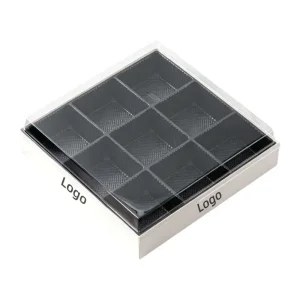
Review our secondary suite of specialized paperboards, clear-lid food boxes, and customizable commercial dessert platforms optimized for global freight efficiency.
Get clear answers to essential questions regarding regulatory compliance, MOQs, custom tooling, and manufacturing lead times for non-toxic UV printed packaging.
Conventional UV inks often contain low-molecular-weight photoinitiators (such as Benzophenone) that remain partially unreacted after curing, allowing small molecules to migrate into packaged foods or cause unpleasant chemical odors. Non-toxic UV printing utilizes low-migration ink formulations featuring high-molecular-weight polymeric photoinitiators (> 1,000 Daltons) and purified acrylates. Once cross-linked under focused LED-UV wavelengths, these molecules become permanently locked inside the solid polymer network, meeting strict FDA, EFSA, and Swiss Ordinance low-migration limits (< 10 ppb).
For existing structural dies with customized non-toxic UV logo/brand printing on paper bases, sleeves, or boxes, our MOQ starts at 3,000–5,000 pieces per size. Fully custom structural tooling—such as developing an entirely new die-cut box geometry or custom PET blister thermoforming mould—starts at 10,000 pieces per SKU to offset initial tooling and press setup costs. Buyers can combine multiple sizes within a single 20ft or 40HQ ocean container load to optimize shipping efficiency.
We process food-grade virgin white cardboard and kraft board ranging from 250 to 400 gsm, grease-resistant barrier boards, and rigid food-contact PET/rPET plastic sheet from 0.25 to 0.45 mm for lids, window bags, and transparent carry containers. Comprehensive Material Safety Data Sheets (MSDS), Food-Contact Declarations of Compliance (FDA 21 CFR 175.300 / EU 1935/2004 style), and SGS third-party migration test certificates are issued per production batch upon request.
Unprinted structural samples from existing dies ship within 3–5 working days. Custom-printed pre-production samples—utilizing low-migration UV inks and physical plate cutting—take 7–10 working days for client sign-off. Standard mass production requires 15–25 working days following digital proof and physical sample approval. For seasonal holiday rushes (e.g., Christmas, Mid-Autumn Festival, Ramadan), we advise placing orders 6–8 weeks in advance.
Yes. Non-toxic LED-UV inks cure instantly without generating damaging high surface heat, making them ideal for heat-sensitive non-porous plastics like clear PET, PP, and synthetic papers. Unlike conventional heat-dried inks that crack or fail to adhere, LED-UV inks form a tough, flexible surface bond with high scuff resistance and crisp detail resolution.
Our structural design team builds folding box lines with auto-locking side walls and precision creasing scores. Shipping boxes flat or nesting plastic tray bases dramatically reduces volumetric space—saving up to 35% of total container volume compared to pre-assembled boxes. This significantly reduces overall ocean freight costs per unit for international distributors.
Send us your product dimensions, target order quantity, and artwork files. Our structural engineering team will deliver a precise CAD die-line, material specification sheet, and container loading plan within 48 hours.
Request Factory Quote & Sample Pack