High-performance food-contact packaging, clear-window confectionery containers, and engineered bakery formats directly from our Chaozhou manufacturing plant.
The global confectionery packaging ecosystem is undergoing a seismic technical transformation. Driven by shifting retail formats, consumer demands for resealability, and stringent international sustainability mandates, fast-moving consumer goods (FMCG) brand owners are rapidly phasing out rigid containers in favor of engineered flexible candy pouches. Modern pouch packaging represents not merely a container, but an active physical barrier and marketing medium critical to brand equity and extended shelf stability.
According to recent supply chain data, flexible stand-up pouches (SUP) and high-barrier flexible packaging account for over 64% of all new confectionery product launches globally. Brands specializing in hard candies, gelatin gummies, freeze-dried sweets, artisanal chocolates, and functional nutraceutical gummies require precise barrier properties to combat ambient moisture absorption, lipid oxidation, and volatile aromatic loss.
OEM Sourcing Insight: Procurement executives must evaluate OEM candy pouch manufacturers not solely on unit cost, but on structural film engineering, barrier coefficient consistency (MVTR & OTR), seal integrity across high-speed filling lines, and supply chain transparency.
Confectionery products present complex chemical stability challenges. Gummy candies are hygroscopic and susceptible to moisture gain, leading to surface clumping and mold growth. Conversely, chocolate confections suffer from fat bloom when exposed to thermal fluctuation and oxygen penetration. To guarantee a 12 to 24-month ambient shelf-life, specialized OEM candy pouch manufacturers combine tailored polymer substrates into multi-layer laminates.
Standard workhorse lamination for hard candies and gummies. Vacuum Metallized PET (VMPET) delivers exceptional light blocking and vapor barrier properties at an optimized weight profile.
Aluminum foil (AL) zero-permeability layer reinforced with biaxially oriented nylon (NY) for high flex-crack resistance. Designed for premium chocolate and oily cocoa products.
Sustainable MDO-PE combined with barrier-coated PE resins. Fully recyclable in kerbside streams while maintaining compliance with EU circular economy targets.
| Laminate Structure | Target Confectionery | MVTR (g/m²/day) | OTR (cc/m²/day) | Primary OEM Benefit |
|---|---|---|---|---|
| BOPP / VMPET / CPP | Snack Candies & Small Drops | < 0.5 | < 1.5 | High stiffness, metallic sheen, economical cost structure |
| PET / AL / PE | Premium Chocolates & Mints | < 0.05 | < 0.05 | Total light block, extended aroma preservation, zero leakage |
| Kraft / VMPET / PE | Artisanal & Organic Sweets | < 0.3 | < 0.8 | Natural aesthetic tactile feel combined with technical barrier |
| MDO-PE / EVOH-PE | Eco-Conscious Gummy Brands | < 0.4 | < 0.6 | 100% Mono-PE recyclable format supporting sustainability goals |
Chaozhou, located in Guangdong Province, China, stands as the world's most concentrated hub for flexible packaging engineering and food-grade converting equipment. The Chaozhou packaging ecosystem encompasses full vertical integration—from raw polymer resin synthesis, cylinder gravure engraving, and high-speed multi-color printing to solventless lamination and pouch conversion.
Facilities operating within this cluster, such as Chaozhou Weiting Packaging Products Co., Ltd. (WTPack), leverage specialized automated lines including Mengxing thermoformers and high-speed Zhongbo die-cutting machinery. This concentration yields unmatched operational efficiency:
High-speed machinery operating at speeds up to 450 meters per minute eliminates volatile organic compound (VOC) emissions while eliminating solvent retention risks inside food pouches.
Advanced electronic cylinder engraving delivers ultra-sharp micro-text, realistic photographic print quality, spot UV matte contrasts, and metallic foil register stability.
Optical CCD vision systems check 100% of the printed web for color drift, pinholes, print streaks, and seal register errors before pouches are converted.
Confectionery pouch packaging is not one-size-fits-all. Sourcing directors must match the physical pouch format to the retail display environment and end-user consumption habits. OEM factories engineer multiple physical configurations tailored to specific distribution channels:
Application: Retail gummy bags, hard candy sharing packs.
Key Features: K-seal or round bottom gusset providing vertical counter stability, re-closable press-to-close zippers, and euro-slot punch for pegboard hanging display.
Application: Premium boxed chocolates, luxury gift candy.
Key Features: Five printable faces providing maximum branding area, side gussets for high volume capacity, and pocket zippers for easy consumer access.
Application: Medicated gummies, cannabis-infused edibles, functional mints.
Key Features: Certified squeeze-and-slide or double-press zippers complying with US ASTM D3475 standards to prevent infant access.
Application: Kid-targeted sweets, seasonal holiday gifts.
Key Features: Custom die-cut contours (bottle shapes, fruit outlines) with integrated high-clarity transparent windows showcasing product contents.
Application: Industrial form-fill-seal (VFFS/HFFS) packaging lines.
Key Features: Custom slitting widths, controlled coefficient of friction (COF 0.18-0.22), and fast seal initiation temperature (SIT) for 200+ PPM speeds.
Directing global procurement for packaging materials requires rigorous compliance auditing to avoid customs detentions, product recalls, or heavy metal contamination risks. Qualified Chinese OEM candy pouch factories adhere strictly to international food-contact protocols.
| Compliance Standard | Governing Body | Technical Requirement / Testing Protocol | Sourcing Relevance |
|---|---|---|---|
| FDA 21 CFR 177.1520 | US Food & Drug Administration | Olefin polymer extractable limits, virgin resin traceability | Mandatory for all pouch exports entering North American food retail. |
| EU Regulation (EC) No 10/2011 | European Union Commission | Overall Migration Limit (OML < 10mg/dm²), Specific Migration Limits (SML) | Standard compliance required for European confectionery brands. |
| BRCGS Global Standard | GFSI Recognized | HACCP risk management, cleanroom hygiene class 100,000 certification | Validates factory operational safety and hygiene standards. |
| ASTM F1249 / F1927 | ASTM International | MOCON testing for Water Vapor and Oxygen Transmission Rates | Determines scientific barrier efficacy for sensitive candy formulations. |
As the confectionery market evolves through 2026 and beyond, OEM packaging factories are integrating cutting-edge materials and digital technologies:
Utilizing EN 13432 certified PLA (Polylactic Acid) and PBS (Polybutylene Succinate) films combined with metallized cellulose layers to produce home-compostable gummy pouches.
Direct inline micro-laser printing of unique dynamic QR codes for anti-counterfeiting verification, batch tracking, and interactive consumer digital experiences.
Combining registered soft-touch matte coatings with raised 3D gloss UV elements to create distinct shelf touchpoints that boost consumer purchase intent.
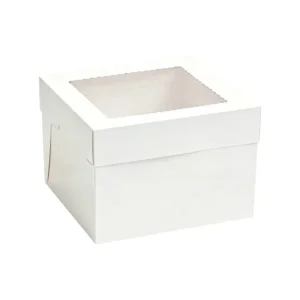
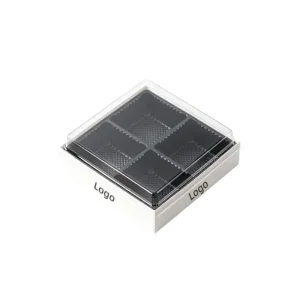
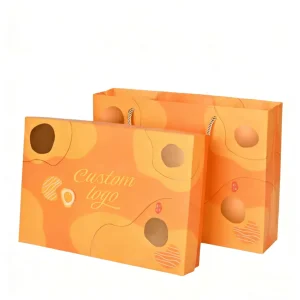
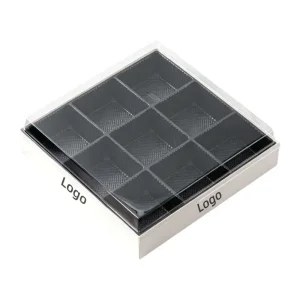
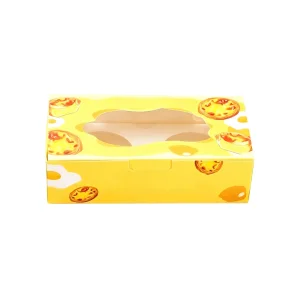
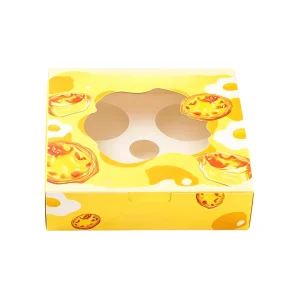
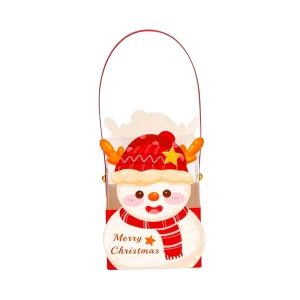
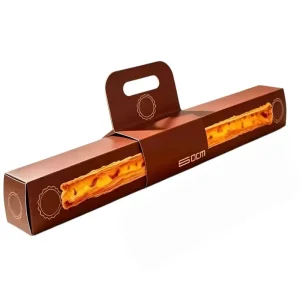
Explore our extended catalog of structural bakery, dessert, and confectionery gift packaging engineered for global trade buyers.
Expert answers to key sourcing, engineering, and manufacturing questions for OEM candy pouch buyers.
For standard stock film structures with custom rotogravure surface printing, our typical MOQ starts at 10,000 to 20,000 pouches per SKU depending on physical pouch size. Fully customized structural shapes or specialized multi-layer laminates (e.g., zero-aluminum EVOH high-barrier or compostable PLA structures) require an initial production run of 30,000 units due to master film slitting widths and cylinder setup parameters.
We perform batch-level MOCON testing for Water Vapor Transmission Rate (MVTR) and Oxygen Transmission Rate (OTR) in accordance with ASTM F1249 and ASTM D3985 standards. For gelatin and pectin gummies, we engineer laminates achieving MVTR values under 0.1 g/m²/24hr. For fatty chocolate confections, we incorporate pure aluminum foil (AL) or high-density VMPET layers with opaque white LLDPE to block 100% of UV spectrum radiation.
We accept vector artwork files in Adobe Illustrator (.AI), PDF, or EPS formats with converted outlines and defined Pantone (PMS) spot codes. Our pre-press team generates 3D digital proof die-lines within 24 hours. Upon artwork approval, electronic cylinder engraving requires 5-7 days, followed by physical pre-production color drawdowns or printed film proofs prior to mass converted production.
Yes. All converted stand-up pouches, flat pouches, and rollstock films are manufactured with strictly controlled Coefficient of Friction (COF) ratings between 0.18 and 0.22 (kinetic). This guarantees seamless feeding through automated multi-head weighers, continuous rotary packaging machines, and vertical form-fill-seal (VFFS) systems operating at speeds exceeding 180 PPM.
Every shipment includes a comprehensive quality release package: Certificate of Analysis (COA), FDA 21 CFR food-grade material compliance declaration, EU 10/2011 overall and specific migration test reports, Heavy Metals (CONEG/REACH) certificates, and SGS third-party laboratory verification.