Standard and fully customized structural designs optimized for high-volume automated packaging lines, structural integrity, and eco-compliant retail display.
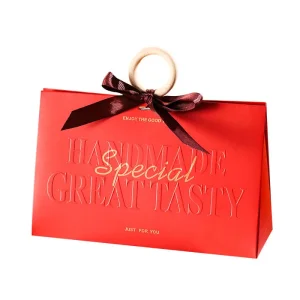
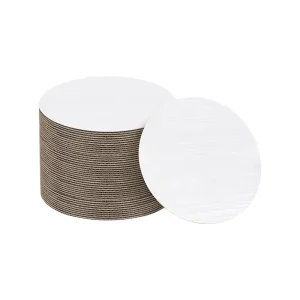
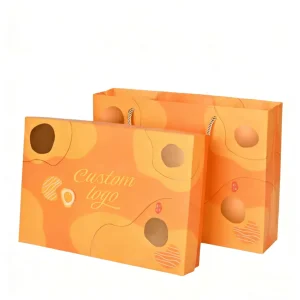
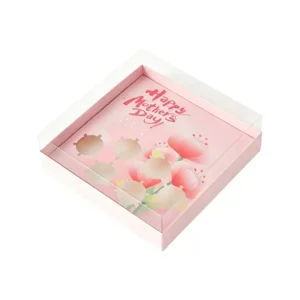
The global cardboard retail packaging sector is currently experiencing a profound paradigm shift driven by stringent regulatory frameworks (such as the EU Packaging and Packaging Waste Regulation - PPWR), changing consumer ESG preferences, and accelerating technological convergence. Retailers and global fast-moving consumer goods (FMCG) brands are rapidly decoupling from single-use fossil-fuel plastics in favor of engineered cellulosic fiber matrices. OEM (Original Equipment Manufacturer) paperboard manufacturing is no longer merely an exercise in box converting; it has evolved into a discipline of high-precision structural engineering, material science, and supply chain telemetry.
As retail supply chains navigate post-pandemic disruptions, inflation, and carbon taxation, cardboard packaging stands out as the single most viable substrate capable of balancing structural protection, high-fidelity brand communication, and true circularity. Modern corrugated substrates and solid bleached sulfate (SBS) virgin boards are engineered to provide maximum strength-to-weight ratios, ensuring that retail packaging absorbs minimal volumetric cargo space while offering structural resistance against stacking deformation, moisture intrusion, and transit vibration.
Elimination of non-separable multi-layer laminates. Modern OEM factories utilize bio-based aqueous dispersion coatings that maintain grease/moisture barriers while remaining 100% repulpable in standard paper recycling streams.
Transition from traditional B/C flutes to engineered Micro-flutes (E, F, and N flutes). These deliver rigid structural compression strength, superior print surface smoothness, and up to 35% reduction in packed warehouse cubic volume.
Integration of high-density 2D barcodes, digital watermarking, and RFID-ready die-cut slots directly into cardboard structures, enabling real-time SKU traceability and frictionless retail checkout experiences.
For Chief Procurement Officers (CPOs) and Global Supply Chain Directors overseeing retail, food service, and consumer electronics brands, selecting an OEM cardboard packaging manufacturing partner requires evaluated scrutiny far beyond initial piece-rate cost. Total Cost of Ownership (TCO) models dictate that packaging inefficiencies—such as box collapse during pallet stacking, ink off-gassing, inconsistent die-cut tolerances, and container fill inefficiencies—can create exponential downstream costs that completely dwarf marginal per-unit price savings.
Enterprise procurement mandates verifiable technical testing metrics. Premium OEM factories rigorously test raw board materials using standard ISO/TAPPI protocols:
Navigating cross-border compliance demands robust quality management systems. OEM services must guarantee strict adherence to global standards:
The modern Chinese OEM packaging ecosystem has undergone a dramatic technological metamorphosis. Moving far beyond traditional manual labor models, leading packaging hubs in Guangdong (such as Chaozhou and Shenzhen packaging clusters) represent state-of-the-art Industry 4.0 facilities. Integrations of automated die-cutting, robotic box assembly, computerized ink formulation systems, and real-time Manufacturing Execution Systems (MES) allow Chinese factories to deliver unmatched precision, speed, and cost efficiency to global markets.
Proximity to raw paper mills, specialty barrier coating chemical facilities, and window film extruders within a 50-kilometer radius minimizes raw material lead times and insulates production against global upstream supply shocks.
Deployment of advanced multi-color Heidelberg, Komori, and Manroland presses equipped with inline spectroscopic color measurement devices guarantees color fidelity across multi-million box runs within a Delta E < 1.5 tolerance threshold.
CAD/CAM computer-controlled sample cutting tables allow CAD engineers to transform customer structural concepts into physical, press-ready prototypes within 24 to 48 hours, radically accelerating time-to-market cycles.
Comprehensive overview of substrate characteristics engineered within modern OEM cardboard manufacturing facilities:
| Paperboard Substrate | Grammage Range (gsm) | Flute / Structure Type | Primary Mechanical Strengths | Target Retail Applications |
|---|---|---|---|---|
| Solid Bleached Sulfate (SBS) | 210 - 450 gsm | Single-Ply Solid Board | Ultra-smooth print surface, high tear resistance, clean white edge die-cut | Luxury cosmetics, pharmaceuticals, high-end bakery retail, confectionary |
| Unbleached Kraft Board (SUS) | 230 - 450 gsm | Virgin Wood Pulp Board | Exceptional wet-strength, high burst strength, natural eco-aesthetic finish | Heavy retail beverage carriers, organic food packaging, industrial parts |
| E-Flute Corrugated | 350 - 650 gsm | Micro-Flute (Flute height ~1.5mm) | High crush resistance, excellent die-cut rigidity, flat printing face | Subscription boxes, countertop POS displays, heavy bakery cakes, shoe boxes |
| F-Flute Corrugated | 300 - 550 gsm | Ultra Micro-Flute (Height ~0.8mm) | Compact wall thickness, lightweight freight profile, folding carton replacement | Fast food clamshells, luxury gift sleeves, retail cosmetic kits, electronics |
| Coated Duplex Board (Grey Back) | 250 - 450 gsm | Multi-ply Recycled Fiber | Cost-effective structural bulk, smooth clay-coated front printing surface | High-volume retail consumer goods, hardware packaging, dry food cartons |
Cardboard packaging must be engineered specifically to withstand the precise environmental stresses of its intended retail distribution channel. Below are specialized structural application scenarios designed and produced by OEM factories worldwide:
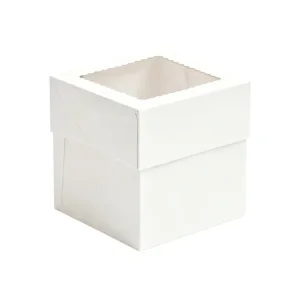
Operational Challenges: Oil penetration, steam condensation weakening box integrity, loss of structural rigidity during multi-tier cake transport.
OEM Engineering Solution: Application of food-contact compliant aqueous bio-coatings directly to virgin kraft or SBS board. Integration of anti-fog PET/RPET clear window patches and double-wall reinforced locking corners that allow stacking up to 5 tiers without sidewall buckling.
Operational Challenges: Rough parcel sorting network handling, theft risks, expensive returns caused by unboxing damage.
OEM Engineering Solution: Heavy-duty E-flute corrugated mailer structures with integrated tear-strip openings for frustration-free customer unboxing. Secondary adhesive strips built directly into the cardboard flap enable seamless, tape-free customer returns.
Operational Challenges: Strict campaign launch deadlines, complex multi-component gift packaging sets, volatile order volume spikes.
OEM Engineering Solution: Knock-down (flat-pack) structural design engineering that allows multi-compartment gift boxes to ship flattened, maximizing container space. In-store staff can assemble the rigid structures in under 5 seconds via auto-bottom fold mechanisms.
Operational Challenges: Cluttered retail cashier counters, requirement for instant shelf-ready packaging (SRP).
OEM Engineering Solution: Perforated transit cartons that transform directly into angled countertop display trays upon arrival at retail stores. High-impact offset printing on outer walls drives impulse purchases at checkout points.
Understanding the operational trade-offs between custom OEM manufacturing, structural ODM design, and off-the-shelf stock buying is critical for establishing efficient supply chain strategies:
| Evaluation Parameter | OEM (Original Equipment Manufacturing) | ODM (Original Design Manufacturing) | Stock Catalog Sourcing |
|---|---|---|---|
| Structural Customization | 100% custom die-line based on buyer's CAD artwork | Factory-modified existing structural templates | Fixed sizes, zero structural modification |
| Branding & Printing | Full custom spot color, foil, embossing, full wrap graphics | Custom printed logos on standard structure | Unprinted plain board or generic print patterns |
| Tooling & Die-Cut Costs | Initial custom die/plate fee (waived on volume) | Minimal (uses factory standard die library) | Zero tooling fees |
| Minimum Order Quantity (MOQ) | 3,000 - 10,000 units per SKU | 1,000 - 3,000 units per SKU | 100 - 500 units per carton |
| Unit Cost Efficiency | Maximum at medium to high production volumes | Moderate to high | Higher per-unit cost for large quantities |
| Supply Chain Risk | Low (Dedicated, scheduled manufacturing runs) | Low (Standardized material streams) | High (Subject to distributor stock outages) |
In-depth technical answers addressing engineering, quality assurance, logistics, and compliance inquiries.
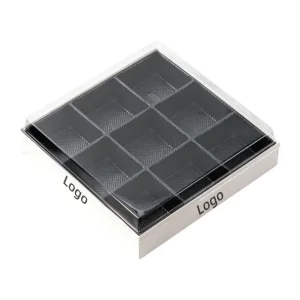
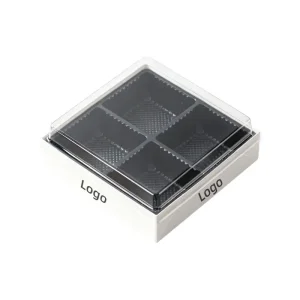
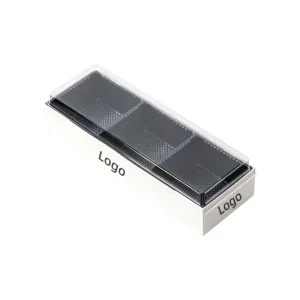
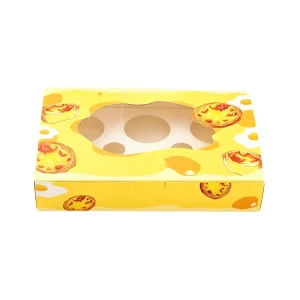
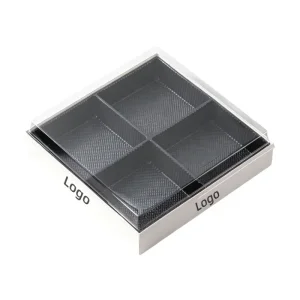
Explore additional OEM configurations, transparent-top treat containers, and high-strength corrugated bases engineered for global logistics.
Transform your retail packaging supply chain with precision CAD structural engineering, certified sustainable board materials, and scalable Industry 4.0 production capacity.
Request Technical Quotation & CAD Dieline