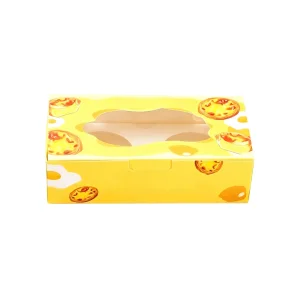
High-clarity PET, paper-plastic hybrid designs, and food-grade certified containers manufactured with industrial precision.
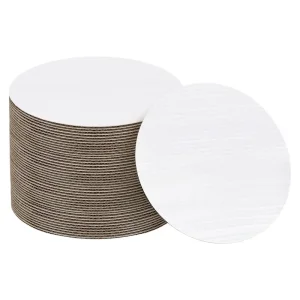
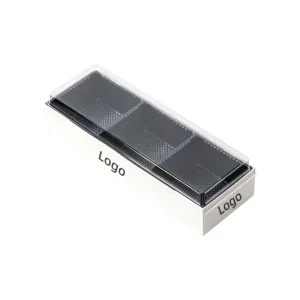
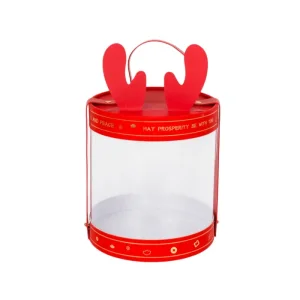
Navigating technical material selection, supply chain resilience, and precision thermoforming engineering for commercial food distribution.
Driven by the acceleration of quick-service restaurant (QSR) chains, cloud kitchen networks, and premium retail bakeries, the demand for high-clarity clear plastic food containers (PET, rPET, PP) is expanding at a projected CAGR of 6.4% globally. Visual appeal directly drives impulse sales in retail environments.
Global regulatory landscapes, including US FDA 21 CFR 177.1630, EU Regulation No 10/2011, and LFGB standards, dictate zero chemical migration and non-toxic polymer compositions. Advanced factory operations deploy virgin food-grade resins alongside certified Post-Consumer Recyclable (PCR) polymer lines.
Logistics costs account for up to 25% of total packaging expenses. Enterprise OEM designs incorporate micro-engineered anti-jamming nesting ribs, maximizing container payload volume and reducing freight costs per unit by up to 35% during transatlantic transit.
How changing consumer preferences, strict environmental mandates, and technological breakthroughs are transforming food container manufacturing.
Modern consumers buy with their eyes. Commercial bakeries and fresh produce packers require containers with near-glass transparency (>92% luminous transmittance). Furthermore, condensation inside chilled displays ruins product visibility. OEM factories now integrate microscopic anti-fog additive surface coatings during sheet extrusion, preventing moisture droplet formation under cold storage environments (2°C to 8°C).
Sustainability is no longer optional—it is a core procurement key performance indicator. Enterprise B2B buyers across Europe and North America demand high-percentage Recycled PET (rPET) containers that adhere to closed-loop circular economy principles. Mono-material packaging designs facilitate seamless kerbside recycling without requiring complex manual separation of lids, bases, or sleeves.
As last-mile delivery services grow exponentially, food safety during transit is paramount. Modern clear food containers feature precision-engineered perimeter locking mechanisms. Tamper-evident tear strips give end consumers peace of mind that their meals have remained uncompromised from kitchen to doorstep.
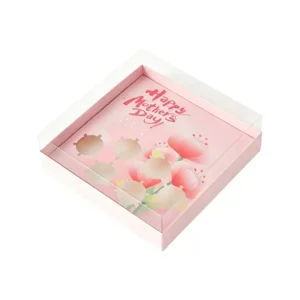
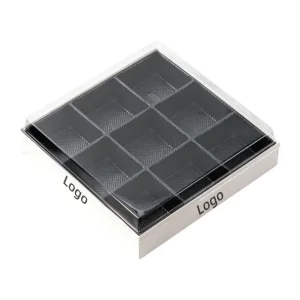
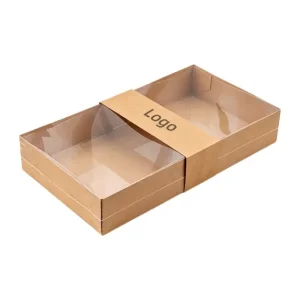
Combining the structural integrity and aesthetic warmth of paperboard bases with crystal-clear PET dome lids represents a high-growth category. This hybrid approach delivers strong branding real estate on the printed paper shell while allowing full product visibility through the transparent top lid.
How automated thermoforming clusters in Guangdong leverage raw material availability, advanced tooling, and lean logistics to deliver global cost advantages.
Located in Guangdong's premier packaging hub, our 10,000 m² facility benefits from immediate regional access to top-grade food-grade PET resin extruders, paperboard mills, and masterbatch chemistry suppliers. This geographic cluster eliminates supply bottlenecks and stabilizes raw material pricing.
Operating multi-station computer-controlled (CNC) thermoforming machinery, our production lines achieve uniform wall thickness distribution, sharp detail reproduction, and clean edge trimming at speeds exceeding 30 cycles per minute per mold set.
By operating our own mold manufacturing department, we eliminate external vendor delays. OEM clients can move from initial 3D CAD design approval to physical aluminum prototype samples in under 7 business days, drastically compressing product launch timelines.
Selecting the appropriate resin matrix based on thermal tolerance, optical clarity, environmental impact, and barrier performance.
| Polymer Type | Optical Clarity | Temperature Resistance | Impact Strength | Barrier Properties (WVTR) | Recyclability & Eco Grade | Primary OEM Application |
|---|---|---|---|---|---|---|
| PET (Polyethylene Terephthalate) | Crystal Clear (>92%) | -40°C to +65°C | High | Excellent | 100% Recyclable (RIC #1) | Bakery domes, deli boxes, salad containers, pastry trays |
| rPET (Post-Consumer Recycled PET) | High Clear (88-91%) | -40°C to +60°C | High | Excellent | Circular Eco-Choice (Up to 100% PCR) | Sustainable retail packaging, eco-conscious bakery lines |
| PP (Polypropylene) | Translucent / Semi-Clear | -20°C to +120°C | Very High | Moderate to High | 100% Recyclable (RIC #5) | Microwaveable hot meal containers, soup bowls, takeaway bases |
| PS / OPS (Oriented Polystyrene) | High Clarity | -10°C to +75°C | Brittle / Moderate | Moderate | Recyclable (RIC #6) | Low-cost single-use display lids, bakery clamshells |
| Virgin Kraft + PET Window | Clear Window Area | -10°C to +80°C | High Structural Rigidity | Grease-Resistant Coated | Hybrid Renewable Base | Artisan bread bags, tart boxes, gourmet cake displays |
Tailoring container structures and material formulas to geographic food standards and commercial operational requirements.
Focuses heavily on impact resistance during long-haul distribution and strict compliance with FDA 21 CFR food contact regulations. Containers require heavy-gauge side walls to withstand stacking in cross-country refrigerated freight trucks without collapsing.
Requires strict compliance with EU 2025 single-use plastic reduction goals, high rPET percentages, and mono-material construction. Low-profile designs with minimal resin weights are favored to minimize eco-tax tariffs.
Demands oversized platter formats, high-clarity festive packaging for dates, sweets, and pastries, and polymer formulations that maintain structural rigidity under ambient temperatures reaching 45°C without warping.
Prioritizes multi-compartment meal prep boxes, anti-fog performance in humid climates, and rapid click-lock closure features designed to accelerate packing speed in high-volume cloud kitchens.
A structured engineering process ensuring flawless execution from conceptual design to containerized sea freight loading.
Analysis of client food product dimensions, volumetric capacity, storage temperatures, shelf life expectations, and stacking limits during transit.
Engineering die-line graphics and rendering 3D digital models. Rapid CNC prototyping yields physical trial samples in 3-5 days for snap-fit validation.
Cutting multi-cavity aviation-grade aluminum production molds to guarantee high thermal conductivity, consistent wall thickness, and long mold lifespan.
High-speed continuous sheet extrusion, vacuum forming, high-definition offset printing for paper bases, and anti-static surface treatments.
Quality assurance checks measuring seal strength, drop resistance (-18°C), optical clarity, stack load strength, and zero-leakage fluid tightness tests.
Compact stacking and carton palletization designed to maximize 40HQ container load volume, complete with full export clearance documentation.
Detailed technical answers regarding MOQs, tooling costs, material safety standards, and global delivery timelines.
Explore our full line of clear food containers, cake bases, pastry packs, and holiday gift solutions.