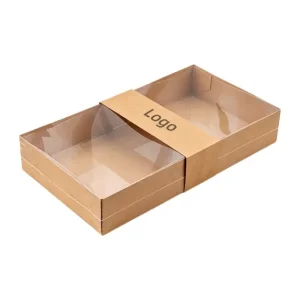
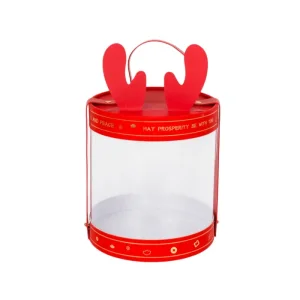
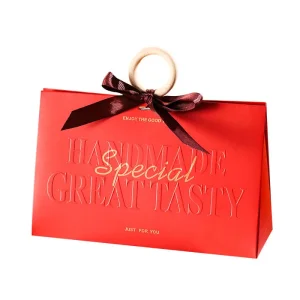
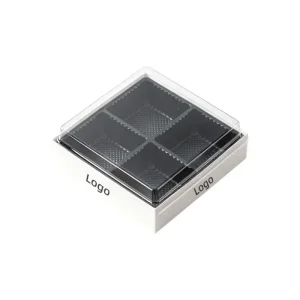
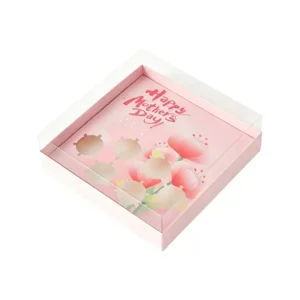
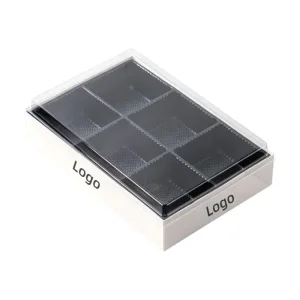
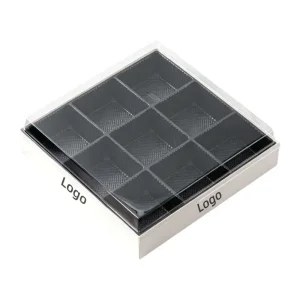
Direct factory supply featuring clear PET lids, oil-resistant food-grade paper bases, and anti-fog display engineering for commercial catering.
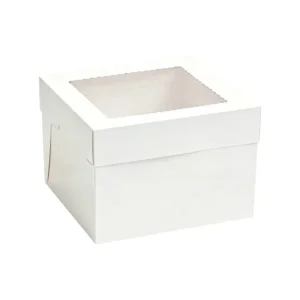
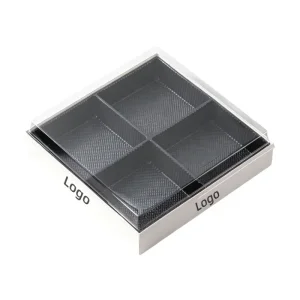
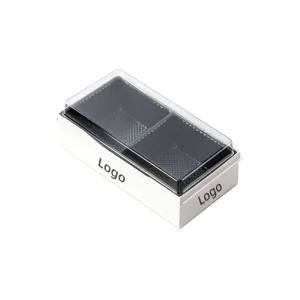
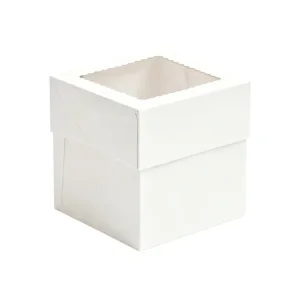
Understanding the molecular dynamics of anti-fog technology in fresh sandwich display packaging.
In the commercial chilled food sector, water droplet condensation (fogging) on plastic lids poses a severe obstacle to sales. When fresh sandwiches containing warm moisture or high-water-content ingredients (such as tomatoes, lettuce, and mayonnaise) are enclosed and cooled to 2°C – 4°C in refrigerated display cabinets, the relative humidity inside the container quickly reaches 100% saturation.
Standard polyethylene terephthalate (PET) or oriented polystyrene (OPS) surfaces possess a low surface energy (typically around 38–42 dynes/cm). Water drops have a high surface tension (72.8 dynes/cm), causing them to bead up into thousands of microscopic convex lenses. This light scattering obscures product visibility, degrades consumer perception of freshness, and fosters localized moisture pooling that renders sandwich bread soggy.
As a premier wholesale supplier, our manufacturing processes leverage two state-of-the-art methods to deliver superior anti-fog performance:
How industrial concentration, precision thermoforming automation, and material integration yield competitive advantages for international procurement teams.
China's food packaging industrial hubs (such as Chaozhou, Guangdong and Eastern coastal corridors) operate in close proximity to massive petrochemical plants and recycled PET (rPET) resin processing centers. This vertical integration allows factories to procure food-contact grade virgin PET chips and anti-fog additive masterbatches at lower raw-material costs, insulating global buyers from supply chain shocks.
Leading Chinese OEM/ODM factories feature fully automated positive/negative pressure thermoforming equipment (including German Kiefel and domestic high-speed lines) integrated with inline optical inspection tools. With monthly capacities surpassing tens of millions of units, these facilities maintain tight lid-to-base snap fit tolerances (±0.15mm) to prevent food contamination and seal leakage.
Creating custom triangular, square, or multi-compartment sandwich boxes requires low-cost, high-precision aluminium moulds. Chinese factories excel in rapid CNC mould fabrication, turning around structural die-lines and physical prototypes within 3 to 5 working days—at a fraction of Western tooling costs.
Key macroeconomic and regulatory shifts transforming the commercial sandwich and fresh takeaway packaging market.
Strict legislation across the European Union (Single-Use Plastics Directive) and North America mandates minimum post-consumer recycled (PCR) content in packaging. Wholesale anti-fog sandwich box factories have updated extrusion formulations to support 30% to 100% rPET compositions without compromising tensile strength or clarity. The challenge lies in applying food-grade anti-fog coatings over recycled polymer matrices—a technique in which Chinese factories are leading the industry.
To reduce plastic footprint, brand owners are moving toward hybrid constructions: structural grease-resistant kraft or virgin white board bases coupled with ultra-thin snap-fit anti-fog clear PET lids. This offers the aesthetic appeal of artisanal eco-friendly packaging alongside the high visibility of anti-fog plastic windows.
Tailored packaging designs to solve operational challenges across varied commercial channels.
High-volume Grab-and-Go display coolers (e.g., 7-Eleven, FamilyMart). Focuses on standard wedge-shaped sandwich boxes with instant anti-fog clarity to support quick consumer purchase decisions.
Requires multi-portion platter boxes, large square fruit containers, and clear-lid dessert boxes. Demands high stackability strength (up to 5-layer stacking) without lid collapse.
Strict dimensional requirements, tamper-evident perimeter sealing, lightweight PET profiles, and temperature endurance ranging from frozen assembly to ambient meal delivery.
Ghost kitchens and food delivery platforms (UberEats, Deliveroo). Emphasizes leak-proof snap locks, liquid barrier paperboard bases, and vibration resistance during delivery transit.
Key quality criteria, compliance certifications, and structural specifications required by international procurement directors.
| Evaluation Parameter | Technical Requirement / Standard | Factory Testing Standard |
|---|---|---|
| Anti-Fog Efficiency | Zero fogging or water droplet bead formation within 5 seconds of cold transfer | Chilled steam chamber test @ 4°C for 72 continuous hours |
| Food Contact Compliance | 100% Virgin or Decontaminated rPET Polymer | FDA 21 CFR 177.1630, EU No 10/2011, BRCGS Grade A Certification |
| Optical Transmittance | > 92% Total Light Transmittance; Haze < 2.5% | ASTM D1003 Spectrophotometer Evaluation |
| Lid Snap-Fit Force | 0.8 kgf – 1.5 kgf pull-off resistance force | Digital Force Gauge Pull-Test on perimeter lock buttons |
| Stacking Compression Strength | Withstand minimum 15 kg top load weight | BCT (Box Compression Test) @ 23°C / 50% RH for 24 hrs |
| Temperature Tolerance | Safe operation from -20°C (Freezer) to +70°C (Warming Cabinets) | Thermal Shock Testing (-20°C to 70°C cyclic exposure) |
Direct technical answers from our engineering desk to streamline your factory procurement process.
Work directly with our engineering team to develop custom anti-fog sandwich containers, die-lines, and branded packaging solutions tailored to your retail specifications.
Request Factory Quotation & Structural SamplesExplore our full line of wholesale food boxes, artisan bread packaging, and specialty holiday gift containers.