Precision-engineered, food-grade structural packaging solutions direct from our Guangdong production facility.
Analyzing global regulatory tailwinds, consumer preference shifts, and structural material innovation in B2B food containment systems.
The global market for flexible food packaging is experiencing an unprecedented structural transition. Driven by stringent international mandates—such as the European Union’s Packaging and Packaging Waste Regulation (PPWR), extended producer responsibility (EPR) schemes across North America, and single-use plastic bans across APAC—the demand for wholesale biodegradable food packaging bags suppliers & factory capabilities has evolved from a niche sustainability initiative into a core supply chain imperative. Modern enterprise food brands, commercial bakery networks, Quick-Service Restaurant (QSR) operators, and industrial food processors can no longer rely on conventional fossil-based polymers like low-density polyethylene (LDPE), polypropylene (PP), or non-recyclable multi-layer laminates.
Key Sourcing Insight: Next-generation biodegradable food packaging bags must achieve structural parity with conventional plastics—providing identical Oxygen Transmission Rates (OTR) and Water Vapor Transmission Rates (WVTR)—while guaranteeing complete bio-degradation under industrial or home composting protocols without microplastic residue.
Historically, adopting bio-based flexible bags meant sacrificing critical functional metrics: seal integrity, tensile strength, clarity, and barrier longevity. Early iterations of polylactic acid (PLA) films suffered from thermal brittleness, low heat distortion temperatures, and poor moisture resistance, rendering them unsuitable for high-oil, high-moisture, or hot-fill food items. However, recent breakthroughs in bio-polymer chemistry, resin compounding, and multi-layer co-extrusion technology have completely closed this performance gap.
Today’s enterprise procurement managers evaluate wholesale biodegradable food packaging bag suppliers based on a sophisticated multi-dimensional framework: material purity, certification compliance (EN 13432, ASTM D6400, BPI, OK Compost), total cost of ownership (TCO), and automated line compatibility. Direct-from-factory suppliers with integrated OEM/ODM capabilities lead this transformation by engineering customized substrate blends designed for specific food categories—ranging from fresh bakery products and dry confectioneries to fatty proteins and deep-frozen meals.
Deep-dive analysis of raw bio-resins, barrier coatings, and co-extrusion technology powering sustainable food bags.
Creating high-performance biodegradable food bags requires a scientific balance of bio-based resins, biodegradable synthetic polyesters, and functional barrier additives. A leading biodegradable food packaging bags factory utilizes several primary material pathways:
Derived from fermented plant starch (corn, sugarcane, or cassava). PLA offers exceptional optical clarity, high tensile modulus, and natural aroma retention, serving as an ideal structural layer for clear window packaging and rigid film windows.
Polybutylene Adipate Terephthalate (PBAT) provides high elasticity, impact toughness, and superior heat-sealing window flexibility. Blended with PLA, PBAT neutralizes PLA’s brittleness, yielding puncture-resistant bag films.
Bacterial fermentation-derived biopolymers featuring natural marine and soil biodegradability. PHA exhibits exceptional moisture barrier properties and oil resistance, defining the cutting edge of zero-waste packaging science.
To assist packaging engineers and buyers in technical evaluation, the following matrix compares structural bio-laminates with traditional PE/PET food barrier structures:
| Material Substrate Structure | OTR (cc/m²/24h) | WVTR (g/m²/24h) | Heat Seal Range (°C) | Composting Certification | Primary Food Application |
|---|---|---|---|---|---|
| Kraft Paper + Aqueous Dispersion Coating | < 5.0 | < 12.0 | 110 - 130 | EN 13432 / Home Compost | Artisan Bread, Dry Snacks, Baked Goods |
| PLA / PBAT Co-extruded Monolayer Film | < 450.0 | < 125.0 | 95 - 115 | EN 13432 / BPI Industrial | Fresh Produce, Short-shelf Bakery Bags |
| Kraft Paper / High-Barrier Metallized PLA | < 1.0 | < 1.5 | 120 - 145 | EN 13432 Industrial | Specialty Coffee, Milk Powders, Nuts |
| Cellulose Film / PHA High-Barrier Laminate | < 2.5 | < 3.0 | 105 - 135 | OK Compost HOME / Marine | Oily Snacks, Confectionery, Frozen Food |
| Conventional Fossil PE / PET (Control) | < 2.0 | < 1.2 | 130 - 160 | Non-Biodegradable (Landfill) | Legacy Standard Packaging |
The roadmap for green flexible packaging centers on Micro-Fibrillated Cellulose (MFC) barrier coatings, vacuum-deposited nano-silica ($SiO_x$) bio-films, and active antimicrobial plant extracts. These advancements enable fully transparent, ultra-high barrier compostable pouches capable of extending perishable food shelf life beyond 18 months without synthetic preservative additives.
Unlocking enterprise purchasing advantages through automated production, localized cluster efficiencies, and strict quality assurance.
Sourcing directly from a specialized biodegradable food packaging bags factory in China offers strategic cost and scalability advantages. Located in China’s premier packaging manufacturing cluster in Guangdong, facilities like Chaozhou Weiting Packaging Products Co., Ltd. (WTPack) integrate the complete production lifecycle—from raw material resin formulation and blown film extrusion to high-precision gravure printing, solvent-free lamination, and automated pouch conversion.
Equipped with high-speed multi-layer co-extrusion lines and automated German-engineered die-cutters, our facilities eliminate human error. Inline 360-degree optical vision sensors inspect 100% of converting output, detecting pinholes, seal gaps, or ink aberrations at speeds surpassing 300 meters per minute.
Our direct proximity to global bio-resin chemical producers ensures priority allocation of certified PLA, PBAT, and kraft paper stock. Integrated raw material buffering protects global B2B buyers from global market price fluctuations and supply disruptions.
Freight cost optimization represents a crucial component of Total Cost of Ownership (TCO). Professional Chinese packaging factories implement advanced knock-down (KD) and flat-pack structural engineering for bags, boxes, and pouches. By optimizing nesting geometry and pallet layout density, export shipping volumes are reduced by up to 35%. This dramatically lowers per-unit ocean freight costs into major import hubs across Europe, North America, the Middle East, and Australia.
Customized biodegradable pouch and packaging architectures tailored to meet diverse commercial food sector requirements.
Micro-perforated PLA toast bags and window kraft pouches designed to release steam from fresh-baked loaves while maintaining crust crispness and preventing moisture condensation.
Grease-proof, water-based coated paper bags featuring high-strength thermal seal bands for hot chicken, sandwiches, and greasy deli items. Guaranteed 100% fluorine-free (PFAS-free).
High-clarity compostable pouches offering anti-fog film capabilities for organic vegetables, alongside metallized PLA high-barrier stand-up pouches for gourmet nuts and coffee beans.
Navigating food safety standards, environmental protocols, and import regulations across target export markets.
Enterprise procurement requires total legal assurance. Importing food contact materials into major economic zones necessitates strict compliance with regional safety protocols and environmental testing standards. A verified wholesale biodegradable food packaging bags supplier must deliver comprehensive, batch-level documentation proving compliance across three core domains:
FDA 21 CFR 175 / 176 / 177: Strict compliance for paper and polymer adhesives in direct contact with dry, aqueous, and fatty food matrices.
EU Regulation (EU) No 10/2011 & (EC) 1935/2004: Overall Migration Limit (OML) and Specific Migration Limit (SML) testing verified via SGS/TÜV laboratory analysis.
LFGB §30 & 31: German sensory, heavy metal, and transfer testing for food safety.
EN 13432 / EN 14995 (Europe): Requires >90% disintegration within 12 weeks in industrial composting conditions.
ASTM D6400 / BPI (North America): Standard specification for compostable plastics in municipal facilities.
AS 4736 / AS 5810 (Australia): Commercial and Home Composting certification including worm toxicity testing.
PFAS-Free Guarantee: In response to stringent US state laws (such as California AB 1200) and European ECHA regulations banning per- and polyfluoroalkyl substances, our factory uses 100% fluorine-free, water-based acrylic dispersion coatings to achieve grease resistance on paper packaging substrates.
A step-by-step roadmap for B2B sourcing managers—from structural engineering to final container loading.
Submit your food product specs, dimensions, shelf-life target, and filling line speeds. Our structural design team generates a 3D digital rendering and precise die-line within 48 hours.
Physical non-printed structural samples ship in 3-5 working days. Custom printed pre-production bio-laminate samples are produced in 7-10 days for client seal testing and filling trials.
Upon artwork sign-off, mass production executes in 15-25 days. Every shipment includes batch certificate of analysis (COA), food contact compliance guarantees, and container inspection photo logs.
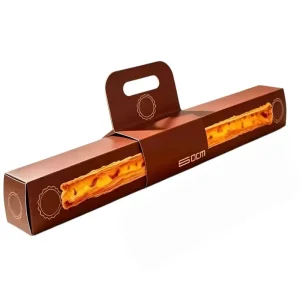
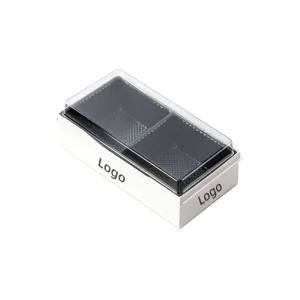
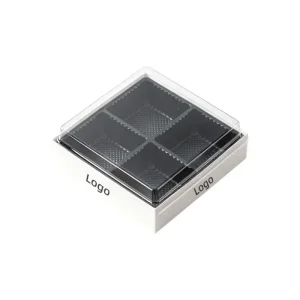
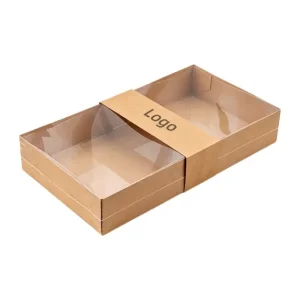
Explore our full range of specialty food boxes, windowed bags, and catering containment solutions.

Technical, regulatory, and logistics answers from our engineering and export desk.