Direct factory supply of high-barrier food packaging, clear PET containers, custom paper boxes, and sealed structural pouches for commercial importers and retail brands.
In the modern global supply chain, high-barrier flexible packaging—specifically vacuum-sealable pouches—serves as a mission-critical infrastructure for food preservation, pharmaceutical integrity, electronics ESD shielding, and industrial chemical containment. The transition from rigid metal or glass containers to engineered multi-layer co-extruded polymers has fundamentally altered global trade economics by drastically reducing package-to-product tare weight ratios and minimizing transit volume footprint.
The global market for vacuum packaging media is expanding at an accelerated CAGR exceed 5.4%, propelled by compounding demand in commercial sous-vide food preparation, extended shelf-life fresh protein logistics, zero-waste supply chain mandates, and strict medical device sterile barrier systems (SBS). Factory-direct sourcing and OEM engineering have evolved from price-per-unit transactional buying into strategic technology partnerships focusing on total cost of ownership (TCO) optimization.
To qualify high-performance wholesale vacuum pouch suppliers, procurement directors and packaging engineers evaluate four core physical indicators:
Measured in cc/m²/24h at standard temperatures. Ultra-high barrier pouches leverage EVOH or Aluminum layers to achieve OTR below 0.5 cc, eliminating oxidative rancidity in lipid-rich foods.
Quantified in g/m²/24h. Essential for freeze-drying applications, moisture-sensitive pharmaceutical powders, and preventing weight loss in chilled fresh meats.
Measures energy required to penetrate flexible films with a sharp probe. Critical for bone-in meats, frozen crustaceans, and sharp industrial hardware.
The delta between minimum seal initiation temperature (SIT) and polymer degradation point. Wide windows guarantee high-speed operation on automated chamber sealers.
The vacuum packaging industry is undergoing a structural transformation driven by two converging pressures: stringent international plastic circular economy legislation (such as EU PPWR mandates) and demands for extended extended shelf life without synthetic chemical preservatives.
| Pouch Laminate Chemistry | OTR (cc/m²/day) | MVTR (g/m²/day) | Thermal Resistance | Primary Application Target |
|---|---|---|---|---|
| PA / PE Co-Extrusive 7-Layer | 20 – 35 | 1.5 – 3.0 | -40°C to +100°C | Commercial fresh meat, cheese, general food service |
| PET / AL / PA / CPP (4-Ply Foil) | < 0.05 | < 0.01 | -50°C to +121°C (Retort) | MREs, sterilizable medical, military, high-fat sauces |
| Mono-Material Recyclable (PE/EVOH-PE) | 0.5 – 2.0 | 0.8 – 1.5 | -30°C to +85°C | Eco-compliant retail packaging, kerbside recyclable streams |
| SiOx / AlOx Vacuum Deposited PET | 0.1 – 0.5 | 0.1 – 0.5 | -20°C to +115°C | Microwavable ready meals, high-clarity transparent barrier |
Historically, achieving both exceptional gas barrier and mechanical sealability required laminating incompatible polymers (such as PET outer, PA core, and PE seal layer), rendering the pouch non-recyclable in standard municipal waste streams. Next-generation mono-PE and mono-PP pouches integrate ultra-thin oriented PE (MDO-PE) with nano-scale EVOH coatings, delivering comparable barrier performance while fitting into Category 4 (LDPE) recycling streams.
Integration of active scavengers directly into inner seal layer matrixes actively neutralizes residual headspace oxygen following vacuum cycle completion. Furthermore, microfluidic colorimetric indicators printed on inner layers provide visually verifiable freshness monitoring for cold-chain compliance.
For external suction vacuum sealers, micro-embossed mesh patterns engineer continuous air evacuation micro-channels. B2B innovations focus on dual-mesh multi-directional diamond texturing that speeds up vacuum drawdown cycles by up to 25% while maintaining seal integrity across wrinkles.
Vacuum-sealable pouches are far more than simple storage bags; they are engineered environmental control chambers designed to withstand intense mechanical stress, chemical exposure, thermal shock, and pressure differentials across diverse global sectors.
Engineered for thermal endurance from -40°C freezing to 100°C long-duration water bath cooking. Formulated with plasticizer-free, BPA-free virgin food-grade polyolefins to prevent chemical migration at elevated temperatures.
Co-extruded high-puncture bone-guard films stop sharp bone fragments from piercing the vacuum barrier during transit, preventing costly drip loss and microbial contamination in cold-chain exports.
Cleanroom-manufactured (ISO Class 7) pouches compatible with Ethylene Oxide (EtO) and Gamma Irradiation sterilization. Guarantees microbiological barrier properties until the point of surgical use.
Faraday-cage electrostatic discharge (ESD) shielding metallized vacuum bags protect sensitive integrated circuits from ambient static fields, moisture oxidation, and atmospheric corrosion during ocean transport.
Operating out of a 10,000 m² state-of-the-art facility in Anbu Town, Chaozhou—the premier food packaging manufacturing cluster in China—Chaozhou Weiting Packaging Products Co., Ltd. (WTPack) delivers end-to-end OEM and ODM packaging solutions for major global importers, bakery chains, and food distributors.
Unlike trading intermediaries, WTPack maintains full in-house operational control across the production lifecycle: multi-layer film co-extrusion, high-precision rotogravure printing, solvent-free lamination, precision die-cutting, blister thermoforming, and automated pouch fabrication.
Our structural design team evaluates product weight, shape, shelf-life target, and shipping stress to generate optimized 3D CAD models and die-lines within 48 working hours.
Every shipment is audited against strict ANSI/ASQ Z1.4 sampling standards. Vacuum seal strength (ASTM F88), bubble emission leaks (ASTM F2096), and burst pressures (ASTM F1140) are verified in-house with certified test reports.
All pouches and paper-plastic container systems are engineered for nested or flat-pack loading, reducing cubic shipping volume by up to 35% and saving thousands in oceanic container freight costs.
Full regulatory compliance portfolio supplied with every batch: US FDA 21 CFR 177, EU Commission Regulation (EU) No 10/2011 food-contact compliance, BRCGS Grade A, and SGS third-party laboratory test reports.
Direct answers from our Senior Packaging Engineering & Export Compliance Desk to assist commercial buyers during vendor selection.
Answer: 7-layer co-extruded vacuum pouches are blown simultaneously in a continuous thermal process without chemical adhesives. This yields superior flex-crack resistance, zero risk of layer delamination during freezing or boiling, and exceptional clarity. Laminated pouches join pre-formed films using adhesive solvents, making them suitable when high-definition graphic printing on inner layers is required or when ultra-high temperature retort treatment (>121°C) demands specialized foil combinations.
Answer: Standard light-duty applications (fresh cheese, boneless poultry, soft vegetables) typically utilize 70 to 90 Micron (2.7 to 3.5 Mil) pouches. Heavy-duty applications involving bone-in meats, frozen shellfish, or industrial hardware require 120 to 150 Micron (4.7 to 6.0 Mil) heavy-gauge barrier films to prevent micro-punctures during vacuum draw-down and transit handling.
Answer: For existing structural stock pouch sizes, our standard MOQ starts at 3,000 to 5,000 pieces per batch. For fully customized pouch dimensions, custom rotogravure printing (up to 10 spot colors), or proprietary EVOH barrier film extrusions, the base MOQ is 10,000 to 30,000 units depending on film gauge and surface area requirements.
Answer: Yes. Our food-grade PA/PE and PA/CPP high-temperature pouch series are explicitly rated for sous-vide water bath cooking up to 100°C for up to 72 hours without chemical leaching or seam degradation. For microwavable applications, specialized laser-scored steam release vents or high-clarity SiOx/AlOx mono-materials are integrated.
Answer: WTPack enforces an aggressive 4-stage Quality Control protocol: 1) Online laser infrared film gauge monitoring; 2) Hourly ASTM F88 seal tensile testing across top, side, and bottom seals; 3) ASTM F2096 bubble emission leak testing under vacuum chamber conditions; and 4) Final pre-shipment container drop and vibration simulations.
Answer: We ship directly from Shantou and Shenzhen deep-water ports under FOB, CIF, or DDP (Delivered Duty Paid) terms. Every sea or air container shipment is accompanied by a full export documentation dossier: Commercial Invoice, Packing List, Clean Bill of Lading, Certificate of Origin (Form E/Form A/CO), Material Safety Data Sheet (MSDS), and Batch Food-Contact Compliance Certificates.
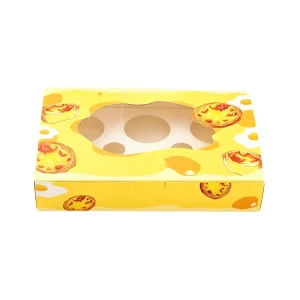
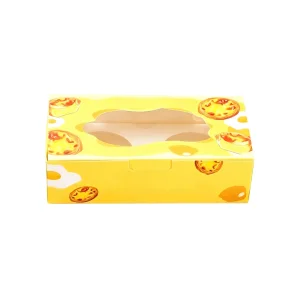
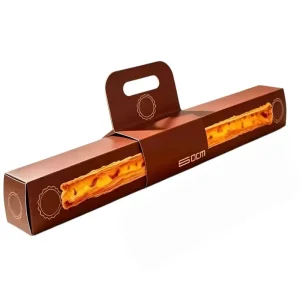
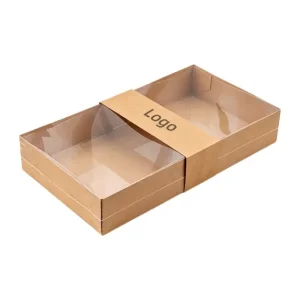
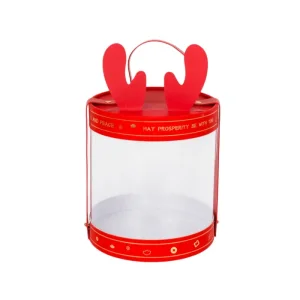
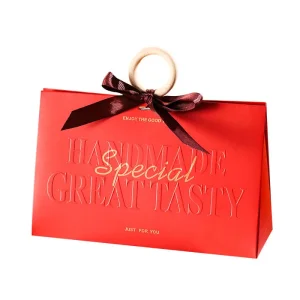
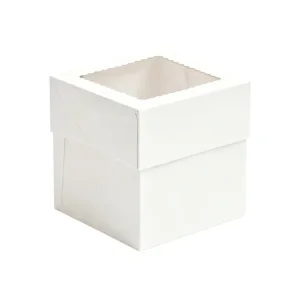
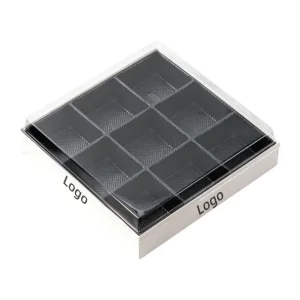
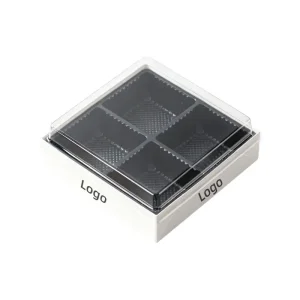
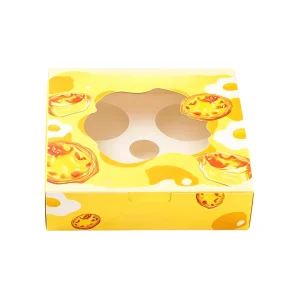
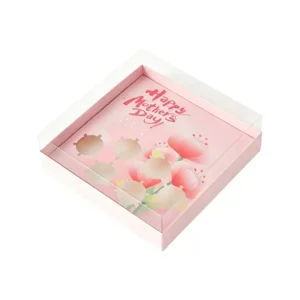
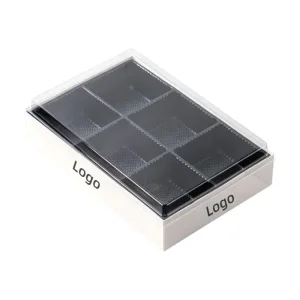
Explore our secondary series of custom-printed bakery containers, dessert boxes, and specialized display bases manufactured at our Chaozhou factory.
Send our engineering team your product specifications, target barrier performance, and estimated annual volume. Receive complete structural dielines, material recommendations, and factory-direct quotation tiers within 24 hours.
Request Engineering Consultation